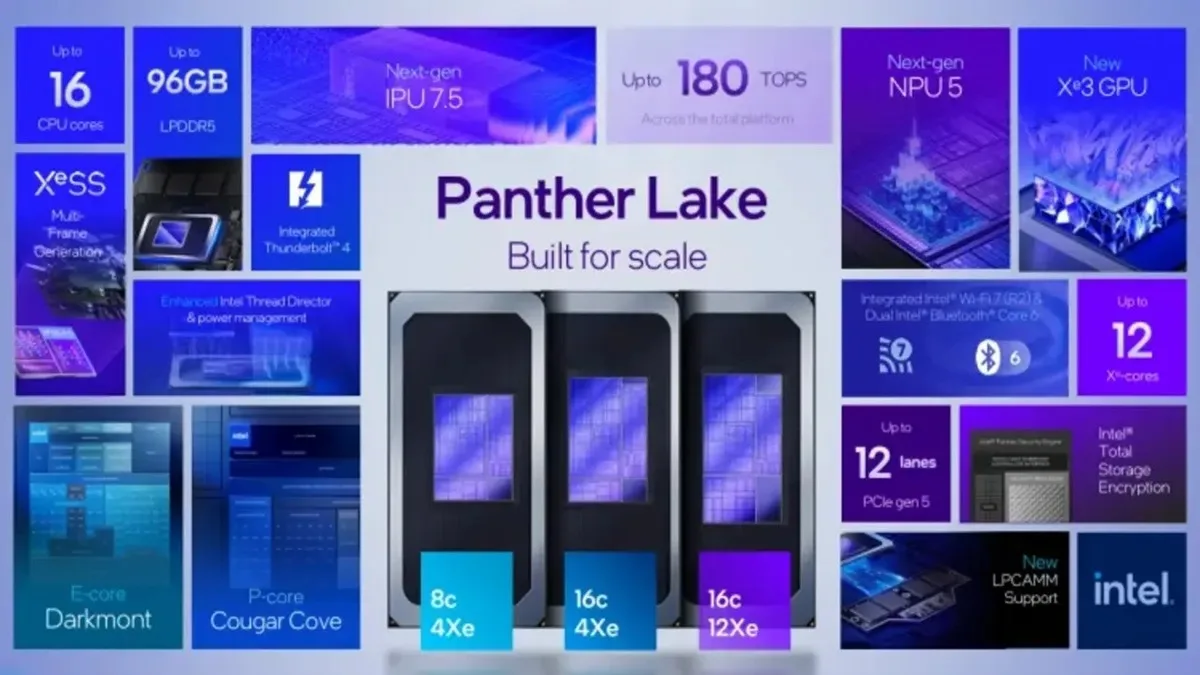
The PC gaming landscape is about to shift again. Intel has officially pulled back the curtain on its Panther Lake Core Series 3 architecture, and while the name might sound like another codename in a long line of chip iterations, the details reveal something far more exciting: a platform designed to push gaming performance, efficiency, and future-proofing into a new era.
For gamers, this isn’t just another incremental CPU update—it’s a signal of where high-performance gaming rigs are headed in the next few years. Let’s break down what Panther Lake means for us, the players who demand every frame, every millisecond, and every ounce of stability.
Built for Gaming First, Not Just Productivity
One of the standout takeaways from Panther Lake is Intel’s renewed focus on balancing raw performance with efficiency. Previous generations leaned heavily into hybrid architectures (Performance cores + Efficiency cores), but Panther Lake refines this approach with smarter scheduling and lower latency pathways between cores.
For gamers, this means:
- Higher minimum FPS in CPU-bound titles like Counter-Strike 2 or Starfield.
- Reduced stutter when streaming, recording, or running background apps while gaming.
- Better scaling for modern engines that thrive on multi-threading (think Unreal Engine 5).

Platform Upgrades That Matter
Panther Lake isn’t just about the CPU cores—it’s about the entire platform. Intel is rolling out support for:
- DDR5 memory at higher native speeds → Expect smoother performance in memory-hungry games and faster load times.
- PCIe 6.0 lanes → A massive leap for next-gen GPUs and ultra-fast NVMe SSDs. This is future-proofing for the inevitable RTX 6000-series or Radeon 9000-series cards.
- Integrated AI acceleration → While this might sound like a buzzword, AI-driven upscaling (think DLSS, XeSS, FSR) is becoming central to gaming. Having AI acceleration baked into the CPU could offload tasks from your GPU, freeing up frames where it matters most.
Thermal and Power Efficiency
Gamers know the struggle: high-end CPUs often mean heat and noise. Panther Lake introduces a redesigned power management system that dynamically adjusts voltage and frequency with greater precision.
- Expect cooler temps under sustained loads, which means less thermal throttling in marathon gaming sessions.
- Lower power draw could make high-performance gaming laptops more viable, extending battery life without sacrificing frame rates.
What This Means for Gamers in 2025 and Beyond
If you’re a competitive gamer, Panther Lake’s latency improvements and frame stability could be game-changing. For single-player enthusiasts, the AI acceleration and memory bandwidth upgrades will help future-proof your rig for the cinematic, resource-heavy titles on the horizon.
But perhaps the biggest win is platform longevity. With PCIe 6.0 and DDR5 scaling, Panther Lake rigs won’t feel outdated when the next wave of GPUs and storage tech hits. That’s a huge deal for gamers who don’t want to rebuild their system every two years.
Intel’s Panther Lake Core Series 3 isn’t just another tick in the tick-tock cycle—it’s a strategic leap aimed squarely at gamers who demand both performance and efficiency. Whether you’re chasing 500 FPS in esports titles or immersing yourself in sprawling open worlds, Panther Lake looks like the CPU line that will keep your rig relevant well into the next generation of gaming.
The question now is: will you upgrade early to ride the wave, or wait until the first wave of Panther Lake-powered gaming laptops and desktops prove their worth?