After 18 long years waiting for a new Metroid Prime game,8 of those marked by torturous anticipation since its official announcement Metroid Prime 4: Beyond is finally here. The good news: it delivers on most of the fans’ expectations. The not-so-good news: it also introduces some questionable decisions that affect parts of the experience.
The story follows the classic structure of the saga: Samus arrives on a mysterious planet, an explosion strips her of her abilities, and she must recover them one by one while learning about a fascinating extinct alien civilization. The villain introduced in the previous entry returns, but once again plays a surprisingly minor role, as the game focuses more on open exploration than strictly linear storytelling.
Along the way, allies appear similar to those in Metroid Prime 3 providing occasional assistance in combat and expanding the plot without ever feeling intrusive. Still, the heart of the experience remains intact: Samus spends most of her time alone, facing enemies across varied and atmospheric environments.
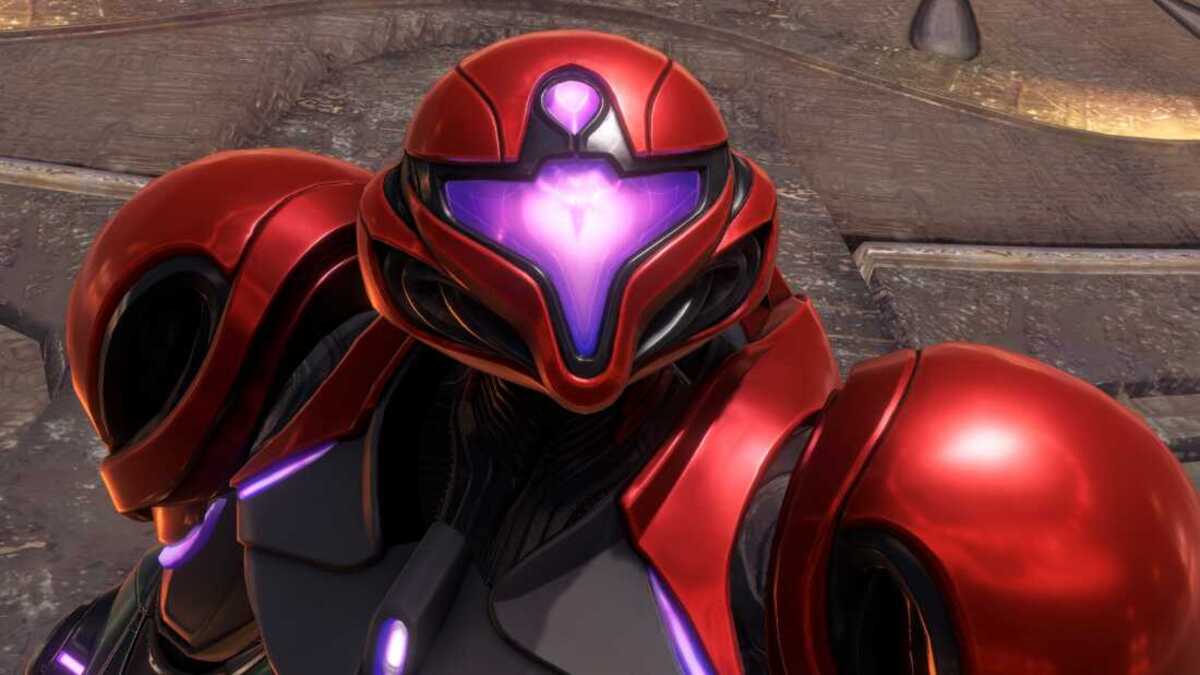
Gameplay maintains the franchise’s core identity: first-person shooting with the iconic arm cannon, missiles, elemental powers, and returning abilities such as the Hook Shot and Morph Ball. The new psychic powers introduce a layer of variety, but seasoned players will quickly notice these abilities are just old mechanics reimagined with purple effects.
Despite this, the overall experience is remarkably polished and satisfying so much so that it may be the strongest entry in the sub-series. This is reinforced by its stunning visuals: from lush forests to frozen laboratories, every environment is crafted with outstanding detail. Enemy designs are equally impressive, and the entire game runs at a stable 4K resolution and 60 FPS, proving that the Nintendo Switch 2 is finally capable of true next-gen performance.
Voice acting is solid and enhances the narrative tone, but no character truly shines likely due to their limited interaction with Samus. Interestingly, some conversations feel written with the expectation that Samus would respond, which creates the impression that certain elements were cut at the last minute.
The most controversial decision lies in the structure of its world. Metroid is traditionally defined by interconnected biomes within a single large map. However, Beyond divides its regions into separate sectors as it attempts to adopt a semi-open-world approach. Traveling between areas requires crossing a vast desert on a motorcycle fun to control, but placed in an empty, monotonous area with little purpose. The scattered temples provide minimal rewards, and the collectibles tied to specific missions fail to justify the trip.
Metroid Prime 4: Beyond is undoubtedly the most visually impressive game available on both Nintendo Switch and Switch 2. The gameplay is phenomenal and comes very close to taking the crown as the best entry in the sub-series. Unfortunately, new mechanics lack consistency and the narrative feels so restrained that it barely gives a sense of progression or accomplishment.
Final Score: 4/5