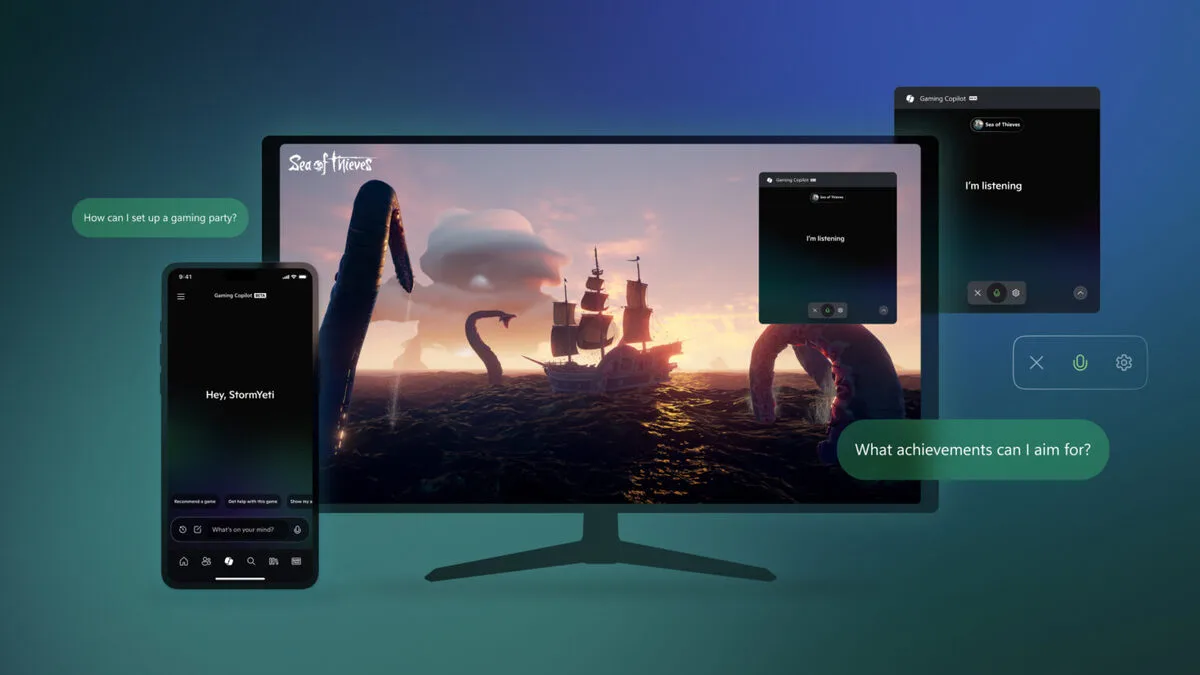
When Microsoft confirmed that Gaming Copilot will officially arrive on current‑generation Xbox consoles in 2026, it wasn’t just another feature announcement — it was a declaration of where the Xbox ecosystem is heading. After years of experimentation across PC, mobile, and even the ROG Ally handheld, Microsoft is finally ready to bring its AI assistant directly into the heart of its gaming hardware. And with that move, the company is signaling a new era: one where AI becomes a native layer of the Xbox experience rather than an optional accessory.
A Long‑Planned Expansion Reaches the Living Room
Gaming Copilot first appeared in 2024 inside Minecraft, quietly testing the waters of what an AI assistant could do for players. It wasn’t a gimmick — players could ask for help when stuck, get strategy suggestions, or even request explanations of game mechanics. The assistant learned from how players interacted, offering contextual guidance rather than generic tips. That early integration laid the groundwork for a broader rollout.
By 2025, Microsoft expanded beta testing to PC, mobile, and the ROG Ally, positioning Copilot as a cross‑platform companion. But the console remained the missing piece — the place where most Xbox players actually spend their time. According to Xbox product manager for gaming AI Sonali Yadav, that gap is closing. Speaking at the GDC Festival of Gaming, she emphasized that Copilot is coming to “more services that players are playing,” confirming that Xbox consoles are next in line.
What Copilot on Xbox Actually Means
The arrival of Copilot on Xbox isn’t about replacing human creativity or automating gameplay. Instead, it’s about embedding a layer of intelligence that supports players without overshadowing the artistry of game development.
On console, Copilot is expected to:
- Provide real‑time assistance when players get stuck, offering tailored hints or strategies without forcing them to leave the game for a YouTube search.
- Surface personalized recommendations based on a player’s history, habits, and preferred genres.
- Help players rediscover their own library, a feature that becomes increasingly valuable as Game Pass and digital collections grow.
- Assist with system‑level tasks, potentially making navigation, accessibility, and social features more intuitive.
In other words, Copilot isn’t just a gameplay assistant — it’s a platform‑wide intelligence layer designed to make the Xbox ecosystem feel more responsive, more personal, and more connected.
A New Leadership Philosophy Shapes the Rollout
The timing of this expansion is no accident. Microsoft Gaming’s new CEO, Asha Sharma, has been vocal about her stance on AI: she wants none of the “bad AI” that has flooded other creative industries. In an internal memo, she promised that Xbox would not “chase short‑term efficiency or flood our ecosystem with soulless AI slop.”
That statement wasn’t just rhetoric — it was a line in the sand.
Sharma’s leadership, alongside Xbox CCO Matt Booty, has emphasized that AI should support creators, not replace them. Booty reinforced that teams are under “no pressure from Microsoft” to use AI and are free to adopt whatever tools genuinely help them, whether for debugging, code review, or production workflows. The message is clear: AI is a tool, not a mandate.
This philosophy is crucial to understanding why Copilot’s arrival on Xbox matters. It’s not being introduced as a cost‑cutting measure or a creative shortcut. It’s being positioned as a player‑centric enhancement — a way to make games more approachable, more enjoyable, and more accessible.
Why This Matters for the Future of Xbox
Bringing Copilot to Xbox consoles is more than a feature update; it’s a strategic move that aligns with Microsoft’s broader vision for gaming:
1. A Unified Microsoft Gaming Ecosystem
Copilot becomes the connective tissue between PC, mobile, handheld, and console. It’s the first time Microsoft has a single AI identity that spans every gaming surface it touches.
2. A More Accessible Xbox
For new players, younger audiences, or those returning after long breaks, Copilot can flatten the learning curve. It can explain mechanics, guide progression, and help players re‑engage with complex titles.
3. A Competitive Differentiator
Sony and Nintendo have not yet introduced anything comparable. If Copilot proves genuinely helpful — not intrusive — it could become a signature Xbox advantage.
4. A Step Toward AI‑Enhanced Game Discovery
With Game Pass offering hundreds of titles, discovery is a challenge. Copilot’s personalized recommendations could become a powerful driver of engagement.
A Turning Point, Not a Replacement
The most important takeaway is that Copilot’s arrival doesn’t signal a shift away from human‑driven creativity. Microsoft’s leadership has been explicit: art remains at the center of Xbox, and technology exists only to support it. The company is threading a careful needle — embracing AI without compromising the soul of game development.
If Microsoft succeeds, Copilot on Xbox could become one of the most meaningful evolutions of the console experience since the introduction of Xbox Live. Not because it automates play, but because it enhances it — making games more approachable, systems more intuitive, and the entire Xbox ecosystem more intelligent.
2026 will be the year players find out whether Copilot becomes a quiet revolution in how we interact with games… or the beginning of something even bigger.