
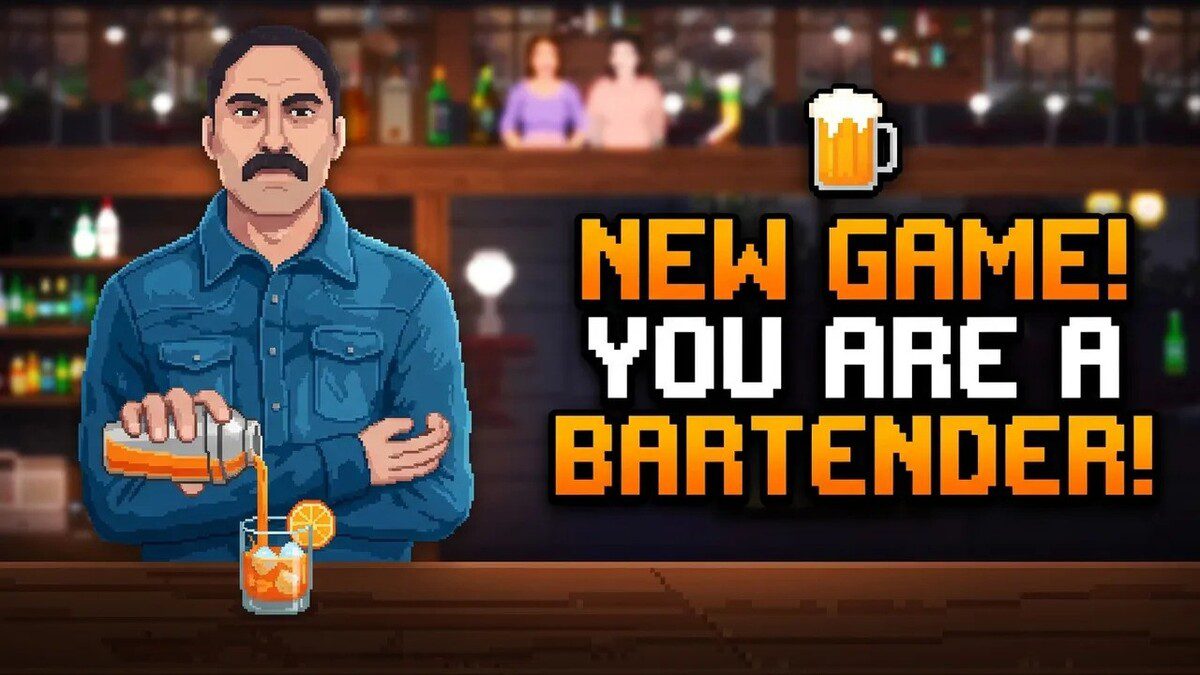
Indie games often thrive by taking familiar experiences and reframing them through charm, humor, or emotional nuance. Something to Drink? does exactly that. It transforms the messy, unpredictable world of bartending into a pixel‑art time‑management game that feels both chaotic and strangely comforting. What begins as a simple premise — serve drinks and survive the night — quickly becomes a character-driven story about responsibility, burnout, and the strange humanity found in late-night conversations.
This review breaks down how the game works, what makes it memorable, and why it stands out among 2026’s indie releases.
A Dive-Bar Premise With More Depth Than Expected
You play as Tom, a former menace of the bar who’s now forced to work behind the counter. It’s a clever setup: the protagonist isn’t a hero, a chosen one, or a rising star. He’s just a guy trying to get through his shift while dealing with the same people he used to annoy.
The bar itself is a character. It’s cramped, loud, and full of regulars who seem to live in a perpetual state of mild disaster. The game embraces the grime and absurdity of dive-bar culture without ever feeling mean-spirited. Instead, it leans into the humor and humanity of people who are messy, flawed, and occasionally endearing.
Gameplay — Time Management With Personality
At its core, Something to Drink? is a time‑management simulator. You take orders, mix drinks, and try to keep customers from spiraling into impatience or chaos. The mechanics are simple to learn but escalate quickly as the bar fills up and drink recipes become more complex.
Where the game stands out
- Unpredictable events keep each shift fresh.
- Customer behavior adds tension and comedy.
- Multi-step drink recipes introduce satisfying progression.
- Choice-driven interactions influence the story and endings.
The game never overwhelms you with systems, but it does demand attention. It’s the kind of title where you start out relaxed and end up sweating because three customers are yelling, someone passed out, and a regular wants a drink that absolutely shouldn’t exist.
Writing & Characters — Sharp, Funny, and Occasionally Emotional
The writing is one of the game’s strongest elements. Dialogue is quick, sarcastic, and full of personality. Characters feel like people you’d meet at 3 AM in a bar that definitely shouldn’t be open. Some are absurd, some are tragic, and many are both.
The developer’s own tagline — “The tips suck, but at least the customers are insane” — captures the tone perfectly.
Despite the humor, the game doesn’t shy away from emotional beats. Tom’s interactions with regulars reveal small stories about loneliness, coping mechanisms, and the strange intimacy of late-night conversations. It’s subtle, but it adds weight to the chaos.
Visuals & Audio — Cozy Chaos in Pixel Form
The pixel art is clean and expressive, with enough detail to make the bar feel alive without overwhelming the screen. Animations are simple but effective, especially during drink preparation.
Sound design completes the atmosphere:
- clinking glasses
- muffled conversations
- neon hum
- sudden bursts of noise when things go wrong
It’s immersive in a way that makes the bar feel like a real place — one you probably shouldn’t visit, but would definitely remember.
Progression & Replayability
Progression is steady and satisfying. New drink recipes, tools, and challenges unlock as you advance, giving each shift a sense of growth. The game also features multiple endings, encouraging players to experiment with different choices and approaches.
The developer has teased Endless Mode, which could turn the game into a long-term comfort title — something you boot up just to unwind and serve drinks without worrying about narrative progression.
Performance & Accessibility
The game runs smoothly on virtually any PC. It supports:
- mouse-only play
- full controller support
- 18 languages, including Spanish (LATAM), Japanese, and Chinese
It’s lightweight, accessible, and ideal for short sessions or casual play.
Final Verdict — A Small Game With Big Personality
Something to Drink? succeeds because it understands its own identity. It’s not trying to be a massive management sim or a sprawling narrative epic. Instead, it focuses on atmosphere, character, humor, and the small emotional beats that make late-night bar culture strangely compelling.
If you enjoy:
- pixel-art indie games
- time-management sims
- character-driven storytelling
- cozy-but-chaotic gameplay
- weird, memorable NPCs
This game is absolutely worth your time — and its price point makes it an easy recommendation.