For decades, video game NPCs have been limited by pre-recorded dialogue, scripted reactions, and repetitive voice lines. Whether it was a teammate repeating the same encouragement or an enemy recycling identical taunts, players quickly learned to recognize the artificial nature of these interactions.
Now, Activision appears to be exploring a future where computer-controlled characters can react much more like real human players.
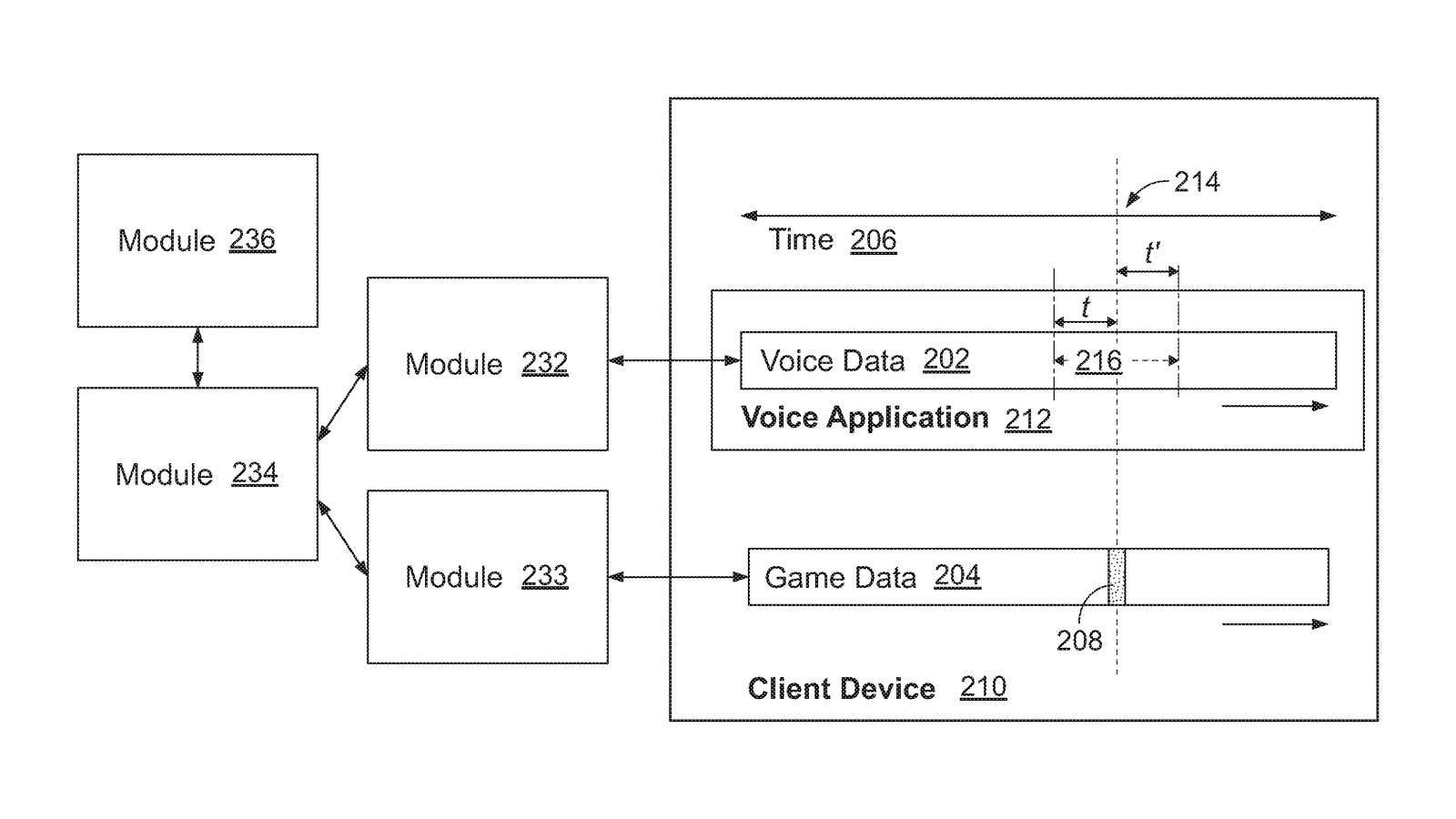
A newly published patent titled“Methods and Systems for Applying Machine Learning to Generate Gameplay Audio” outlines a system that could allow AI-controlled characters to learn from how real players speak during gameplay, potentially including everything from celebrations and callouts to the infamous trash talk that has become a staple of competitive gaming. According to the patent filing, the technology correlates player voice-chat reactions with specific in-game events and uses that information to train machine-learning models capable of generating similar responses for NPCs.
While patents do not guarantee implementation, the filing offers a fascinating look into how Activision may envision the next evolution of AI-driven game worlds.
How the Technology Works
At its core, the patent describes a system that continuously observes major gameplay moments and the reactions they generate from players.
When a significant event occurs, such as:
- A kill
- A death
- A clutch victory
- A multi-kill streak
- A major objective capture
- An unexpected defeat
the system can capture surrounding voice-chat audio and associate those reactions with the corresponding gameplay event. The collected data is then used to train neural networks capable of reproducing similar reactions when NPCs encounter comparable situations in the future.
In practical terms, if players consistently celebrate a difficult long-distance kill with excited shouting, AI-controlled teammates or enemies could learn to exhibit similar enthusiasm under the same circumstances.
The patent specifically states that the goal is not necessarily to clone a player’s voice but rather to understand behavioral patterns, communication styles, emotional reactions, and conversational habits.
Beyond Generic Voice Lines
Modern multiplayer games often rely on extensive voice libraries recorded by actors. While these recordings can be impressive, they remain finite and predictable.
Activision’s proposed system seeks to address one of gaming’s biggest immersion problems: repetitive NPC dialogue.
Instead of hearing the same handful of pre-written phrases, future AI characters could react dynamically to unfolding gameplay scenarios.
Imagine:
A squadmate celebrating after a comeback win.
An enemy mocking a failed attack.
A companion expressing surprise after witnessing an unlikely play.
Nearby AI soldiers cheering after a tense objective defense.
These reactions could be generated contextually based on patterns learned from thousands or even millions of player interactions.
The goal appears to be creating NPCs that feel less like scripted bots and more like actual participants in the match.
Discord and TeamSpeak Are Specifically Mentioned
One of the most interesting aspects of the patent is its mention of third-party voice communication services.
According to the filing, gameplay reactions may be captured from voice-chat applications running alongside the game itself. Examples referenced include popular communication platforms such as Discord and TeamSpeak.
The patent describes synchronizing gameplay events with conversations occurring through these services, allowing machine-learning systems to understand not only what happened in the game but how players reacted to it vocally.
This potentially expands the available training data far beyond in-game communication systems.
However, this specific aspect has already generated discussion among gamers and privacy advocates alike.
The Privacy Questions Are Impossible to Ignore
While Activision’s patent focuses heavily on technological capabilities, it also raises obvious questions regarding privacy and consent.
Voice communication has become an integral part of modern multiplayer gaming. Many players use Discord servers, private voice channels, and external communication tools to coordinate with friends.
Some industry observers have noted that the patent documentation does not explicitly discuss how player consent would be handled should such a system ever move beyond experimentation into commercial deployment.
As AI continues to expand throughout the gaming industry, transparency regarding data collection practices is becoming increasingly important.
Players today are far more aware of how their information is used than they were even five years ago. Any future implementation would almost certainly face scrutiny regarding:
- Voice-data collection
- User permissions
- Data retention policies
- AI training methodologies
- Regional privacy regulations
These concerns could ultimately prove just as important as the technical achievement itself.
Activision Says Offensive Language Would Be Filtered
Given the reputation of competitive gaming communities, many readers immediately wondered whether Activision intends to teach NPCs the same insults commonly heard in public lobbies.
According to the patent, safeguards exist to prevent offensive or inappropriate language from becoming part of generated NPC dialogue. Filtering systems would be used both during data collection and output generation to remove problematic speech before it reaches players.
Whether such moderation systems would be effective remains a separate debate.
The challenges faced by AI moderation tools across the technology industry show that filtering human language is far from a solved problem.
Still, the inclusion of these safeguards suggests Activision is aware of the concerns associated with teaching AI characters through player-generated conversations.
A Broader Industry Trend Toward AI-Powered NPCs
Activision is far from alone in exploring AI-driven character behavior.
Across the gaming industry, developers are increasingly investing in systems that allow NPCs to become more responsive, adaptive, and convincing.
Recent years have seen experimentation involving:
- AI-generated dialogue
- Dynamic quest generation
- Context-sensitive character reactions
- Personalized encounters
- Machine-learning-driven enemies
The ultimate objective is to make game worlds feel more alive without requiring developers to script every possible interaction manually.
Activision’s patent takes that concept a step further by focusing specifically on voice and emotional reactions. Rather than simply understanding player actions, these AI systems attempt to understand player expression.
If successful, such technology could help close one of the final immersion gaps separating human players from computer-controlled characters.
Could This Appear in Call of Duty?
The obvious question is whether this technology is destined for the Call of Duty franchise.
At the moment, there is no confirmation that the system is being integrated into any existing or future game. Patents often serve as intellectual property protection for ideas that may never enter production.
That said, Activision possesses one of the largest multiplayer ecosystems in gaming.
Franchises like Call of Duty generate massive quantities of player communication data every day, making them an ideal testing ground for systems designed to learn how gamers naturally speak and react.
Whether it appears in Call of Duty, another Activision-Blizzard project, or never reaches consumers at all remains unknown.
The Future of Multiplayer AI
If implemented responsibly, Activision’s patent could represent one of the most ambitious attempts yet to bridge the gap between human and artificial players.
For years, developers have tried to make bots smarter. This patent suggests the next step may be making them sound smarter as well.
Instead of relying on canned voice lines recorded years before launch, tomorrow’s AI teammates and enemies could celebrate victories, complain about defeats, react to surprises, and yes, even engage in carefully moderated trash talk that feels remarkably human.
The technology remains speculative for now, but its existence illustrates a larger industry reality: artificial intelligence is no longer being viewed merely as a tool for development. Increasingly, it is being positioned as part of the player experience itself.
Whether gamers embrace that vision or push back against it may ultimately determine how soon these AI-driven personalities move from patent filings into the games we play every day.