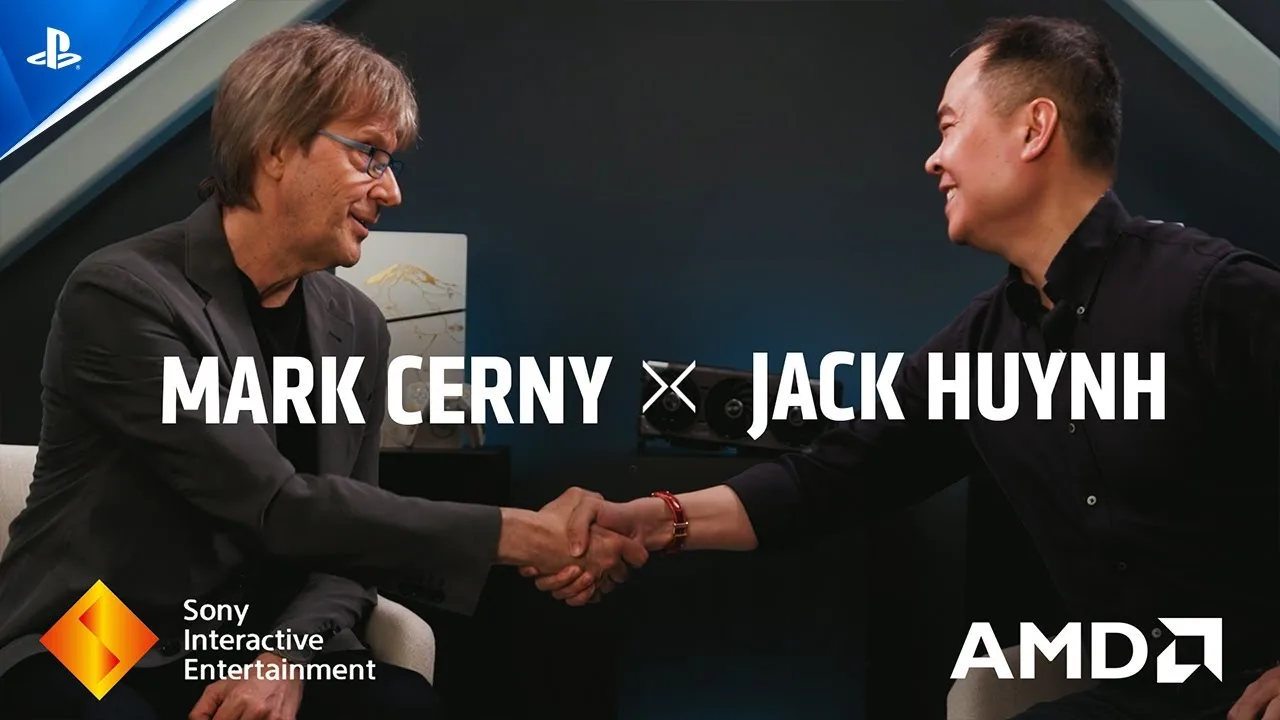
Sony flirting with a “PS6 handheld GPU” that touts ray tracing, even path tracing, and AMD “Radiance Cores” isn’t just another specs tease—it’s a statement about where console performance, form factors, and developer workflows are heading. If true, it suggests Sony will lean harder into mobile-class silicon that doesn’t feel “mobile,” and double down on AMD’s semi-custom playbook to align generational features across PlayStation and Xbox while pushing its own identity through system software, audio, IO, and developer tooling.
What “Radiance Cores” and path tracing imply for a handheld-class PlayStation GPU
- Ray + path tracing in handheld thermals: Path tracing is brutally compute-heavy; getting it to feel good on a handheld means aggressive upscaling, smart denoisers, and hardware acceleration that is both lean and power-aware. A handheld-class GPU advertising path tracing implies deep integration of hardware RT units, AI-assisted denoising, and reconstruction that can mask low native pixel counts while preserving lighting quality.
- If “Radiance Cores” is AMD’s next-gen RT branding: AMD’s current nomenclature uses Ray Accelerators and emerging AI blocks; a “Radiance” label would signal a new-gen design focused on throughput per watt for RT workloads. Expect elevated BVH traversal rates, improved cache hierarchies, and hardware-accelerated denoise hooks optimized for temporal stability—crucial for handheld motion and battery constraints.
- FSR, frame gen, and AI blocks become non-negotiable: To make path tracing viable, Sony would have to standardize robust upscaling and frame generation pipelines at the platform level. In practice, that means developers get predictable performance envelopes if they use Sony’s recommended render graph: RT for global illumination/reflections, AI for reconstruction, strict frame pacing, and VRR-friendly output.
- Perceptual wins over raw resolution: A handheld PS6 GPU pitching path tracing suggests Sony wants “perceptual fidelity”—cinematic lighting, stable motion, clean edges—over chasing native 4K. That is the right bet in mobile thermals and aligns with modern display realities where reconstruction can outshine brute force resolution.
How this reshapes the long-running PS6 rumors
- Timeline and cadence: Industry expectations put PS6 around the 2027–2028 window. A handheld-capable GPU rumor hints that Sony is prototyping silicon and software stacks that can scale from a low-power envelope (handheld) to a living-room console APU. That strengthens predictions of a unified render strategy across SKUs: same features, different performance targets.
- A hybrid family, not a single box: Rather than a one-console future, this points to a “constellation” approach—home console plus a companion handheld/streaming-capable device sharing a common feature set. Think: same ray/path tracing APIs, shared asset pipelines, identical shader models; different thermals, clocks, and power budgets.
- Developer-lock on RT as baseline: If Sony mandates RT-capable hardware across the family, devs can treat global illumination, high-quality reflections, and soft shadows as table stakes. That changes content planning: you aim for RT as the default, with path-traced modes on titles that can lean into reconstruction and stylized, filmic lighting.
- Distinctive identity via non-GPU blocks: Historically, PlayStation differentiation comes from IO, audio (Tempest 3D), and custom geometry/mesh solutions. Expect PS6-era devices to showcase fast asset streaming, low-latency scheduling, and platform-level denoise/reconstruction stacks that make RT practical even in mobile thermals—while Sony’s SDKs keep developer friction low.
What this signals about AMD’s role and why it matters
- AMD’s semi-custom dominance: Sony and Microsoft have used AMD semi-custom APUs for CPU+GPU since PS4/Xbox One, continuing through PS5/Series with Zen/RDNA. If this rumor is accurate, AMD remains the spine of HD gaming outside Nintendo—providing both the architecture and co-designed blocks that let Sony/Xbox differentiate without fragmenting developer tooling.
- Feature parity, platform flavor: With AMD co-design, baseline features (RT, mesh/compute pipelines, AI accelerators, modern video blocks) converge across PS and Xbox. Differentiation shifts to the platform layer: dev tooling, content policies, storage and IO strategies, audio engines, and cloud integration. That’s good for studios: fewer bespoke render paths, clearer optimization targets.
- Ecosystem lock-in via AI+RT+FSR: If AMD’s next-gen includes improved RT throughput and integrated AI denoising/reconstruction, both PS and Xbox can standardize these stacks. Studios then ship one high-fidelity path, tuned per platform. This reduces porting risk and keeps AMD central to the console value chain—further entrenching its dominance in living-room and (now) handheld console silicon.
- NVIDIA vs AMD context: NVIDIA still owns Switch-class and PC GPU mindshare, but Sony+Microsoft’s alignment around AMD means the core console market (excluding Nintendo) continues to live on x86 Zen + RDNA derivatives. That gives AMD strong leverage in roadmap negotiations, ISA consistency, and shared optimization wins across two of the biggest platforms.
Practical implications for developers and players
- Developers
- Unified pipelines: Build for RT as default, path-traced modes as premium. Invest in temporal stability, denoise, and reconstruction quality; expect platform-level SDK support.
- Thermal-aware design: Handheld targets mean stricter budgets for bandwidth and clocks. Plan LODs and material complexity with reconstruction in mind to avoid ghosting and shimmer.
- IO-first content: Faster streaming and compact assets matter more than ever. Optimize for low-latency data access to maintain stable frame pacing with heavy RT workloads.
- Players
- Quality-focused visuals: Expect more cinematic lighting at “reasonable” resolutions, with sharpness driven by reconstruction rather than native pixels.
- Mode variety: Standard modes with RT-on, performance modes with smart compromises, and showcase modes experimenting with path tracing on compatible displays.
- Form factor flexibility: A companion handheld that doesn’t feel like a downgrade, plus seamless cloud/hybrid play where heavy scenes can dynamically adapt settings.
The bigger picture: Sony’s strategy if the rumor holds
- A multi-device PS6 era: Sony can anchor a flagship console while releasing a handheld that shares silicon DNA. Shared features mean coherent branding: “PlayStation lighting,” “PlayStation reconstruction,” “PlayStation audio”—regardless of device.
- Aggressive software stewardship: Success depends on SDK polish—playable capture for RT+AI, robust frame-gen guardrails, and developer-first diagnostics to keep ghosting and noise in check. Sony’s edge will be how easy it is to ship stable RT across all its hardware.
- AMD cemented as co-architect: AMD remains the default partner for console compute/graphics, shaping paths for both Sony and Xbox. That stability is good for devs and consumers, and it keeps the console space distinct from PC’s faster-but-fragmented cadence.
If Sony’s PS6-handheld GPU rumor with ray/path tracing and “Radiance Cores” is real, it points to a PS6 family designed around RT as a baseline and path tracing as a showcase, achieved through AI-assisted reconstruction and careful thermal design. It strengthens long-standing rumors of a hybrid hardware strategy—home console plus handheld—with shared feature sets and developer tooling. AMD’s role remains dominant: both PlayStation and Xbox rely on AMD’s semi-custom APUs, making AMD the central architect of console graphics outside Nintendo and aligning generational features across platforms while leaving differentiation to software, IO, and ecosystem choices.