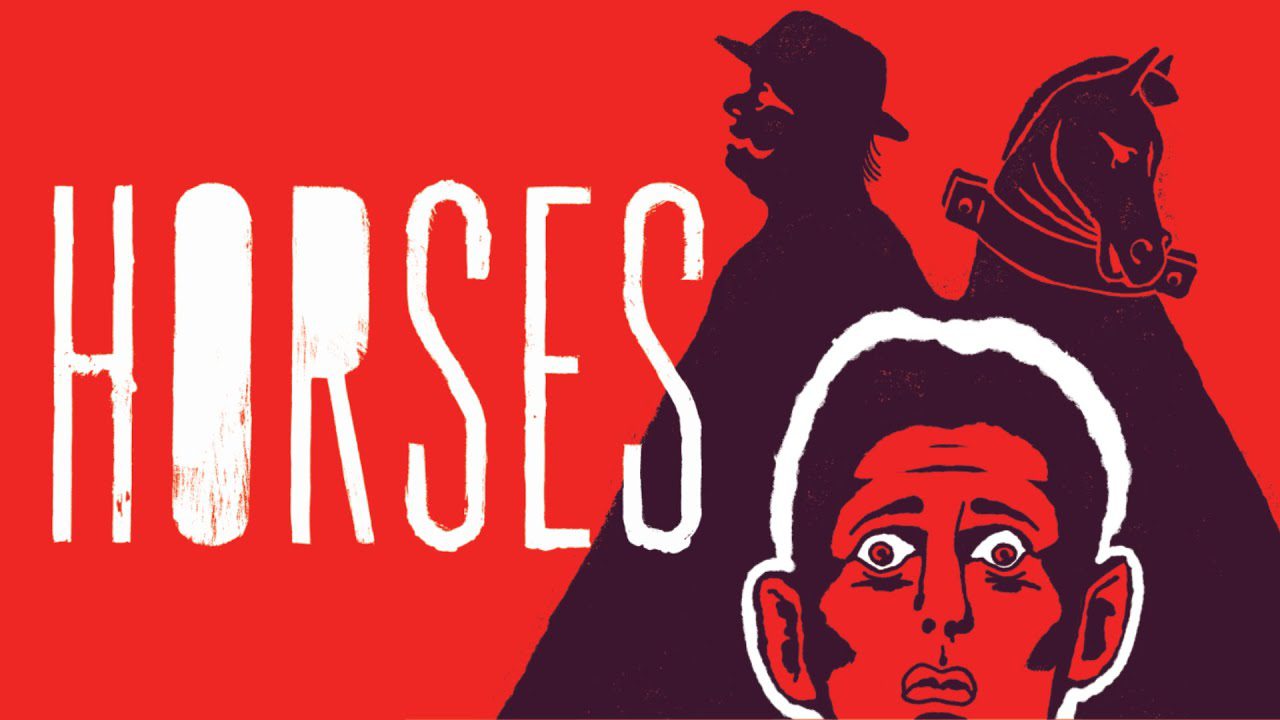
When indie studio Santa Ragione prepared to launch its unsettling horror title HORSES, the plan was simple: release across multiple storefronts, reach a wide audience, and let the game speak for itself. But less than 24 hours before launch, the rug was pulled out from under them. The Epic Games Store, which had already approved the release build, suddenly informed the developers that the game would not be distributed on its platform.
The reason? Epic cited violations of its content guidelines, pointing to explicit sexual themes and depictions of abuse, including animal abuse. It wasn’t the first time HORSES had faced rejection. Steam had already banned the game during development, and Humble briefly delisted it before relisting after review. For Santa Ragione, this was becoming a pattern: major storefronts were unwilling to host the game, even as smaller platforms embraced it.
The Game That Pushes Boundaries
HORSES isn’t a conventional horror release. It’s a narrative-driven first-person experience designed to disturb and provoke. Santa Ragione has built a reputation for experimental titles that challenge players, and this project continues that tradition by exploring taboo subjects in surreal, unsettling ways. The controversy surrounding the game isn’t about bugs or polish — it’s about whether storefronts should act as gatekeepers for artistic expression.
GOG and Itch.io Step In
With Epic’s last-minute reversal, Santa Ragione turned to GOG and Itch.io. These platforms, known for their more open policies, welcomed the game. Priced at $4.99, HORSES quickly climbed GOG’s charts, becoming a best-seller thanks in part to the publicity generated by its bans elsewhere. What could have been a devastating setback instead became a rallying point, with players curious to see what the fuss was about and eager to support the developers directly.
A Case Study in Censorship and Visibility
The saga of HORSES highlights a growing tension in the industry. On one side, storefronts like Steam and Epic argue that they must protect audiences from harmful or abusive content. On the other, critics see these bans as censorship that stifles creativity, especially in indie spaces where experimentation thrives. Ironically, the bans may have amplified the game’s reach. By being labeled “too disturbing” for mainstream platforms, HORSES gained notoriety and visibility that a quiet release might never have achieved.
For small studios, the lesson is clear: relying on major storefronts is risky. Approval can be revoked at the last minute, leaving marketing plans in disarray. At the same time, smaller platforms like GOG and Itch.io are proving to be vital lifelines, offering distribution channels for games that don’t fit neatly within mainstream content policies.
The story of HORSES is ultimately one of resilience. What began as a setback turned into an opportunity, showing that indie developers can still thrive outside the shadow of the biggest platforms. And for players, it’s a reminder that some of the most daring, thought-provoking experiences may not be found on Steam or Epic, but in the corners of the industry where risk-taking is still allowed.