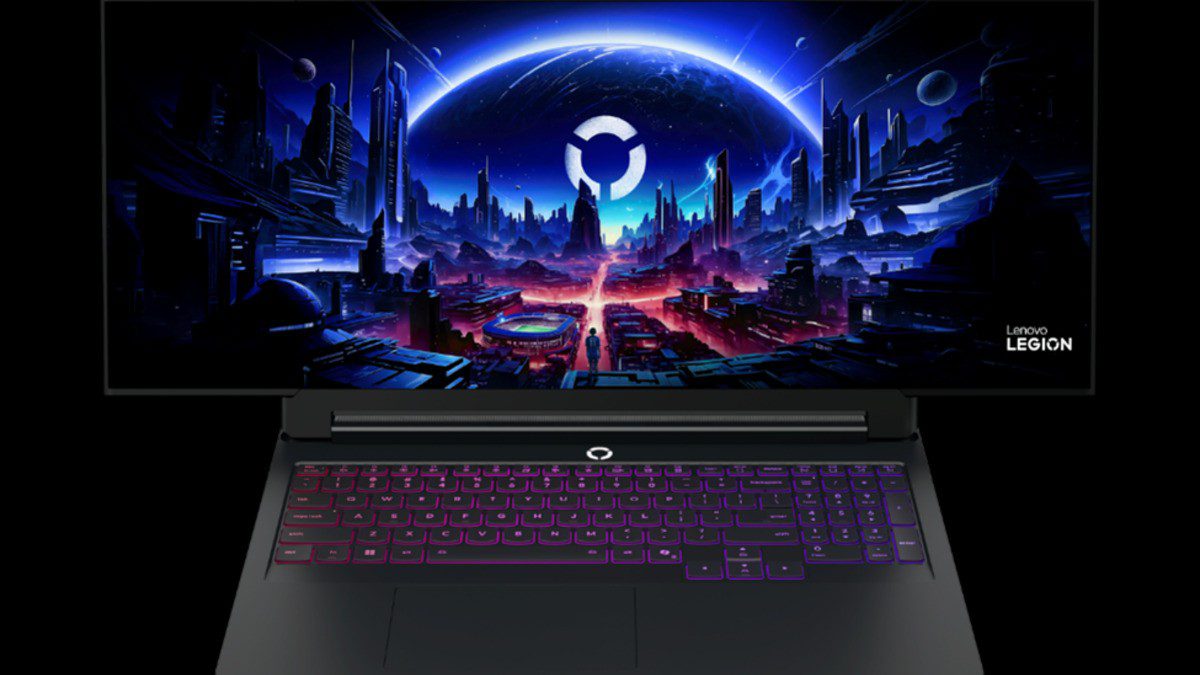
Lenovo arrived at CES 2026 with the confidence of a brand that knows exactly where the gaming market is heading. Instead of incremental refreshes, the company delivered a showcase filled with experimental concepts, next‑generation hardware, and a clear commitment to pushing the Legion brand into new territory. From rollable OLED displays to SteamOS handhelds and AI‑enhanced monitors, Lenovo’s announcements stood out as some of the most forward‑thinking of the entire show.
The Rollable Legion Pro Concept: A Laptop That Physically Adapts to You
The most striking reveal was the Legion Pro Rollable Concept, a device that challenges the very definition of a gaming laptop. At first glance, it looks like a sleek 16‑inch machine. But with the press of a button, the display expands horizontally to 21.5 inches, and then again to a massive 24 inches. Lenovo uses a dual‑motor system to roll the OLED panel outward, creating a smooth, almost theatrical transformation.
This design isn’t just a gimmick. Lenovo envisions esports players using the smaller 16‑inch mode for focused practice, the mid‑range 21.5‑inch mode for tactical training, and the full 24‑inch expansion to simulate ultrawide tournament setups. Inside, the concept runs on Intel’s latest Core Ultra processors paired with NVIDIA’s RTX 5090 Laptop GPU, making it as powerful as it is experimental.
AI Frame Display: A Monitor That Watches the Game With You
Another concept that drew attention was Lenovo’s AI Frame Gaming Display, a monitor designed to interpret what’s happening on screen and adjust itself accordingly. Instead of static settings, the display uses machine learning to zoom into important areas—like mini‑maps or boss arenas—while also adjusting ambient lighting based on in‑game events. It’s a bold attempt to merge AI with display technology in a way that feels genuinely useful rather than gimmicky.
Legion Go Returns With SteamOS and a Clear Mission
Lenovo’s handheld gaming PC, the Legion Go, received its most significant update yet: it now ships with SteamOS. This instantly positions it as a direct competitor to Valve’s Steam Deck, but with more powerful hardware and a larger OLED display. The device runs on AMD’s Ryzen Z2 Extreme processor and supports up to 32GB of RAM and 2TB of storage, giving it the muscle to handle modern AAA titles without compromise.
Legion Go (2026) — Key Specs
| Component | Details |
|---|---|
| Processor | AMD Ryzen Z2 Extreme |
| Memory | Up to 32GB |
| Storage | Up to 2TB |
| Display | 8.8-inch OLED |
| OS | SteamOS |
| Starting Price | $1,199 |
| Availability | June 2026 |
With SteamOS onboard, players gain instant access to their Steam library, fast suspend/resume, and a more console‑like experience—something Windows‑based handhelds have struggled to deliver smoothly.
Legion 7a: A Flagship Built for Gamers and Creators Alike
The Legion 7a represents Lenovo’s premium offering for 2026, redesigned to be lighter while still delivering top‑tier performance. Powered by AMD’s Ryzen AI 400 processors and paired with NVIDIA’s RTX 50‑series GPUs, the laptop targets gamers, 3D artists, and simulation users who need both speed and efficiency. Lenovo also refined its cooling system and overall chassis weight, making the 7a more portable without sacrificing power.
Legion 5 Series: The Mid‑Range Sweet Spot Gets Smarter
Lenovo’s Legion 5 lineup continues to be one of the most popular choices for mainstream gamers, and the 2026 refresh focuses on refinement. The Legion 5i uses Intel’s Core Ultra Series 3 processors, while the Legion 5a comes in two AMD variants—one with the Ryzen AI 400 Series and another with the Ryzen 200 Series. All models include PureSight OLED displays and Lenovo’s improved Coldfront Hyper cooling system, ensuring stable performance even during extended sessions.
Legion 5 Series Overview
| Model | Processor | Graphics | Display | Starting Price | Availability |
|---|---|---|---|---|---|
| Legion 5i | Intel Core Ultra Series 3 | RTX 50‑series | PureSight OLED | $1,549 | April 2026 |
| Legion 5a (AI 400) | Ryzen AI 400 | RTX 50‑series | PureSight OLED | $1,499 | April 2026 |
| Legion 5a (Ryzen 200) | Ryzen 200 Series | RTX 50‑series | PureSight OLED | $1,299 | April 2026 |
LOQ Series: Budget Gaming With Fewer Compromises
For students and entry‑level gamers, Lenovo’s LOQ series continues to offer strong performance at more accessible prices. The AMD‑powered LOQ 15AHP11 uses Ryzen 200 Series processors, while the Intel‑based LOQ 15IPH11 features Core Ultra chips but will not be sold in the U.S. Both models include RTX 50‑series graphics and Lenovo’s Hyperchamber Cooling, which helps maintain performance under load.
LOQ Series Overview
| Model | Processor | Graphics | Notes | Starting Price |
|---|---|---|---|---|
| LOQ 15AHP11 | Ryzen 200 Series | RTX 50‑series | Global release | $1,149 |
| LOQ 15IPH11 | Intel Core Ultra | RTX 50‑series | Not sold in U.S. | Varies |
Final Thoughts: Lenovo Is Betting Big on the Future of Gaming
Lenovo’s CES 2026 lineup shows a company willing to take risks while still delivering practical upgrades for everyday players. The rollable Legion Pro Concept is one of the most ambitious ideas shown at the event, and the SteamOS‑powered Legion Go signals a major shift in handheld gaming strategy. Meanwhile, the Legion 7a, Legion 5 series, and LOQ lineup ensure that Lenovo has a strong offering at every price point.
This is the kind of CES presence that doesn’t just refresh a product line—it redefines a brand’s direction.