
For years, industry observers wondered why Toei, one of Japan’s most powerful entertainment institutions, had not already established a dedicated gaming arm. The company’s legacy spans tokusatsu giants like Kamen Rider and Super Sentai, as well as global anime phenomena such as One Piece and Dragon Ball, yet its relationship with gaming had always been indirect—licensing IP to external publishers, collaborating with studios, or allowing partners like Bandai Namco to define how its worlds lived interactively. That era is now ending.
This week, Toei officially announced the creation of Toei Games, a full internal gaming division positioned as a new strategic pillar alongside its film, television, and events businesses. The company emphasized that this move is part of its long‑term initiative, “Toei New Wave 2033,” which aims to expand its global reach and diversify how its stories are delivered to audiences.
What makes this debut especially striking is Toei’s choice to avoid using its existing blockbuster IP—at least at first. Instead, Toei Games will focus on creating entirely new original franchises, developed by teams in Japan and abroad, with initial releases planned for PC via Steam, followed by expansions to consoles such as PlayStation, Switch, and Xbox.
This approach signals a desire not just to enter the gaming market, but to build gaming‑native worlds rather than rely on adaptations.
Toei’s leadership frames this as a natural evolution. CEO Fumio Yoshimura explained that the company intends to leverage the technology and expertise refined through decades of video production to deliver a uniquely Toei brand of interactive entertainment.
The company sees gaming not as a side venture, but as a new creative frontier—one capable of standing shoulder‑to‑shoulder with its traditional media pillars.
But the deeper story is that this move was overdue. For years, Japan’s entertainment landscape has been shifting toward direct IP monetization through gaming, with companies like Shueisha and Sanrio launching their own gaming labels. Analysts note that Japanese IP is more globally popular than ever, and the government actively supports expanding these properties into interactive markets.
Toei, sitting on some of the most recognizable franchises in the world, was uniquely positioned to benefit—but had not yet taken the leap.
About time!
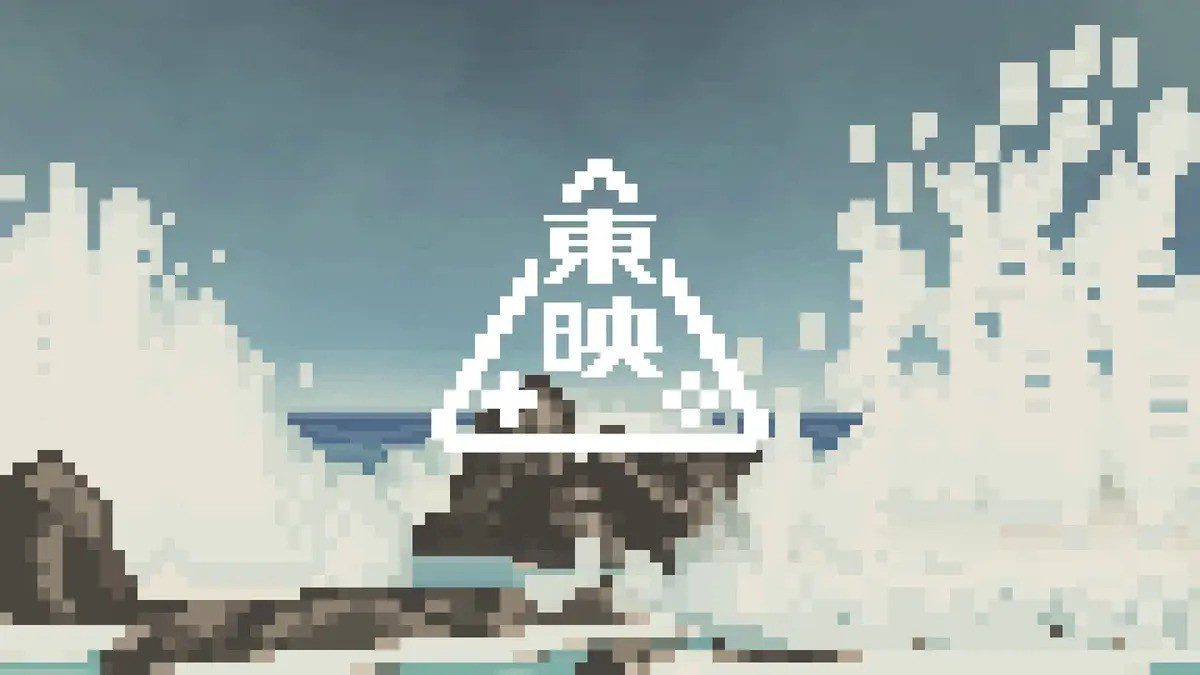
The timing also aligns with Toei’s 75th anniversary, a symbolic moment to redefine its future. The company even unveiled a new pixel‑art reinterpretation of its iconic “waves over a rough shore” logo for the Toei Games brand, signaling a blend of heritage and reinvention.
In truth, Toei’s entry into gaming feels less like a surprise and more like a long‑awaited correction. For decades, its characters, worlds, and storytelling traditions have shaped global pop culture. Now, with Toei Games, the company is finally claiming full authorship over how its stories evolve in the medium that has become the center of modern entertainment.
The first original title from Toei Games will be revealed on April 24, 2026, marking the beginning of a new era—one that many would argue should have begun years ago.
