
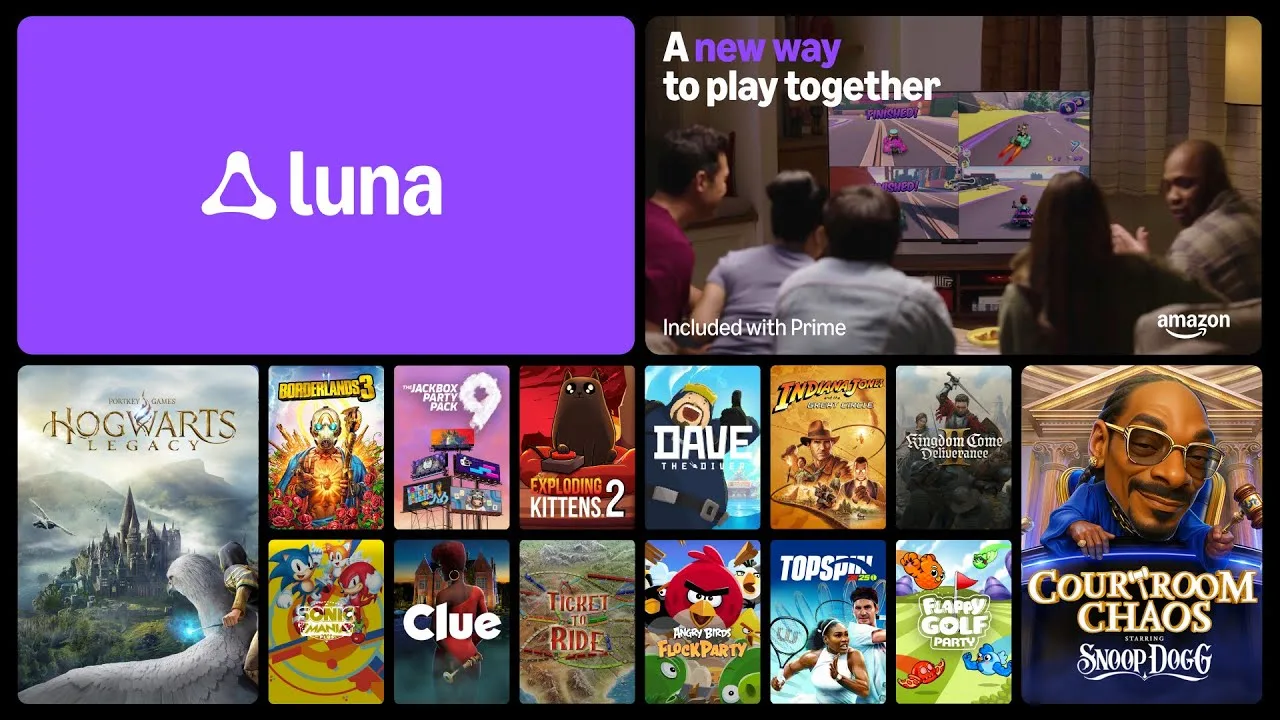
For years, cloud gaming has lived in a strange limbo — always on the verge of becoming the next big shift in interactive entertainment, yet repeatedly undermined by broken promises, inconsistent performance, and corporate impatience. When Amazon Luna first appeared in 2020, it entered a battlefield littered with the remains of ambitious experiments. Google Stadia was already wobbling under the weight of its own hype. PlayStation Now had never fully convinced players that streaming could replace local hardware. Even NVIDIA’s GeForce Now, the most technically sound of the bunch, struggled with publishers pulling their libraries in and out like a revolving door.
Luna arrived with the confidence of a trillion‑dollar company behind it, but also with the burden of Amazon’s long history of launching flashy consumer products only to abandon them quietly. The pitch was simple: a cloud gaming service built on AWS, integrated with Twitch, and designed to be flexible through channel‑based subscriptions. It wasn’t trying to replace consoles; it wanted to be the “easy” alternative — a place where you could jump into a game instantly without downloads, patches, or hardware upgrades.
But the world didn’t bite.
The Rise and Stall of Amazon Luna
Luna’s early months were defined by cautious optimism. The tech worked. The controller was solid. The interface was clean. And Amazon’s partnership with Ubisoft, offering a dedicated “Ubisoft+ Channel,” gave the platform recognizable games from day one.
Yet Luna never found its identity.
Amazon marketed it as a modular service, but the channel system confused more people than it attracted. The library felt fragmented. The pricing felt experimental. And the platform lacked the one thing cloud gaming desperately needs to survive: a steady stream of content that makes people feel like they’re missing out if they’re not subscribed.
By 2022, Luna was still alive, but it wasn’t growing. Amazon quietly shut down its internal game development efforts. Twitch integration — once touted as a killer feature — became inconsistent. The service felt like it was waiting for a purpose.
Then Stadia died.
Google’s retreat from cloud gaming didn’t kill Luna; it validated its caution. Amazon didn’t overpromise. It didn’t try to replace consoles. It didn’t spend billions on exclusives. But it also didn’t innovate fast enough to fill the void Stadia left behind.
Luna became a service people forgot existed.
The Rebuild: Amazon’s New Strategy
The IGN report marks a turning point: Amazon Luna is now included with Prime Video at no extra cost. Not as a standalone gaming subscription. Not as a separate ecosystem. But as a feature inside one of the most widely used entertainment platforms on Earth.
This is Amazon’s new thesis: cloud gaming shouldn’t be sold as a premium product — it should be treated like a convenience.
Prime Video already offers movies, shows, live sports, and channels. Now it offers games too. No extra subscription. No new app. No friction.
Amazon’s messaging, as reported by IGN, is clear: they want to rebuild trust in cloud gaming by making it feel natural instead of experimental. They’re not asking players to believe in a future where everything is streamed. They’re simply adding games to a service people already use daily.
It’s a strategic pivot that acknowledges the failures of the past without pretending they didn’t happen.
Why Prime Video Changes Everything
Prime Video is one of Amazon’s most stable consumer products — a place where people already spend hours each week. By embedding Luna inside it, Amazon solves Luna’s biggest problem: visibility.
Suddenly, millions of Prime subscribers will see a “Play” button next to interactive titles. No downloads. No setup. Just instant access.
This is the opposite of Stadia’s approach. Google tried to build a new ecosystem from scratch. Amazon is slipping cloud gaming into an ecosystem that already has momentum.
It’s not about competing with Xbox Game Pass or PlayStation Plus. It’s about making cloud gaming feel like streaming a movie — a natural part of the entertainment flow.
The Trust Problem Amazon Wants to Fix
IGN’s reporting highlights a key phrase from Amazon: rebuilding trust.
Cloud gaming has a credibility issue. Players remember:
- Stadia shutting down and deleting purchases.
- Publishers pulling support from GeForce Now overnight.
- Input lag ruining competitive games.
- Services launching with fanfare and disappearing within two years.
Amazon knows Luna cannot survive another cycle of hype and abandonment. By attaching it to Prime Video, Amazon is signaling long‑term commitment. Prime isn’t going anywhere. Prime Video isn’t going anywhere. And if Luna is part of that bundle, Luna becomes harder to kill.
It’s a psychological shift: Luna is no longer a standalone experiment. It’s a feature of a subscription people already trust.
What Luna Has Become in 2026
Today, Luna is leaner, more focused, and more realistic. The library isn’t massive, but it’s curated. The tech is stable. The service is no longer trying to compete with consoles — it’s trying to complement them.
Amazon’s new goal isn’t to dominate cloud gaming. It’s to normalize it.
By making Luna frictionless, invisible, and included, Amazon is betting that cloud gaming’s future isn’t in selling a dream — it’s in removing barriers.
The Bigger Picture: Cloud Gaming’s Slow Resurrection
The industry is shifting again. Microsoft is integrating cloud streaming deeper into Game Pass. NVIDIA is thriving with PC gamers who want flexibility. Sony is experimenting with PS5 streaming. And now Amazon is embedding cloud gaming into mainstream entertainment.
The failures of the past weren’t technical — they were philosophical. Companies tried to replace consoles instead of enhancing them. Amazon’s new approach is refreshingly humble: cloud gaming should be a convenience, not a revolution.
Luna’s rebirth inside Prime Video is the most grounded cloud gaming strategy we’ve seen in years.
The Verdict: A Second Chance Earned, Not Given
Amazon Luna didn’t disappear — it evolved. It survived the collapse of Stadia, the stagnation of early cloud gaming, and Amazon’s own tendency to abandon consumer projects. Now it returns with a clearer purpose and a safer home.
Prime Video gives Luna what it always lacked: stability, visibility, and trust.
Cloud gaming may never replace consoles, but it doesn’t need to. It just needs to work, feel natural, and be there when players want it. Luna finally understands that.
And for the first time since 2020, Amazon’s cloud gaming service feels like it has a future worth paying attention to.
