
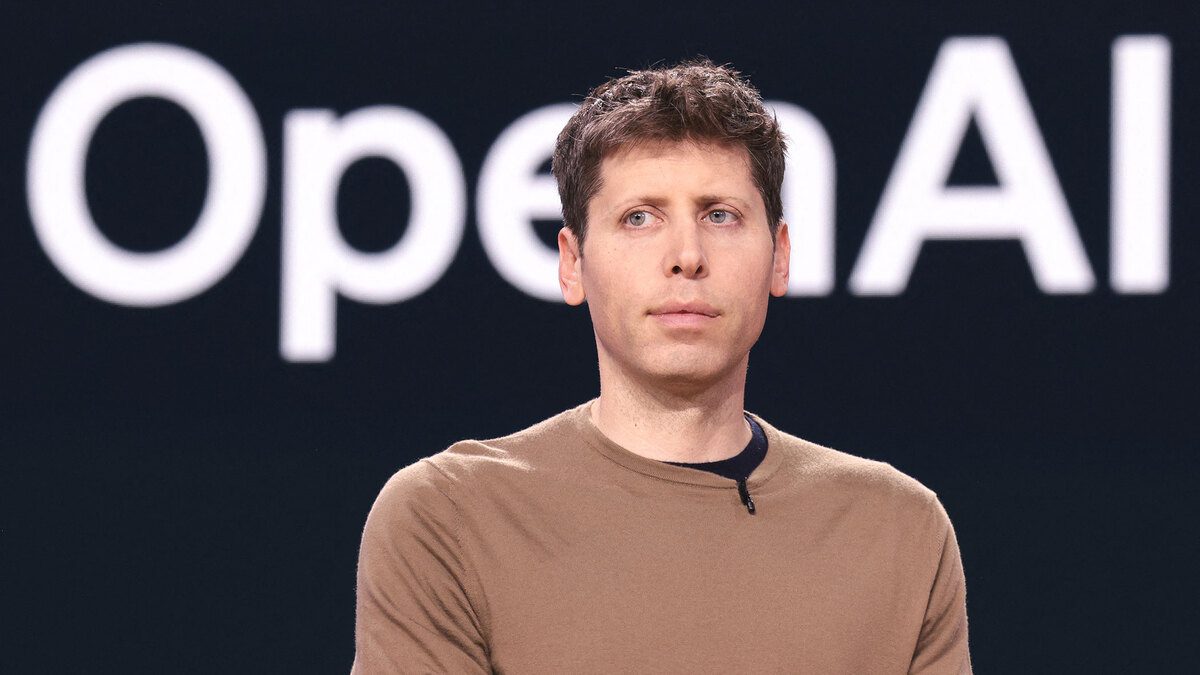
Sam Altman’s latest claim—that your PC’s RAM is “terrible” and should be reallocated to cloud data centers—lands with the kind of irony only the modern AI era could produce. He argues that consumer DRAM sits idle 95% of the time and therefore represents a global inefficiency. But this argument comes from the same executive whose company has aggressively consumed the world’s memory supply, helping create the very shortage he now blames on everyday users.
Sam Altman Says Your PC RAM Is “Terrible”—But the Irony Is He Helped Create the Crisis
Sam Altman has once again stepped into the tech spotlight with a statement that feels less like a warning and more like a punchline. In a recent conversation on the Cheeky Pint podcast, he argued that the RAM inside your personal computer is “terrible” for global efficiency because it sits idle most of the time. According to him, the world would be better off if that memory were reallocated to cloud data centers where AI workloads could use it continuously. It’s a bold claim, but the irony is impossible to ignore: the very shortage he’s pointing at is one his own industry helped create.
This isn’t coming from someone outside the storm. It’s coming from one of the architects of the modern AI boom—a boom that has consumed memory, compute, and energy at unprecedented scale. And now, after AI companies have absorbed massive portions of global DRAM production, the blame is being redirected toward everyday PC users, as if your gaming rig or workstation is somehow responsible for the supply chain strain.
The truth is far simpler: consumers didn’t cause this crisis. AI did.
The Cloud-Centric Vision That Conveniently Benefits the Cloud
Altman’s argument hinges on the idea that local inference—the act of running AI models on your own hardware—is inefficient because your RAM isn’t being used 24/7. He frames this as a global optimization problem, suggesting that memory should live in the cloud where utilization is higher. But this perspective conveniently aligns with the business model of companies like OpenAI, which depend on centralized infrastructure, subscription revenue, and continuous cloud usage.
If AI runs locally, people don’t need to rent it.
That’s the real tension. Local AI threatens the cloud-first economy. It gives users autonomy, privacy, and long-term cost control. Cloud AI, on the other hand, keeps users dependent on remote servers, usage fees, and corporate control. So when Altman says your RAM is “terrible,” it’s not just a technical critique—it’s a commercial preference dressed as global concern.
The Irony: AI Companies Bought the World’s RAM, Then Blamed You for Having Yours
The most striking part of Altman’s claim is how disconnected it is from the actual cause of the memory shortage. Over the past two years, AI companies have purchased staggering amounts of DRAM and HBM to fuel model training and inference. Manufacturers have shifted production away from consumer modules and toward enterprise-grade memory because that’s where the demand—and the money—is. Prices have surged. Availability has dropped. Even major suppliers have exited the consumer market entirely to focus on AI customers.
So when Altman suggests that your 32GB of RAM is part of the problem, it feels like a magician pointing at your hand while hiding the real trick behind his back. The crisis didn’t come from idle consumer PCs. It came from hyperscale AI infrastructure absorbing supply faster than the industry could produce it.
It’s like someone buying out the entire grocery store and then telling you that your pantry is the reason food is scarce.
The Cloud Tax: A Crisis Consumers Never Asked For
The ripple effects of AI’s appetite for memory have already reached everyday users. PC builders are paying more for RAM. Gamers are paying more for GPUs. Laptop prices have climbed. Even consoles and smartphones have felt the pressure. This “cloud tax” is the cost of competing with trillion-dollar companies for the same physical resources.
And now, after consumers have been priced out of their own hardware, the narrative is shifting toward telling them they shouldn’t have that hardware in the first place.
It’s a strange moment in tech history: the people who created the shortage are now telling you that you’re using memory inefficiently.
My Stance: AI Should Help You—Not Replace Your Entire Computing Life
I’ve always been clear about my position in 16 years of freelancing blogging (with few pauses here and there of course!). I am not anti‑AI. I’ve been vocal about AI’s value as a tool—an enhancer, a multiplier, a companion to human creativity and productivity. AI should make your day-to-day better, not consume it entirely. It should empower you, not replace your autonomy. It should complement your hardware, not dictate that everything you own must be surrendered to the cloud.
The idea that personal computing is somehow obsolete because AI exists is not innovation—it’s overreach. Your PC is not inefficient. Your RAM is not a global problem. And your desire to run AI locally is not a threat to progress. It’s a natural evolution of computing, one that gives users control instead of renting it back from corporations.
Why This Moment Matters for the Future of AI
The debate between local and cloud AI is becoming one of the defining battles of modern computing. On one side, you have companies pushing for centralized infrastructure, arguing that efficiency and scale justify the shift. On the other, you have consumers, developers, and hardware enthusiasts who believe in personal ownership, privacy, and independence.
Altman’s comments are not just a technical observation—they’re a glimpse into the ideological direction some AI leaders want the world to move toward. A world where your hardware is secondary, your compute is rented, and your digital life flows through a single centralized pipeline.
But that future is not inevitable. Local AI is advancing rapidly. Hardware is becoming more capable. Models are becoming more efficient. And users are becoming more aware of the trade-offs.
The irony of Altman’s claim is that it exposes the tension between AI’s growth and the consumer’s right to compute freely. It highlights the need for balance, transparency, and a recognition that personal computing is not a waste—it’s a foundation.
Conclusion: The Crisis Didn’t Start in Your PC. It Started in the Cloud.
Sam Altman’s statement about PC RAM being “terrible” might sound like a call for efficiency, but it’s really a reflection of the strain AI companies have placed on global memory supply. The crisis wasn’t caused by gamers, creators, or everyday users. It was caused by hyperscale AI infrastructure consuming resources at unprecedented levels.
And now, the people who helped create the shortage are suggesting that you’re the one misusing memory.
AI should be a tool—not the center of your universe, not the landlord of your hardware, and certainly not the justification for taking compute away from consumers. The future of AI should be balanced, accessible, and empowering—not centralized to the point where your own PC becomes a relic of a time when users still owned their technology.