
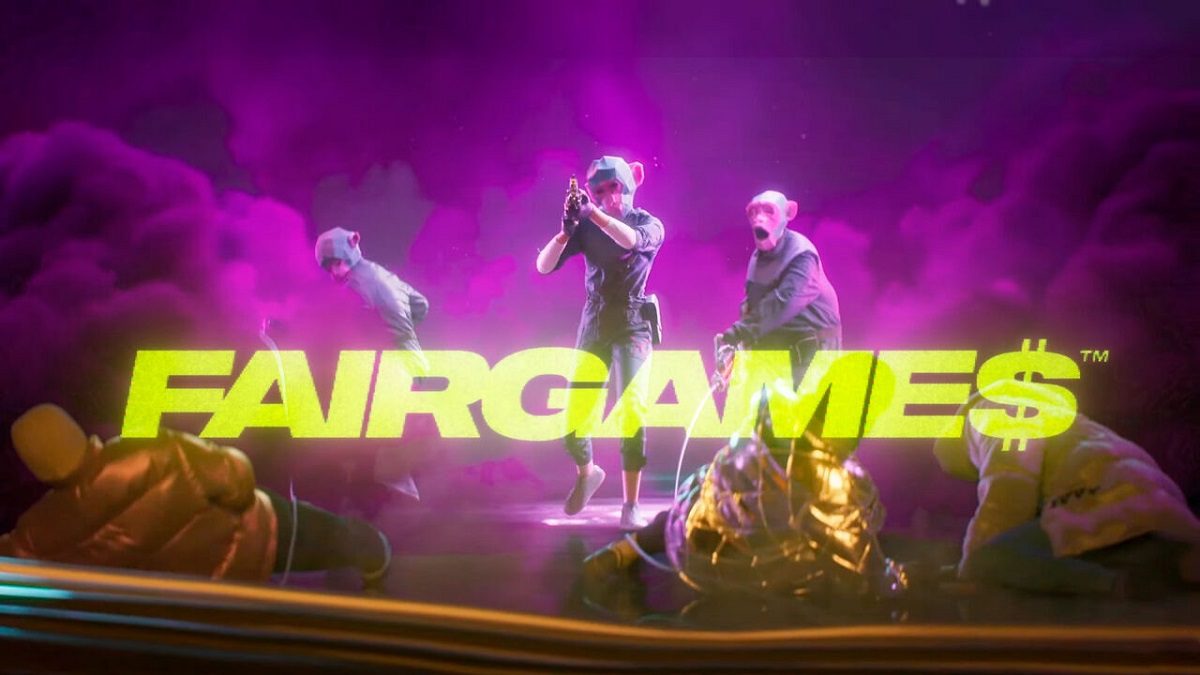
Sony’s ambitious push into the world of live-service gaming has reportedly suffered another major setback. According to a report from Bloomberg, PlayStation has canceled Fairgame$, the competitive multiplayer heist shooter in development at Haven Studios, following disappointing results from recent large-scale playtests. The decision marks the end of one of the company’s most highly publicized live-service projects and raises fresh questions about Sony’s long-term strategy in a market that has become increasingly difficult to conquer.
The reported cancellation comes more than three years after Fairgame$ was first unveiled during the PlayStation Showcase in 2023, where it was positioned as one of the cornerstones of Sony’s massive live-service expansion. At the time, PlayStation executives were openly discussing plans to diversify beyond traditional single-player exclusives and establish a stronger presence in recurring online experiences. Fairgame$ was supposed to be part of that future.
Instead, it appears the game has become another example of how difficult it is to create a successful multiplayer live-service title in an increasingly crowded and unforgiving market.
The Long Road to Fairgame$
The origins of Fairgame$ stretch back to one of PlayStation’s most notable acquisitions of the current console generation. Haven Studios was founded by industry veteran Jade Raymond, best known for her contributions to the early Assassin’s Creed franchise. The studio quickly attracted attention due to Raymond’s reputation and Sony’s growing desire to build live-service expertise internally.
In 2022, Sony officially acquired Haven Studios before the team had even released its first game. The acquisition demonstrated PlayStation’s confidence in the studio’s vision and its belief that Fairgame$ could become a major multiplayer franchise.
When the game was finally revealed in 2023, it stood apart from many traditional shooters. Instead of focusing purely on gunplay, Fairgame$ centered on high-stakes heists where players would infiltrate wealthy targets, steal valuable loot, and compete against opposing teams attempting to do the same. The premise blended competitive multiplayer action with a modern Robin Hood-inspired theme that promised something different within the PvP landscape.
Yet despite the initial excitement, updates on the project became increasingly scarce.
For years, PlayStation shared very little gameplay footage. Development proceeded largely behind closed doors while reports suggested multiple internal revisions and reworks. Industry observers grew concerned about the lack of visible progress, especially as other PlayStation live-service initiatives began encountering their own difficulties.
Playtests Reportedly Failed to Meet Expectations
According to Bloomberg information, the cancellation was ultimately triggered by feedback gathered during recent playtesting sessions. Internal communications reportedly indicated that while the game showed strong operational performance and live-service infrastructure readiness, player feedback and retention metrics failed to reach Sony’s targets.
Executives Sean Decker and John Doyle reportedly informed staff that despite positive signs regarding community engagement and technical execution, the data gathered from participants painted a mixed picture regarding long-term player interest. Combined with what Sony described as challenging conditions in the PvP shooter market, the company decided to halt development entirely.
The timing is particularly notable because alleged footage from a playtest surfaced online in September 2026. For many players, this leaked material represented their first substantial glimpse of gameplay. Instead of generating widespread enthusiasm, reactions were mixed, reinforcing concerns that the title lacked a unique hook capable of standing out among established competitors.
Another Blow to Sony’s Live-Service Ambitions
The reported cancellation of Fairgame$ adds another chapter to Sony’s increasingly turbulent live-service journey.
Only a few years ago, PlayStation leadership identified live-service games as a major growth opportunity capable of complementing blockbuster single-player franchises such as God of War, Spider-Man, Horizon, and The Last of Us. The strategy led to multiple acquisitions, expanded investments, and the creation of several new multiplayer projects.
However, results have been inconsistent.
While Helldivers 2 emerged as a remarkable success story and became one of PlayStation’s largest multiplayer hits in recent memory, other projects struggled to find similar momentum. The collapse of Concord became one of the industry’s most talked-about failures, eventually leading to the closure of Firewalk Studios. Additional multiplayer initiatives have either been delayed, significantly reworked, or canceled outright before reaching launch.
The challenges facing Fairgame$ appear to reflect a broader industry trend. Live-service games require enormous player populations, long-term engagement, constant content updates, and significant post-launch support. Even technically competent titles can fail if they cannot attract and retain a dedicated audience.
That reality has reshaped how publishers evaluate risk.
Rather than launching a product with questionable retention potential and hoping it improves later, many companies are increasingly canceling projects during development if internal metrics suggest long-term struggles.
Haven Studios Survives the Cancellation
One positive aspect of the report is that Haven Studios itself is not expected to become another casualty of the cancellation.
According to reports, Sony does not plan to shut down the studio or conduct layoffs as a direct result of ending Fairgame$. Instead, Haven will remain operational within the PlayStation Studios network and may contribute to future projects across Sony’s expanding portfolio.
This decision suggests that PlayStation still values the talent and technical capabilities assembled at Haven, even if its first major project failed to meet expectations.
For employees, it represents a far more favorable outcome than what occurred following other high-profile live-service disappointments elsewhere in the industry.
What Comes Next for PlayStation?
The cancellation of Fairgame$ does not signal the end of PlayStation’s live-service ambitions, but it does highlight the growing pressures surrounding the strategy.
Sony still has significant investments tied to multiplayer and ongoing online experiences, including Bungie’s Marathon, which continues to occupy an important position within the company’s broader plans. Yet every cancellation further emphasizes how difficult it is to build the next major live-service success.
For years, PlayStation dominated headlines through critically acclaimed single-player experiences that became defining moments of their respective console generations. The company’s effort to replicate that success in the live-service space has proven considerably more challenging.
If reports are accurate, Fairgame$ will now join the growing list of ambitious online projects that never reached players. More importantly, its cancellation serves as another reminder that in today’s gaming landscape, strong concepts and experienced developers are no longer enough. Retention, engagement, and market timing have become just as important as gameplay itself.
For Sony, the end of Fairgame$ may not just be the cancellation of a game. It could be another turning point in the ongoing reassessment of how much the future of PlayStation should depend on the increasingly volatile live-service market.