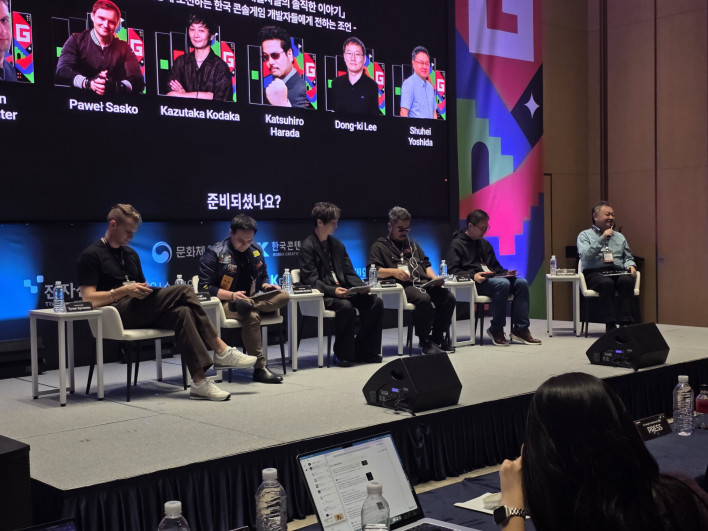
The conversation surrounding Microsoft’s Xbox Series S is far from over. Nearly six years after the launch of the Xbox Series X and Series S family, prominent developers continue to openly discuss the challenges of supporting two consoles that share the same ecosystem but offer very different hardware capabilities. The latest figure to weigh in is legendary Tekken producer and VS Studio CEO Katsuhiro Harada, whose blunt comments have once again brought the industry’s frustrations into the spotlight.
Speaking during a game development panel in South Korea, Harada jokingly remarked that he wished hardware like the Xbox Series S had never been released. His criticism was not aimed at Xbox players themselves, but rather at the development complexities created by Microsoft’s decision to ship two current-generation consoles with vastly different performance targets. Harada described the process as feeling like doing “extra work for a slightly weaker child,” a colorful analogy that immediately attracted attention across the gaming industry.
A Shared Sentiment
The remarks are significant because they echo concerns that have existed since 2020. When Microsoft unveiled its dual-console strategy, the company positioned the Xbox Series X as a premium flagship device while the Xbox Series S would serve as a more affordable entry point into the current generation. The strategy succeeded in lowering the cost of entry for consumers, but it also created an additional burden for developers who must ensure that every Xbox release functions properly on both systems.
According to Harada, the problem is not merely that the Series S is less powerful. Developers have always adapted games to weaker hardware. The real challenge comes from how close the Series S is to the Series X architecturally while simultaneously possessing considerably lower performance and memory resources. Harada argued that developers can approach platforms like Nintendo Switch 2 as entirely separate targets with their own expectations and limitations. The Xbox Series S, however, exists within the same ecosystem and customer expectations as the more powerful Series X, creating a difficult balancing act during development.
His criticism was echoed, albeit more diplomatically, by CD Projekt Red Associate Game Director Paweł Sasko during the same discussion. Sasko acknowledged that the Series S continuously presents optimization challenges and forces engineering teams to write cleaner and more efficient code. While he highlighted some benefits that emerge from those optimization efforts, he also agreed that Harada’s comments contained substantial truth regarding the realities developers face.
The exchange is particularly noteworthy because CD Projekt Red has firsthand experience grappling with Xbox Series S limitations. Since the release of Cyberpunk 2077 and its subsequent updates, the studio has become one of the industry’s leading examples of large-scale technical optimization. Ensuring consistent performance across the PlayStation 5, Xbox Series X, Xbox Series S, and PC configurations has required a massive engineering effort. Harada even jokingly suggested that Sasko’s carefully worded response was simply a polite way of saying the Series S creates headaches for developers.
An Unfortunate “Normal” Thing
The controversy surrounding the Xbox Series S is hardly new. Since the beginning of the current console generation, multiple developers have publicly discussed the extra work required to support the lower-end machine. The most famous example arrived during the development of Baldur’s Gate 3. Larian Studios repeatedly encountered issues implementing split-screen cooperative gameplay on the Series S. The challenge became significant enough that Microsoft eventually granted an exception, allowing the game to launch on Xbox platforms without feature parity in that specific area.
Another frequently cited example has been Black Myth: Wukong. Although developer Game Science never framed its Xbox delay exclusively as a Series S issue, widespread industry speculation linked optimization challenges to Microsoft’s hardware requirements. Likewise, numerous developers have privately and publicly acknowledged that memory limitations on the Series S often become the most difficult obstacle when bringing ambitious games to the Xbox ecosystem.
Memory has consistently emerged as the central concern. While CPU architecture remains largely comparable across the Xbox family, the Series S operates with substantially less available memory than the Series X. Modern game development increasingly depends on large texture pools, complex world streaming systems, advanced lighting solutions, and detailed environmental assets. When memory budgets become restricted, developers often must create additional asset pipelines, reduce texture quality, decrease environmental density, or implement special optimization techniques that are unnecessary on stronger hardware.
This is where Harada’s criticism resonates with many development teams. Every hour spent optimizing exclusively for Series S compatibility is time that could otherwise be invested in new features, visual improvements, or additional polish. Studios are effectively maintaining two current-generation performance profiles for a single platform ecosystem.
The Plan Did Sounded Consumer-Friendly At Paper
From Microsoft’s perspective, however, the Series S represents one of the company’s most important strategic successes. The console has consistently offered a lower-cost route into Game Pass, digital purchases, and the broader Xbox ecosystem. Harada himself acknowledged another reason developers cannot ignore the platform: in major markets such as the United States, Series S owners represent a significant portion of the Xbox audience. Because of that large install base, studios cannot simply deprioritize the hardware even when optimization becomes difficult.
That reality creates another source of frustration. According to Harada, players often direct criticism toward developers when graphical compromises appear on Series S versions. Consumers may question reduced texture quality, visual effects, or performance trade-offs without fully understanding the technical constraints behind those decisions. As a result, studios find themselves carrying responsibility for compromises that ultimately originate from hardware limitations.
The debate also highlights a larger industry trend. As development costs continue climbing and modern game engines become increasingly demanding, platform fragmentation remains a serious challenge. Studios are now expected to support PlayStation 5, PlayStation 5 Pro, Xbox Series X, Xbox Series S, Windows PC configurations ranging from entry-level hardware to enthusiast systems, cloud platforms, and frequently Nintendo hardware as well. Each additional target platform increases testing requirements, optimization workloads, and quality assurance complexity.
Yet despite the criticism, the Xbox Series S has undeniably achieved one of Microsoft’s core objectives: making current-generation gaming more accessible. Millions of players have entered the Xbox ecosystem through the cheaper machine, and many developers acknowledge that optimization work often produces improvements that benefit every version of a game. Sasko himself suggested that aggressively optimizing for lower-spec hardware can lead to better overall performance across platforms.
Harada’s comments nevertheless serve as a reminder that the discussion never truly disappeared. The arrival of increasingly ambitious games, larger open worlds, advanced rendering technologies, and next-generation development expectations continues to expose the performance gap between Microsoft’s two consoles. What began as a conversation before the Series S launch has evolved into a recurring topic whenever developers speak candidly about modern game production.
As the industry slowly begins looking toward whatever comes after the Xbox Series X|S generation, Microsoft’s future hardware strategy is likely to face renewed scrutiny. If the company once again pursues a dual-performance model, developers may continue asking whether the lower-cost option’s market advantages outweigh the engineering costs imposed on studios.
For now, Harada’s remarks have merely said out loud what many developers have quietly discussed for years: supporting Xbox Series S remains one of the most controversial technical requirements in modern console development, and the debate shows no signs of ending anytime soon.