
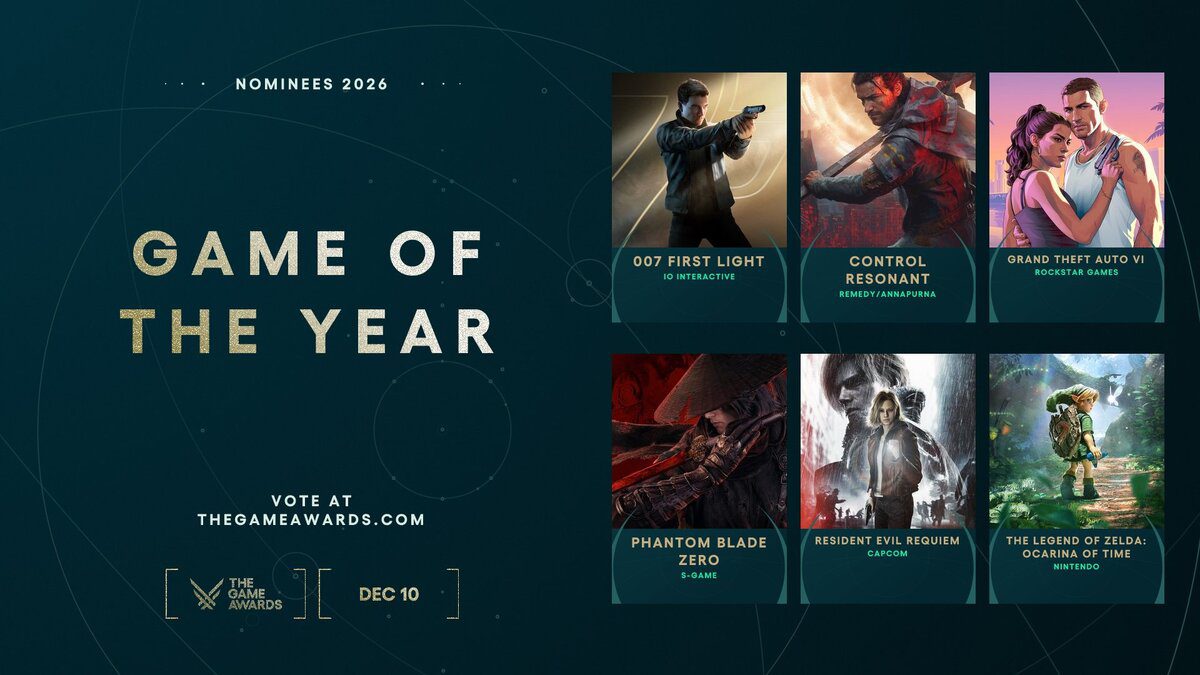
The Game Awards 2026 nominations should have been a celebration of the year’s best games. Instead, they have reignited an uncomfortable debate about credibility, industry favoritism, and whether gaming’s biggest awards show has become increasingly willing to reward anticipation over actual achievement.
When the nominees were revealed, one name immediately dominated the conversation: Grand Theft Auto VI.
Rockstar Games’ long-awaited blockbuster secured eight nominations, including the coveted Game of the Year category, making it one of the most recognized titles at this year’s event. The problem? Most consumers had not even played it yet. The game’s release arrived after nominations were announced, meaning one of the largest award contenders entered the race before the gaming public had a realistic opportunity to judge it for themselves.
For many fans, that is not merely controversial.
It is a credibility crisis.
The GTA VI Nominations Controversy Explained
According to the official nominations, Grand Theft Auto VI earned recognition across some of the most prestigious categories, including Game of the Year, Best Game Direction, Best Narrative, Best Art Direction, Best Score and Music, Best Audio Design, and Best Performance.
Meanwhile, the Game of the Year category also features:
- 007 First Light
- Control Resonant
- Phantom Blade Zero
- Resident Evil Requiem
- The Legend of Zelda: Ocarina of Time Remake
All of those games had months of public scrutiny, critical analysis, player feedback, technical breakdowns, accessibility reviews, speedrunning evaluations, and countless hours of gameplay available to audiences worldwide.
GTA VI did not.
Yet it found itself standing shoulder-to-shoulder with titles that had already proven their worth in the marketplace.
Yes, media outlets may have received review copies. Yes, the nomination process technically follows The Game Awards’ eligibility rules. But rules and legitimacy are not always the same thing.
Awards derive their value from public trust.
The moment audiences begin believing a nominee was selected because of reputation rather than demonstrated excellence, the awards themselves lose prestige.
The Dangerous Message Being Sent
The central question is not whether GTA VI deserves awards.
The central question is whether anyone could reasonably determine that before launch.
By nominating Rockstar’s game before consumers broadly experienced it, The Game Awards unintentionally sent a troubling message to publishers.
The message is simple:
Massive anticipation can be just as powerful as actual player reception.
That creates a dangerous precedent.
If publishers determine that hype alone can secure nominations, future award campaigns may become less about delivering exceptional products and more about controlling the narrative surrounding them.
Every award show must decide what it values most.
Games.
Or marketing.
The Game Awards increasingly appears caught between those two priorities.
This Is Not the First Time The Game Awards Has Faced Credibility Questions
Defenders often portray criticism of The Game Awards as outrage generated by disappointed fans, but the truth is that the event has faced scrutiny for years.
The GTA VI situation simply happens to be the latest example.
The Geoff Keighley Dilemma
One recurring criticism concerns the show’s dual identity.
The Game Awards presents itself as gaming’s most prestigious awards ceremony while simultaneously functioning as one of the industry’s largest marketing showcases.
World premieres, surprise announcements, celebrity appearances, publisher partnerships, sponsorships, and advertising frequently receive as much attention as the awards themselves.
In some years, winners have received less stage time than major game reveals.
While there is nothing inherently wrong with announcements, critics have long argued that the balance often favors commercial spectacle over celebrating achievement.
When viewers remember trailers more than award recipients, legitimate questions emerge regarding the show’s priorities.
The Nomination Process Remains Largely Opaque
Another common criticism involves transparency.
The Game Awards states that nominees are selected by a global jury of media outlets and voting contributors, while final winners are determined primarily through jury voting with a smaller percentage assigned to public voting.
However, ordinary viewers rarely gain meaningful insight into:
- How individual votes are weighted.
- How conflicts of interest are handled.
- How review access affects decision making.
- How games released near deadlines receive equal evaluation.
The GTA VI controversy highlights this issue perfectly.
The public is essentially being asked to trust a process they cannot fully see.
That becomes increasingly difficult when a game receives Game of the Year recognition before the wider audience can evaluate it.
Release Timing Has Become a Competitive Advantage
The awards calendar itself has become a source of controversy.
Historically, late-year releases often find themselves in awkward situations.
Some games barely make eligibility windows.
Others miss them entirely.
Now, however, GTA VI may represent the opposite extreme.
Rather than being penalized by timing, a high-profile title appears to have benefited from a release date close enough to the deadline to maximize hype while minimizing prolonged public scrutiny.
Whether intentional or not, the optics are terrible.
If anticipation becomes a competitive advantage, the nomination process risks rewarding cultural momentum rather than measurable achievement.
The Industry’s Biggest Name Is Not Always the Best Game
Perhaps the most uncomfortable reality surrounding the GTA VI nominations is that Rockstar’s reputation undeniably matters.
The company has earned enormous goodwill from decades of critically acclaimed releases.
Grand Theft Auto III changed open-world game design.
Grand Theft Auto IV pushed narrative ambition.
Grand Theft Auto V became one of the most successful entertainment products ever created.
Red Dead Redemption 2 remains widely regarded as a benchmark for interactive storytelling.
But prestige should not grant automatic awards consideration.
Awards are supposed to evaluate individual accomplishments, not lifetime achievement.
If industry reputation becomes a deciding factor, smaller studios enter every race at a disadvantage before voting even begins.
That undermines the purpose of having awards in the first place.
An Incredible Gaming Year Deserves Better
Lost amid the controversy is the reality that 2026 has been packed with impressive releases.
Titles like Resident Evil Requiem, Control Resonant, Phantom Blade Zero, and 007 First Light earned their place through public reception, critical acclaim, and months of discussion within gaming communities.
These games should be the focus of the conversation.
Instead, the spotlight has shifted to whether the nomination system itself can be trusted.
That is not a victory for The Game Awards.
It is a warning sign.
Final Thoughts: The Game Awards Must Choose Between Prestige and Hype
Grand Theft Auto VI may very well become one of the greatest games ever made.
It may deserve every nomination it received.
It may even win Game of the Year.
None of those possibilities are the point.
The issue is perception.
The issue is credibility.
The issue is whether gaming’s largest awards ceremony wants to be remembered as an impartial recognition of excellence or as an event increasingly influenced by marketing momentum, publisher prestige, and cultural hype.
The Game Awards has spent more than a decade positioning itself as the definitive authority on gaming achievement. Yet every time a nomination decision appears driven by anticipation rather than proven results, that authority weakens.
In 2026, the biggest controversy is not whether Grand Theft Auto VI is worthy of Game of the Year.
It is whether The Game Awards was willing to award Game of the Year status before the industry had a fair opportunity to find out.