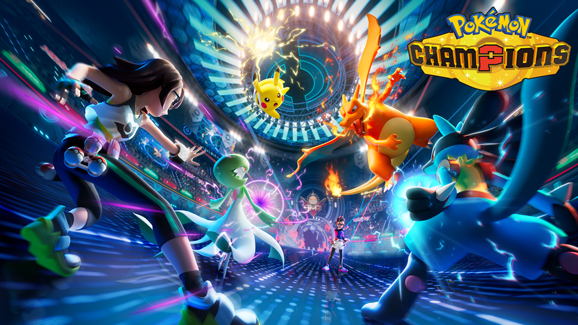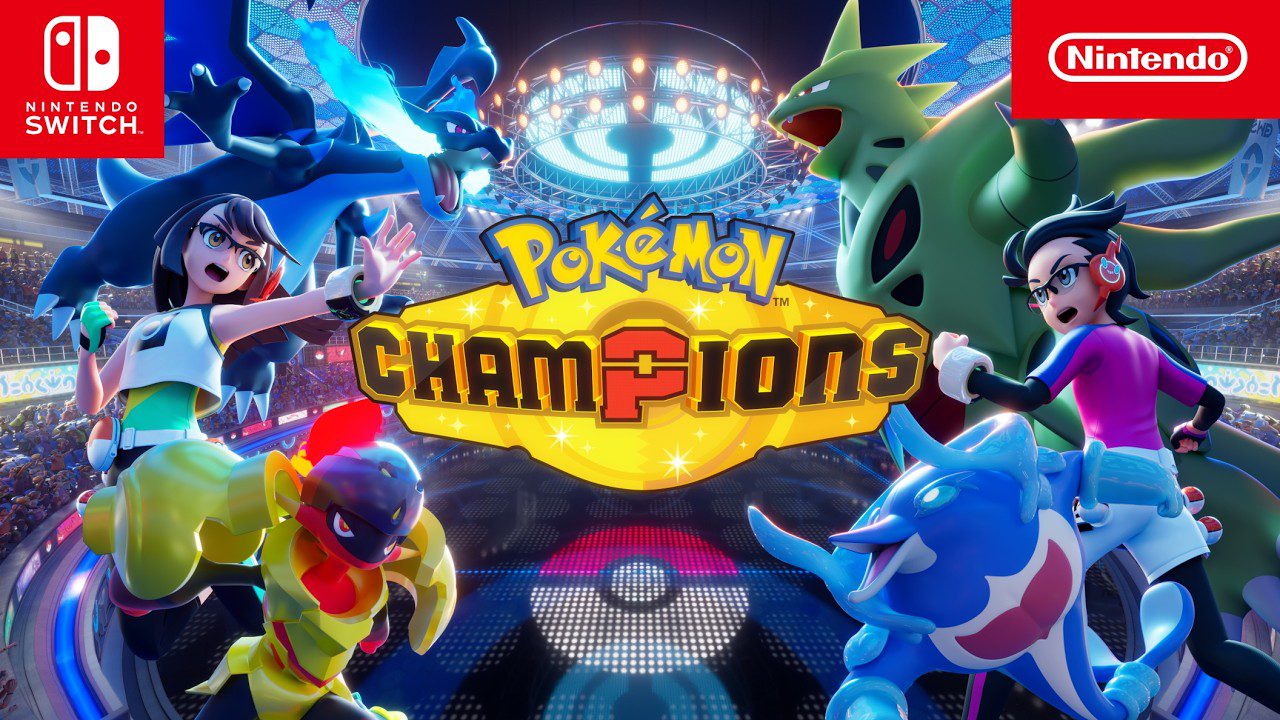
For years, fans have speculated about when The Pokémon Company would finally attempt a unified competitive platform—one that pulls together decades of creatures, mechanics, and player history into a single, evolving battleground. That vision is now taking shape with Pokémon Champions, a title that has rapidly shifted from rumor to reality thanks to a wave of new announcements that reveal not only when the game arrives, but how it plans to sustain itself in the long term.
We Got A Date!
During the Pokémon Day showcase, the company confirmed that Pokémon Champions launches April 8, 2026, arriving simultaneously on Nintendo Switch and the upcoming Switch 2, with a mobile version planned for later in the year. The announcement immediately reignited discussion about what this game represents: a competitive hub where players bring forward the Pokémon they’ve collected across generations through Pokémon Home, finally battling on equal footing in a modernized, cross‑platform arena.
The developers have already begun outlining what players can expect on day one. A Starter Pack bundle will be available at launch, offering expanded Pokémon storage, an additional battle theme, and other early‑game perks. The Switch 2 version will also receive a visual enhancement update, signaling that Champions is being positioned as a long‑term platform rather than a one‑off release.
But the most intriguing reveal so far is the introduction of three new Mega Evolutions—Mega Meganium, Mega Emboar, and Mega Feraligatr—each equipped with abilities that could reshape early competitive metas. Mega Meganium’s Mega Sol allows it to act as if harsh sunlight is always active, Mega Emboar gains Mold Breaker, and Mega Feraligatr’s Dragonize converts Normal‑type moves into Dragon‑type attacks with a power boost. These aren’t just nostalgic callbacks; they’re deliberate attempts to diversify strategies from day one.
As excitement builds, The Pokémon Company has also begun revealing how the game will be monetized—starting with Japan. According to early pricing details, the seasonal Battle Pass will cost 1400 Yen, roughly nine U.S. dollars, while the Starter Pack—which includes Training Tickets, Teammate Tickets, additional storage, and music from Pokémon Let’s Go—will be priced at 980 Yen, or about six dollars. A monthly membership will run 700 Yen, with a discounted annual option at 7000 Yen. These prices are approximations for now, as official Western pricing has not yet been confirmed.
The Battle Pass itself is expected to include Mega Stones, cosmetic items, icons, and other rewards tied to seasonal progression. Players will earn points through Ranked Battle performance, reinforcing the game’s competitive identity. More details are expected as launch approaches.
What remains most compelling is how these announcements set expectations for markets outside Japan. Historically, Pokémon’s monetization strategies have been conservative in the West, often adjusting pricing or reward structures to align with U.S. and European spending habits. If the Japanese pricing holds proportionally, Champions may enter Western markets with a more affordable Battle Pass than many live‑service competitors—something that could help the game gain traction quickly, especially among returning players who haven’t engaged deeply with competitive Pokémon in years.
There’s also the question of how Champions will position itself alongside the mainline series. By allowing players to import Pokémon from past titles and by introducing new Mega Evolutions exclusive to this platform, The Pokémon Company appears to be crafting a hybrid experience: part celebration of the franchise’s history, part competitive ecosystem, and part experimental playground for future mechanics. For Western audiences—particularly those who grew up with the franchise but drifted away—Champions may serve as a re‑entry point that feels both familiar and modern.
As April approaches, anticipation continues to build. Pokémon Champions is shaping up not just as another spin‑off, but as a foundational pillar for the franchise’s future. Whether it becomes the definitive competitive Pokémon experience will depend on how well it balances accessibility, depth, and monetization across global markets. But for now, the message is clear: a new era of Pokémon battles is about to begin, and the world is watching.