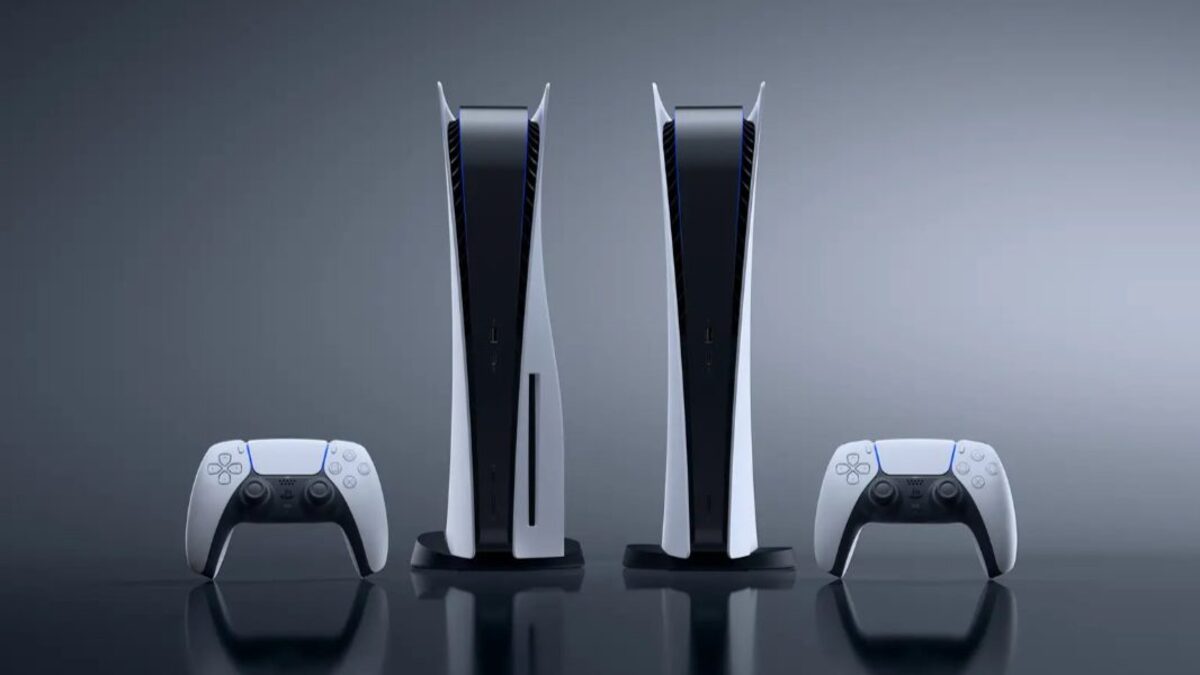
When Sony confirmed that the PlayStation 5, PlayStation 5 Digital Edition, PS5 Pro, and PlayStation Portal would all see global price increases effective April 2, 2026, the announcement landed with a weight that felt bigger than the numbers themselves. It wasn’t just a corporate adjustment to “continued pressures in the global economic landscape,” as Sony’s Isabelle Tomatis explained. It was the culmination of a slow, visible shift that has defined this console generation: the moment when gaming hardware stopped getting cheaper as it aged—and instead became a luxury product in the second half of its life cycle.
For decades, the rhythm of console generations was predictable. Hardware launched expensive, then gradually slid downward as manufacturing improved, components became cheaper, and companies chased a broader audience. By year five, consoles were supposed to be more accessible, not less. But the 2020s broke that tradition. The PS5 generation—shaped by a pandemic, supply chain shocks, inflationary waves, and a global race for cutting‑edge silicon—became the first where the midpoint brought not discounts, but price hikes.
Sony’s new pricing makes that shift unmistakable. In the U.S., the standard PS5 rises to $649.99, the Digital Edition to $599.99, and the PS5 Pro—already positioned as a premium enthusiast device—climbs to $899.99. Even the PlayStation Portal, a device originally marketed as an affordable remote‑play companion, now sits at $249.99.
These aren’t symbolic adjustments. They’re structural.
How We Got Here: A Generation Built on Scarcity
The seeds were planted before the PS5 even launched. The 2020–2022 semiconductor shortage reshaped the economics of hardware production. What used to be a temporary inconvenience became a long-term recalibration of how expensive it is to build advanced chips. Sony, Microsoft, and even Nintendo spent the early years of the generation fighting for allocation, not market share. Manufacturing costs didn’t fall—they rose.
By the time supply normalized, inflation had already rewritten the cost of logistics, materials, and labor. The industry quietly accepted a new baseline: the era of cheap, subsidized hardware was over.
Sony’s first signal came in 2022, when it raised PS5 prices in most regions outside the U.S.—a move that would have been unthinkable in previous generations. The company framed it as a response to global economic conditions, but it also revealed something deeper: console makers were no longer willing to absorb losses in hopes of long-term software revenue. The old razor‑and‑blades model was cracking.
The PS5 Pro’s arrival in 2024 reinforced the trend. Instead of a mid‑generation refresh designed to replace the base model at a similar price, it launched as a premium tier—more powerful, more expensive, and unapologetically aimed at enthusiasts. It was a preview of today’s reality: hardware stratification, not democratization.
The Second Half of the Generation: When Prices Went Up Instead of Down
Historically, year five of a console’s life was the sweet spot. Developers mastered the hardware, blockbuster libraries matured, and price cuts invited millions of new players. But in 2026, the opposite is happening. Sony’s price increases arrive at a moment when the PS5 ecosystem is at its strongest—yet also its most expensive.
This inversion reflects a broader shift in gaming’s economic structure. Hardware is no longer the gateway to a mass market; it’s becoming a premium platform for a global audience that has shown it will pay more for performance, convenience, and brand loyalty. Subscription services, digital storefronts, and live‑service ecosystems have changed the revenue calculus. The console itself is no longer the loss leader—it’s part of the profit center.
Sony’s messaging acknowledges this reality without explicitly naming it. The company emphasizes its commitment to “innovative, high‑quality gaming experiences,” a phrase that now carries financial weight. Delivering those experiences requires hardware that is more expensive to produce, more complex to cool, and more demanding in terms of silicon and materials.
The PS5 Pro, in particular, embodies this shift. Its advanced GPU architecture and AI‑driven upscaling technologies rely on components that simply don’t follow the old cost‑reduction curve. As manufacturing nodes shrink and R&D costs balloon, the idea that consoles naturally get cheaper over time has become outdated.
A New Normal for the Industry?
Sony’s decision will ripple across the industry. Microsoft, which has already experimented with higher‑priced hardware tiers and premium subscription bundles, now faces a landscape where mid‑generation price hikes are no longer taboo. Nintendo, preparing its next‑generation hardware, must navigate a world where consumers are acclimating to higher baseline prices.
For players, the shift is bittersweet. On one hand, the PS5 ecosystem has never been stronger. The hardware is mature, the software lineup is robust, and the Pro model offers performance once reserved for high‑end PCs. On the other hand, the barrier to entry is rising at a time when economic pressures are already squeezing households worldwide.
This generation will be remembered not just for its games, but for its economics. It marks the moment when the console market stopped behaving like the past and started reflecting the realities of a global tech industry under strain. The PS5’s price increase isn’t an anomaly—it’s a milestone.
The Road Ahead
As April 2 approaches, the conversation around PlayStation’s price changes will likely intensify. Some will see it as a necessary adjustment in a turbulent global economy. Others will view it as a turning point where gaming’s accessibility began to erode. Both perspectives carry truth.
What’s undeniable is that the PS5 generation has rewritten the rules. The second half of this cycle isn’t defined by discounts, bundles, or mass‑market expansion. It’s defined by recalibration—of expectations, of economics, and of what it means to participate in the modern gaming ecosystem.
And in that sense, Sony’s announcement isn’t just about new numbers on a price tag. It’s a statement about where gaming is headed: into a future where the hardware powering our experiences is more advanced, more ambitious, and—perhaps inevitably—more expensive.