The United States Patent and Trademark Office has quietly detonated a legal charge beneath one of Nintendo’s most controversial recent patents — and the timing could not be more consequential. In a rare move, USPTO director John A. Squires personally ordered a re‑examination of Nintendo’s 2023 patent covering the act of summoning a secondary character to fight on a player’s behalf, a mechanic most famously associated with Pokémon but present across decades of RPGs and action titles. After months of review, the USPTO has now rejected all 26 claims, effectively revoking the patent unless Nintendo can salvage it through appeal.
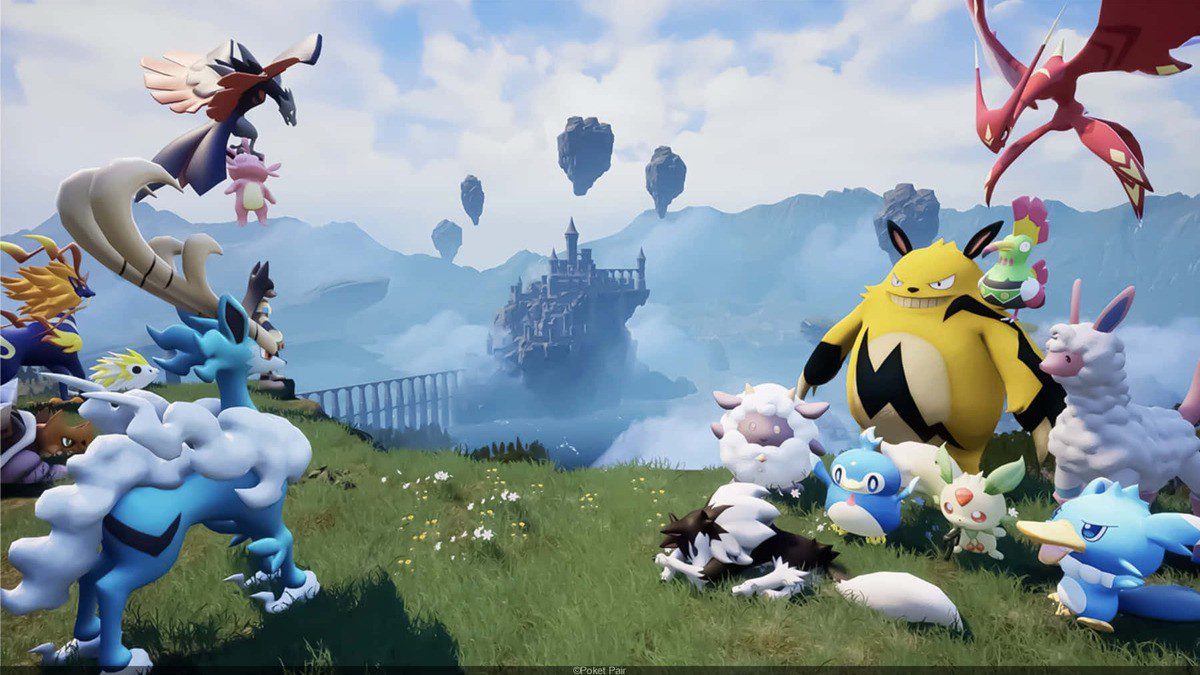
The decision lands in the middle of an already‑charged legal climate, with Nintendo aggressively pursuing claims against Pocketpair’s Palworld — a game whose creature designs and combat systems have drawn intense scrutiny from fans, lawyers, and industry observers. While the revocation does not directly decide the Palworld case, it reshapes the battlefield in ways that could meaningfully influence how Nintendo frames its arguments going forward.
A Patent Built on Familiar Ground
Nintendo’s patent, granted in September 2023, attempted to formalize a mechanic so foundational to Pokémon that it has become part of gaming’s cultural DNA: the ability to summon a creature, ally, or sub‑character who can fight either automatically or under direct player control. The patent’s language was broad enough to theoretically apply to a wide range of games — from Persona to Pikmin — and that breadth is precisely what triggered alarm across the industry.
Squires’ intervention was extraordinary. USPTO directors rarely step in without a competing company filing a challenge, and this was the first such action since 2012. His order cited “substantial new questions of patentability,” pointing to earlier patents from Konami (Yabe, 2002), Bandai Namco (Shimomoto, 2020), and even Nintendo itself (Taura, 2020; Motokura, 2022). When combined, these prior works covered every functional element Nintendo was attempting to claim as novel.
The USPTO ultimately concluded that all 26 claims were invalid — not because summoning mechanics are unpatentable in theory, but because Nintendo’s specific claims were already anticipated by existing patents. The office emphasized that even one valid claim could have allowed Nintendo to pursue infringement cases, but with all claims rejected, the patent currently stands on no enforceable ground.
Nintendo now has two months to respond, request an extension, or appeal to the Federal Circuit.
Why This Matters Beyond Pokémon
The revocation does more than invalidate a single patent — it strikes at the heart of a legal strategy Nintendo has been sharpening for years. While trademark law forces companies to defend their marks or risk losing them, patents operate differently. Nintendo can choose when and where to enforce them, and historically it has done so selectively, targeting cases it believes threaten its core IP.
That nuance is important because the summoning patent was widely interpreted as a potential tool in future lawsuits, especially as games increasingly adopt companion‑based combat systems. The fear was not that Nintendo would sue every RPG developer, but that it would have a powerful new lever to pull when a game strayed too close to Pokémon’s territory.
Which brings us to Palworld.
The Palworld Connection: A Legal Front Now Missing a Key Weapon
Nintendo’s dispute with Pocketpair does not hinge on a single mechanic. The controversy around Palworld centers on alleged visual similarities between Pals and Pokémon, potential asset‑level overlap, and the broader question of whether the game crosses the line from inspiration into infringement. The summoning mechanic was never the core of the case — but it was a potential supporting pillar.
With the patent revoked, Nintendo loses a clean, mechanical argument that could have bolstered its position: that Palworld not only resembles Pokémon aesthetically but also uses a patented gameplay structure tied to creature summoning and combat delegation.
Even if Nintendo had chosen not to wield the patent directly, its existence strengthened the company’s legal posture. Now, that leverage is gone.
This does not mean Pocketpair is in the clear. Copyright and trademark claims operate independently of patents, and Nintendo’s strongest arguments have always been rooted in visual design, animation structure, and potential asset similarity. But the revocation narrows the scope of Nintendo’s legal arsenal and may force the company to rely more heavily on artistic and brand‑related claims — areas where courts tend to require higher thresholds of proof.
A Shift in Industry Precedent
The USPTO’s decision also sends a message to the broader gaming industry: gameplay mechanics, especially those with decades of precedent, cannot be easily fenced off through overly broad patents. Developers have long feared a future where common mechanics — lock‑on targeting, crafting systems, companion AI — become legal minefields. This ruling pushes back against that trend.
It also highlights a subtle irony: two of the patents used to invalidate Nintendo’s claims were Nintendo’s own earlier filings. In attempting to expand its patent portfolio, the company inadvertently strengthened the argument that its new patent lacked novelty.
What Happens Next
Nintendo’s next move will determine how far this story goes. If it appeals, the case could escalate into a multi‑year legal battle that clarifies how far gameplay patents can stretch in an era where genres constantly remix each other. If it lets the revocation stand, the industry will interpret that as a tacit acknowledgment that the mechanic was never meant to be aggressively enforced.
As for Palworld, the revocation does not resolve the lawsuit, but it changes the terrain. Pocketpair now faces a narrower set of potential claims, and Nintendo must rely more heavily on arguments tied to artistic expression and brand identity — areas where public perception and legal precedent are far less predictable.
What is clear is that this ruling has already reshaped the conversation. A patent once feared as a looming threat has been stripped down, and the legal storm surrounding Palworld now moves forward without one of Nintendo’s most controversial tools.