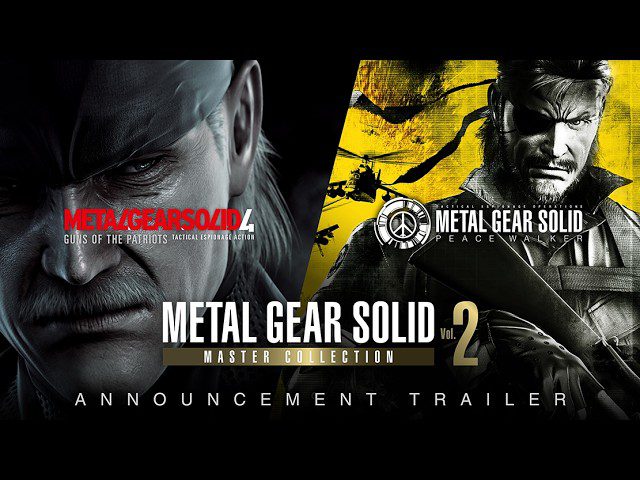
Konami’s announcement of Metal Gear Solid Master Collection Vol. 2, launching August 27, 2026, has sent a shockwave through the gaming community — not just because the long‑awaited bundle is finally real, but because it includes something many believed was nearly impossible:
Metal Gear Solid 4: Guns of the Patriots, rebuilt for modern platforms after spending its entire life trapped on the PlayStation 3.
This collection also includes Metal Gear Solid: Peace Walker and Metal Gear: Ghost Babel, plus screenplay books, archival materials, and a digital soundtrack.
Why MGS4’s Return Is So Surprising
For years, MGS4 was considered one of the most “un‑port‑able” games ever made. Its original development was deeply intertwined with the PS3’s notoriously complex Cell Broadband Engine, a hardware architecture so specialized that even Sony struggled to emulate it consistently. The game’s systems, cutscene streaming, and data management were famously tailored to that hardware.
This is why MGS4 never left the PS3 — not on PS4, not on PS5, not on PC.
Its absence became a running joke among fans and a symbol of the PS3’s technical isolation.
So when Konami revealed that MGS4 is not only returning but being redeveloped for PS5, Xbox Series X|S, Switch/ Switch 2, and PC, the reaction was a mix of disbelief and celebration.
This isn’t a simple upscale. It implies:
- A full re‑engineering effort to detach the game from PS3‑specific code paths
- New rendering and asset pipelines compatible with modern hardware
- A major investment in a title many assumed Konami would never touch again
It’s arguably the most ambitious preservation effort in the franchise’s history.
A Pattern Emerges: Konami’s Quiet Fix‑and‑Improve Strategy
The surprise becomes even more interesting when viewed alongside Konami’s recent behavior.
Master Collection Vol. 1 received a final update improving resolution across multiple titles, even though no gameplay changes were added.
This suggests a pattern:
Konami is willing to revisit older releases and apply meaningful technical patches — even late in the cycle.
Given that history, it’s plausible that:
- Vol. 2 may receive similar post‑launch refinements, especially for a complex title like MGS4
- Konami may be building a long‑term preservation pipeline for the entire Metal Gear catalog
- The company is testing the waters for future remasters or re‑releases, especially with the renewed interest sparked by the MGS3 remake
The fact that they tackled MGS4 — the hardest game to modernize — signals a level of commitment that fans haven’t seen from Konami in years.
What This Means for the Franchise
The return of MGS4 is more than nostalgia. It’s a symbolic moment:
- A once‑stranded classic is finally accessible again
- The Metal Gear timeline becomes playable on modern hardware in a more complete form
- Konami appears to be investing in long‑term franchise rehabilitation
With Peace Walker and Ghost Babel rounding out the package, Vol. 2 feels less like a simple compilation and more like a statement:
Metal Gear is back in motion.
By the way, you can check my past editorial in celebration of Metal Gear Solid V: The Phantom Pain 10th anniversary here!