
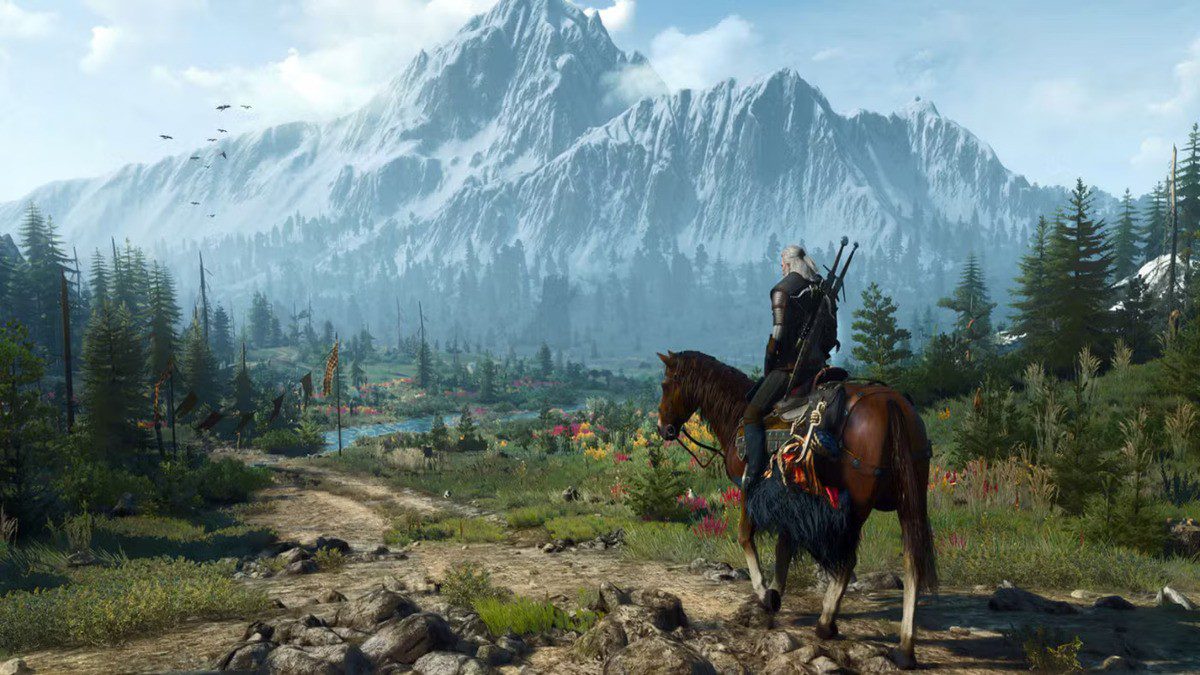
In the days leading up to Gamescom 2026, CD Projekt Red did something it rarely does with The Witcher franchise: it pulled back the curtain—just a little. In a carefully timed sequence of announcements and social posts, the studio framed the future of The Witcher around two pillars: a distant but defined target for The Witcher 4, and a very immediate return to The Witcher 3 in the form of Songs of the Past and a remastered update. Together, they form a calculated strategy to own the conversation around Gamescom without actually showing their next flagship RPG.
This wasn’t just marketing noise. It was CD Projekt Red capitalizing on anticipation, nostalgia, and trust at the exact moment the global spotlight turned toward Cologne.
A rare development update: fixing the horizon for The Witcher 4
The centerpiece of the pre‑Gamescom push was a video message from CD Projekt Red joint‑CEO Michał Nowakowski, posted on social media and amplified through outlets like VGC, GameSpot, IGN, Polygon, and others. In it, he finally attached a concrete—if still flexible—window to The Witcher 4: 2028.
For a studio that has been notably cautious about over‑promising since Cyberpunk 2077’s troubled launch, that alone is significant. But the way they framed it matters even more.
Nowakowski described The Witcher 4 as a “brand new saga, one with Ciri at the helm,” emphasizing a generational shift away from Geralt while reassuring fans that the core identity—dark fantasy, open‑world role‑playing—remains intact. He stressed that more than 500 developers are working on the game, calling it CDPR’s “biggest, boldest and most ambitious” project to date, with a huge open world, intense action‑focused gameplay, and a deep, impactful story.
Crucially, he didn’t pretend the wait would be easy. The now‑familiar phrase “let the team cook” surfaced again, a deliberate nod to the studio’s post‑Cyberpunk posture: no rushed timelines, no premature demos masquerading as finished product. The 2028 window was explicitly framed as a target, not a promise, acknowledging the possibility of delays while still giving fans something solid to hold onto.
This is where the timing becomes strategic. CDPR chose to drop this “rare development update” just days before Gamescom, while simultaneously confirming that The Witcher 4 would not be shown at the event. That combination—clarity about the future, honesty about the present—allowed them to control expectations before anyone walked onto the show floor.
Social media as stage: the invitation before the show
The official Witcher account on X (formerly Twitter) became the front door to this strategy. One of the posts shared Nowakowski’s video directly, framed as a personal invitation to fans, players, and the broader community to join CD Projekt Red at Gamescom and “hear about the future of The Witcher franchise.”
Even without the exact text of both posts, the pattern is clear from coverage: one message set expectations around The Witcher 4—no gameplay, no demo, but a 2028 target and a reaffirmation that the game is deep in production. Another teased what would be at Gamescom: The Witcher 3: Wild Hunt – Songs of the Past, a new expansion, and a remastered update, plus “a surprise or two” during CDPR’s livestreams throughout the week.
By doing this on social media first, CDPR ensured that the narrative wasn’t shaped by leaks, speculation, or half‑understood rumors. Fans didn’t have to guess whether The Witcher 4 would appear at Opening Night Live or on the show floor—they were told upfront. That clarity turned potential disappointment (“no Witcher 4 at Gamescom?”) into a different kind of hype: “okay, so what are they bringing?”
Songs of the Past: returning to Geralt to bridge the gap to Ciri
The answer, as Insider Gaming and other outlets detailed, was a surprising resurrection: The Witcher 3: Songs of the Past, a full expansion for a game that originally launched in 2015 and last received major DLC with Blood and Wine in 2016.
Songs of the Past isn’t a small nostalgia play. It’s positioned as a narrative bridge between The Witcher 3: Wild Hunt and The Witcher 4. Players return to the role of Geralt of Rivia, voiced again by Doug Cockle, in an all‑original expansion that “perfectly bridges the gap” between the old saga and the new Ciri‑led one.
At Gamescom’s Opening Night Live, CDPR debuted a lavish CG trailer for Songs of the Past, immediately followed by a playable build on one of the largest exhibits on the show floor. The expansion is described as a “game‑merging” experience, suggesting that it doesn’t just tack on a side story but actively weaves together threads that matter for the future of the franchise.
Alongside the expansion, CD Projekt announced The Witcher 3 Remastered—a massive overhaul of the original game, free for existing owners and scheduled to launch on September 29. That remaster gives both returning fans and new players a modernized entry point into Wild Hunt, just as Songs of the Past invites them to step back into Geralt’s boots one more time before the torch passes to Ciri.
Taken together, this is a clever bit of franchise choreography. The Witcher 4 is years away, but the emotional and narrative groundwork for it is being laid now, inside a game people already love.
Capitalizing before Gamescom: owning the Witcher conversation without showing Witcher 4
What makes this pre‑Gamescom maneuver so sharp is how CDPR balances absence with presence.
On the one hand, they explicitly remove The Witcher 4 from the Gamescom equation. No demo, no trailer, no tech slice pretending to be gameplay. That avoids the trap they fell into with Cyberpunk 2077, where early vertical slices created expectations the final game struggled to meet. It also sidesteps the risk of showing a game that’s still evolving under Unreal Engine 5 and inviting premature judgment.
On the other hand, they flood the event with Witcher content that is tangible, playable, and emotionally resonant:
- Songs of the Past is on the show floor, letting attendees physically experience new Witcher content.
- The Witcher 3 Remastered is announced as a free upgrade, rewarding loyalty and reigniting interest in a decade‑old masterpiece.
- Livestreams throughout Gamescom promise “a surprise or two,” keeping the community tuned in even beyond the main stage.
By revealing Songs of the Past “in full” right as Gamescom begins, CDPR ensures that every conversation about The Witcher at the show has something concrete to latch onto. Insider Gaming notes that the expansion had been rumored since mid‑2025, but only now is it fully unveiled, with a trailer, playable demo, and clear positioning as the bridge to The Witcher 4.
This is capitalization in the purest sense: using the gravitational pull of a major industry event to amplify announcements that technically could have dropped at any time, but gain far more cultural weight when they’re part of the Gamescom news cycle.
The long game: trilogy ambitions and trust repair
There’s another layer to this strategy that sits just beneath the surface. CD Projekt Red isn’t only talking about The Witcher 4—they’re talking about a new trilogy.
Multiple reports highlight the studio’s plan to release The Witcher 4, 5, and 6 within a six‑year window, potentially wrapping the entire new saga by 2034 if the schedule holds. That’s an ambitious cadence, especially in an era where AAA development timelines keep stretching longer. By anchoring the first game in 2028, CDPR is effectively sketching out the next decade of Witcher releases.
But ambition alone doesn’t sell this plan. What does is the combination of transparency and respect for the audience’s patience. The studio openly acknowledges that 2028 is “a bit of a wait,” and that fans would love to play sooner. It doesn’t pretend that the six‑year trilogy window is guaranteed; it frames it as a goal, not a contract.
Songs of the Past and The Witcher 3 Remastered then function as trust‑building moves. They say, in effect: we know you’ve been waiting; here’s something substantial, crafted with care, that honors the game you already love while genuinely mattering for the future. Co‑developing the expansion with Fool’s Theory—whose team includes veterans of The Witcher 3—reinforces that sense of continuity and craft.
In that light, the pre‑Gamescom announcements aren’t just about hype. They’re about re‑establishing CDPR as a studio that can plan long‑term, communicate honestly, and deliver meaningful content in the interim.
From tech demo to tangible roadmap
It’s also worth remembering that this isn’t the first time CDPR has spoken about The Witcher 4 since its reveal at The Game Awards 2024. In June 2025, the studio showed a tech demo built in Unreal Engine 5, representative of how The Witcher 4 might look on a base PS5—but not actually footage from the game itself. When some fans treated it as a first look at the game, CDPR quickly clarified that it was “a tech demo… but not The Witcher 4 itself,” emphasizing that it was about the underlying technology and systems rather than content.
That earlier moment now reads like a prelude. Back then, CDPR was saying: here’s the foundation we’re building on. Now, ahead of Gamescom 2026, they’re saying: here’s when we think that foundation will become a full game—and here’s how we’re going to carry you from Geralt’s story to Ciri’s.
The difference is that this time, the message is anchored in a broader ecosystem: a remaster, a new expansion, a trilogy roadmap, and a major trade show acting as the amplifier.
The Witcher future, staged in the past
In the end, CD Projekt Red’s pre‑Gamescom 2026 strategy is almost poetic: to talk about the future, they went back to the past.
They set a distant horizon for The Witcher 4, with Ciri leading a new saga in 2028. They revived The Witcher 3 with Songs of the Past, an expansion that returns players to Geralt while quietly steering them toward what comes next. They refreshed Wild Hunt with a remastered update, free for existing owners, ensuring that the game remains a living, playable classic rather than a museum piece.
And they did it all just before Gamescom, using social media and a rare development update to seize control of the Witcher narrative before the show even opened its doors.
For fans, the message is clear: you won’t see The Witcher 4 at Gamescom 2026—but you will feel its presence. In the songs of the past, in the remastered world of Wild Hunt, and in the promise that, this time, the wait will be worth it.