
In 1869, the Alaskan frontier was a promise wrapped in frostbite. A place where desperation and ambition collided under the howl of wolves and the crack of rifle fire. PayDirt Games’ Fatal Frontier 1869 resurrects that era with a clarity that feels less like historical fiction and more like a living, breathing gamble — one where every step into the wilderness is a negotiation between survival and the glittering lure of gold.
This is not a romanticized frontier. It is a cold, procedural, hex‑based expanse where the land itself is your first enemy. The game opens with a simple premise: survive long enough to buy a ticket out. That ticket — your lifeline back to civilization — is the only thing standing between triumph and total loss. And the game wastes no time teaching you that “waiting it out” is not an option. You must venture into forests, plains, deserts, and frozen biomes, each procedurally generated and each hiding threats that feel appropriately unfair for a world defined by chaos.
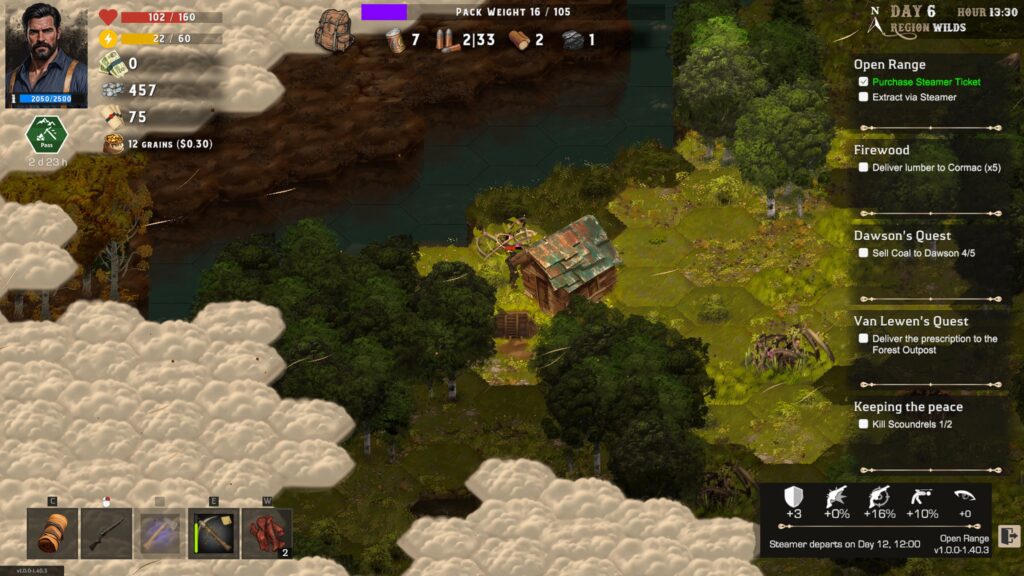
Movement across the hex grid happens in real time, a design choice that adds tension but occasionally betrays the player. You may click to retreat only to watch your character finish a committed step straight into danger — a bandit, a wolf, or something worse. Pathfinding isn’t always your friend, but in a strange way, that imperfection reinforces the frontier fantasy: the wilderness doesn’t care about your plans.
Combat is scrappy, desperate, and shaped by whatever equipment you manage to find or afford. Guns define your fighting style, but ammunition and gear are fleeting. Every encounter feels like a risk assessment. Every victory feels earned. Every mistake feels expensive.
And then there’s the economy — the beating heart of Fatal Frontier 1869. PayDirt Games has built a multi‑layered currency system that mirrors the instability of frontier life. You earn mission‑bound dollars that vanish once your run ends. You earn Greenbacks, a persistent currency that ties into the game’s long‑term progression. And then there’s the real hook: claims and gold that can translate into actual, real‑world payouts, a system that has already captured the attention of players who normally roll their eyes at microtransactions.
This real‑money mechanic is not a gimmick. It’s a psychological engine. It changes how you move, how you explore, how you fight. Suddenly, digging for gold isn’t just a gameplay loop — it’s a moment of genuine tension. The difference between a shallow dig and a deep strike can mean the difference between a wasted expedition and a payout that lands in your bank account the next day. Players have already shared stories of hitting $47 veins and watching the money arrive, turning skepticism into excitement.
But the game’s brilliance isn’t solely in its monetization. It’s in how that monetization reframes the frontier fantasy. Fatal Frontier 1869 asks a simple question: If the real‑money system disappeared, would the game still stand? The answer, surprisingly, is yes — though not without caveats. The survival loop is engaging, the exploration is tense, and the progression system has depth. But the real‑money mechanic undeniably elevates the stakes, transforming a solid roguelike into something more psychologically gripping.
The presentation leans into grit rather than spectacle. The UI is functional, sometimes stiff. The controls can feel stubborn. The AI occasionally behaves like it’s still learning the frontier alongside you. But none of these flaws break the experience. Instead, they contribute to the sense that you’re navigating a world that is indifferent, hostile, and barely held together — much like the real 1869 frontier.
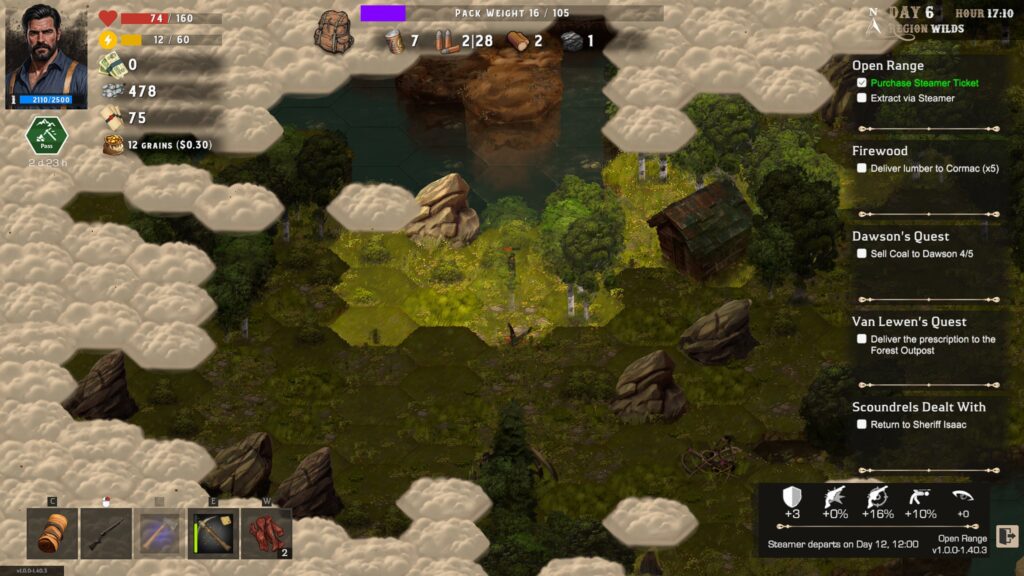
What truly sells Fatal Frontier 1869 is the community response. Players aren’t just enjoying the game; they’re invested in it. They’re sharing stories, celebrating payouts, laughing at their own missteps, and returning for more punishment. Some discovered sprinting hours into their playtime and felt like they had unlocked a new dimension of the game. Others bought claims, struck gold, and immediately planned their next expedition. The frontier is doing what it did historically: pulling people back with the promise of “just one more try.”
Fatal Frontier 1869 is not polished in the traditional AAA sense. It is raw, unpredictable, occasionally frustrating, and often thrilling. It is a frontier simulator that understands the psychology of risk better than most modern survival games. PayDirt Games has built something that feels genuinely new — a hybrid of roguelike survival, historical grit, and real‑world stakes that makes every decision matter.
In a gaming landscape crowded with safe bets and predictable loops, Fatal Frontier 1869 dares to be dangerous. And that danger is exactly what makes it worth playing.