Microsoft is making one of the most significant quality-of-life upgrades to the Xbox ecosystem in years. Rather than focusing solely on new games, hardware, or subscription benefits, the company is tackling something that millions of players interact with every day: the Xbox experience itself.
According to a new announcement from A Faster, Simpler Xbox Experience Is Coming to PC, Web and Cloud, Xbox is rolling out a major redesign that aims to make gaming faster, easier to navigate, and more consistent across every screen where players access the platform. The changes begin with Xbox Insiders today and will gradually expand across PC, web browsers, cloud gaming, supported smart TVs, and VR headsets.
Xbox Is Finally Addressing One of Its Biggest Weaknesses
For years, Xbox has excelled in areas such as Game Pass, cloud infrastructure, cross-platform services, and accessibility. However, one recurring criticism has followed Microsoft’s gaming ecosystem: its software experience often felt fragmented.
The Xbox PC application, cloud gaming portal, console dashboard, and mobile experiences frequently felt like separate products built by different teams. While functionality was rarely lacking, consistency and speed often failed to match the polished ecosystem experiences offered elsewhere in the gaming industry.
That appears to be changing.
Microsoft says its latest initiative is centered around making Xbox “faster, simpler, and more familiar wherever you play,” creating a unified environment that feels recognizable whether users launch a game on a gaming PC, a browser window, a smart television, or through cloud streaming.
The announcement signals a broader shift in Xbox’s long-term strategy. The company increasingly sees Xbox not as a single console, but as an ecosystem that follows players wherever they choose to game.
The Xbox PC App Gets Its Biggest Upgrade Yet
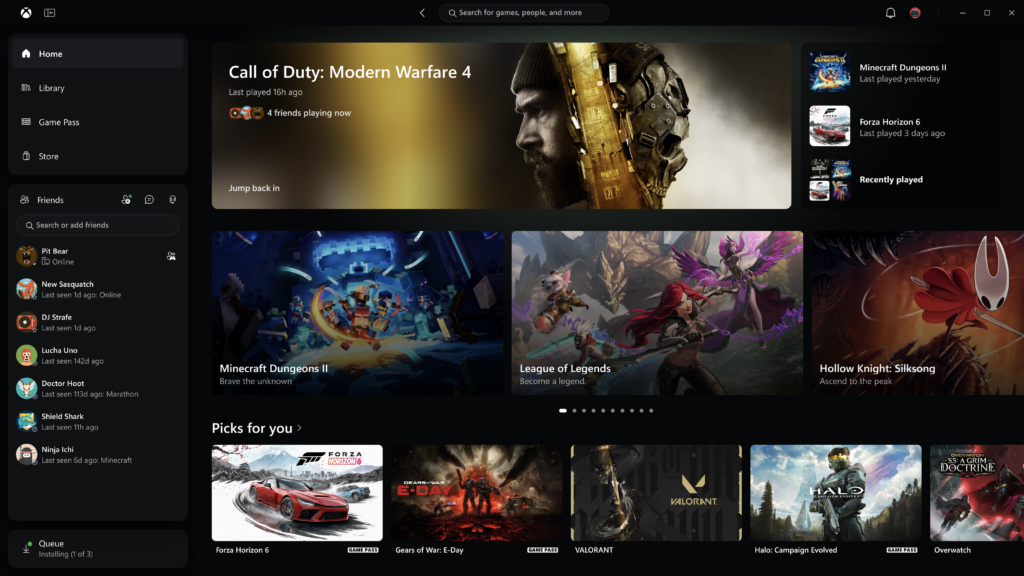
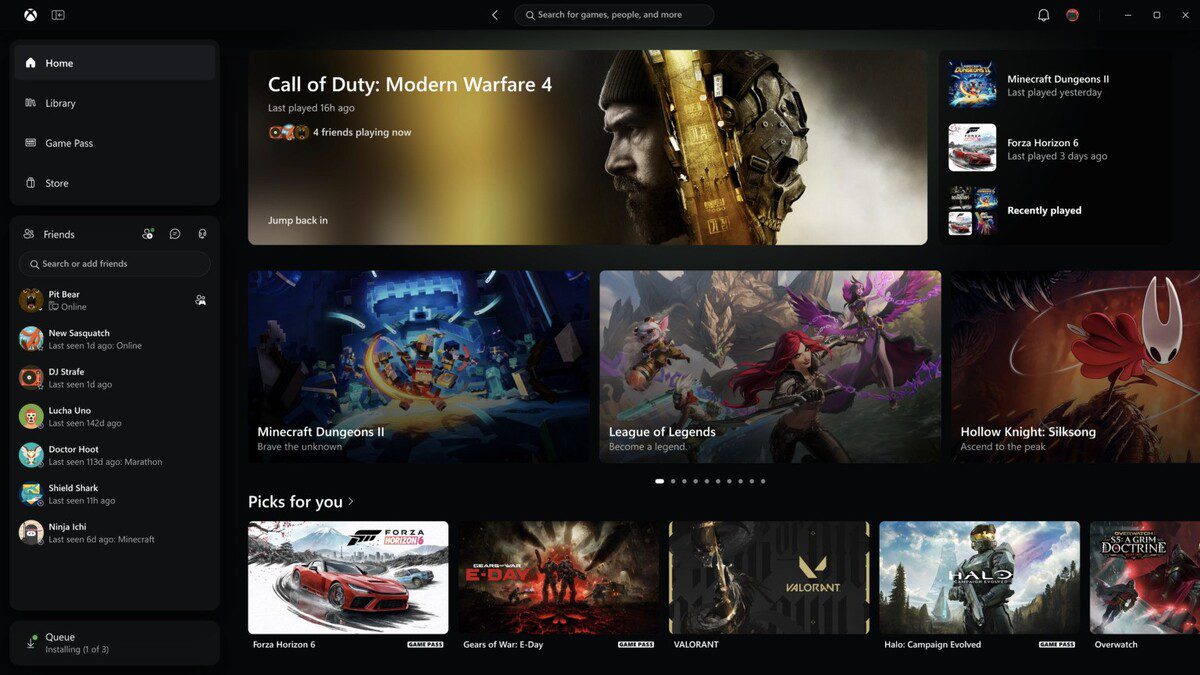
The centerpiece of the update is the redesigned Xbox PC application.
Microsoft claims the new version can launch up to 60 percent faster than before, while major sections such as Home, Store, and Game Pass load up to 50 percent faster. In-app windows are reportedly opening as much as 65 percent faster under Microsoft’s testing.
While speed improvements are impressive on paper, the redesign appears aimed at solving deeper usability concerns.
The application now features a simplified navigation structure that reduces clutter and makes commonly used features easier to reach. Players can browse their game collections through improved library organization tools and updated filtering options designed to help users locate installed titles and purchases more efficiently.
Social features have also been repositioned as a more prominent part of the experience. Friends lists, chat functionality, and party options are now integrated directly into the primary navigation structure instead of feeling tucked away behind additional menus.
In practical terms, this means less time hunting through menus and more time playing.
Better Search Could Be a Game Changer
One of the most underrated additions may be Xbox’s improved search system.
Players increasingly own games across multiple storefronts, subscriptions, expansions, and downloadable content libraries. Finding specific content can sometimes feel harder than actually playing it.
Microsoft’s redesigned search experience aims to solve this by surfacing results from games, add-ons, installed content, and player profiles from a centralized search interface.
The move reflects a growing reality within modern gaming: discovery matters.
As libraries continue growing through Game Pass and digital purchases, helping players quickly locate content becomes nearly as important as expanding the catalog itself.
A Design Language That Feels More Like Xbox
Beyond speed and functionality, the entire experience is receiving a visual refresh.
Microsoft has updated game cards, Home screens, settings menus, and animations throughout the platform. According to early hands-on impressions, the redesign feels much closer to the user experience players associate with Xbox consoles, particularly when navigating with a controller.
This is particularly important as Microsoft continues investing in handheld gaming devices and hybrid Xbox-PC experiences.
The line between console gaming and PC gaming has become increasingly blurred. A cleaner, controller-friendly interface helps reinforce Microsoft’s vision of Xbox as a platform rather than a single device.
Xbox Cloud Gaming Continues to Mature
The announcement isn’t limited to PC users.
Microsoft is also expanding its refreshed Xbox Cloud Gaming experience, which was previously available to select Insider testers. Over the coming weeks, more players will automatically receive the updated interface through the web version of Xbox Cloud Gaming.
The new cloud experience introduces a more comprehensive game library system that combines owned games and Game Pass titles into a unified location. Players can browse available games by genre, recently played content, input methods, and other filtering options.
It sounds like a subtle change, but it removes one of cloud gaming’s most common frustrations: uncertainty about where games are located and how they should be accessed.
Instead of navigating multiple categories, players receive a streamlined hub designed around getting into games quickly.
Accessibility Remains a Major Focus
One particularly notable aspect of the update is Microsoft’s continued commitment to accessibility.
The refreshed web experience introduces both dark and light themes alongside five new high-contrast modes designed to accommodate different visual preferences and accessibility requirements.
This follows several years of Xbox leading the industry in accessibility initiatives, ranging from the Adaptive Controller to increasingly detailed accessibility tags throughout its storefronts.
Rather than treating accessibility as a separate feature set, Microsoft continues integrating it directly into core platform design.
Smart TVs and VR Headsets Are Part of Xbox’s Future
Perhaps the most interesting detail hidden within the announcement is where these upgrades are heading next.
Microsoft confirmed that the refreshed experience will extend beyond traditional PCs and browsers, reaching supported smart TVs and VR headsets through updated cloud gaming applications.
This is another sign that Xbox’s future strategy revolves around platform expansion rather than hardware exclusivity.
The company has spent several years positioning cloud gaming as a way to bring Xbox experiences to nearly any connected screen. A consistent interface becomes increasingly important as the number of supported devices continues to grow.
Whether a player owns an Xbox console, a gaming PC, a television app, or simply a web browser, Microsoft wants every experience to feel unmistakably Xbox.
The Bigger Picture for Xbox
While this update might not generate the same excitement as a blockbuster game reveal, it arguably represents something just as important.
Gaming platforms increasingly compete on convenience. Fast loading times, intuitive navigation, seamless social features, and unified libraries can have as much impact on daily player satisfaction as major first-party releases.
The Xbox ecosystem has expanded dramatically through Game Pass, cloud gaming, Play Anywhere initiatives, and cross-device integration. Yet growth on that scale can sometimes create complexity.
This redesign appears to be Microsoft’s answer to that challenge.
By simplifying navigation, improving performance, enhancing discoverability, and creating a consistent experience across devices, Xbox is taking meaningful steps toward building a platform that feels less fragmented and more cohesive.
For Xbox players, that means less time navigating menus and more time doing what they actually came to do: play games.