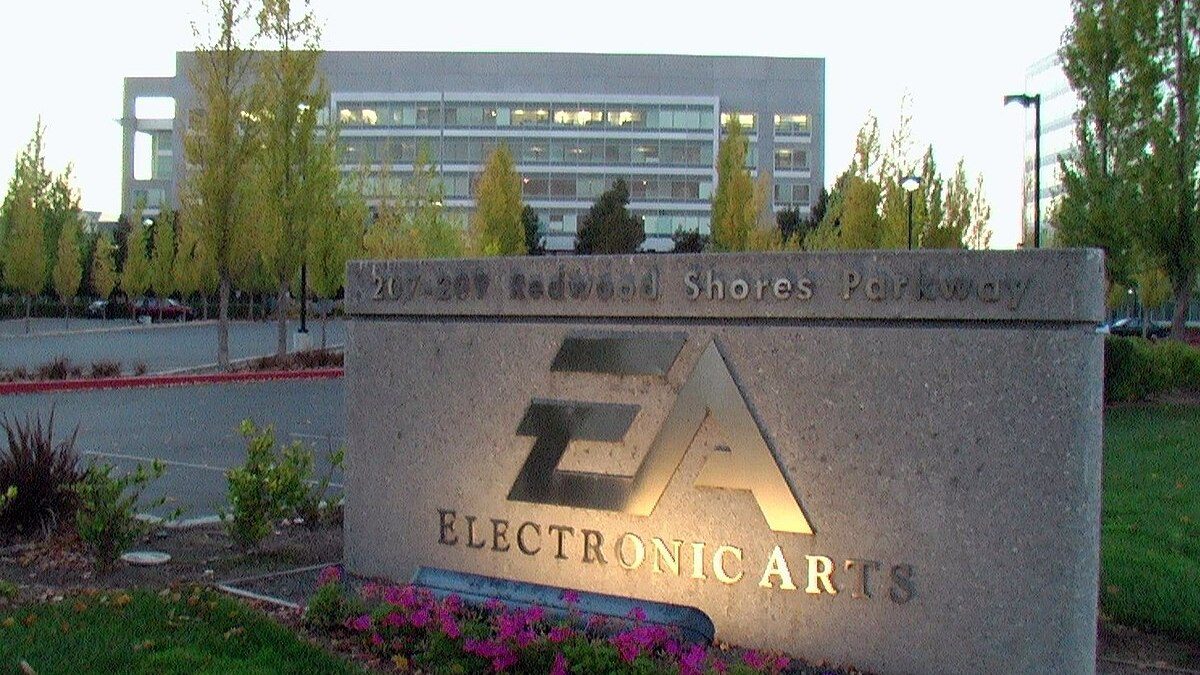
Electronic Arts has finally used a phrase it hasn’t been able to say with confidence in years: “record performance.”
And for once, it’s not corporate exaggeration.
After a turbulent half‑decade marked by creative misfires, restructuring, and a community that has grown increasingly skeptical of AAA publishers, EA delivered what many thought was impossible: Battlefield 6 became the strongest annual performance in the franchise’s history, while Apex Legends posted its best quarter in over two years.
The result is a fiscal year that doesn’t just look good on paper — it marks a turning point for the entire company, arriving just months before EA’s massive $55 billion acquisition is set to close.
A Year of Contradictions: Higher Revenue, Lower Profit, Stronger Stability
EA’s FY26 is a fascinating financial story — not a simple “up and to the right,” but a nuanced mix of investment, recovery, and strategic repositioning.
Q4 FY26 Results (January–March 2026)
- Net revenue: $2.1 billion (↑ 12% YoY)
- Net income: $461 million (↑ 81.5% YoY)
- Net bookings: $1.86 billion (↑ 3.6% YoY)
Battlefield 6’s launch window carried the quarter, while Apex Legends surged thanks to a more aggressive content cadence.
Full Fiscal Year FY26 Results
- Net revenue: $7.53 billion (↑ 1% YoY)
- Net income: $887 million (↓ 20.9% YoY)
- Net bookings: $8.03 billion (↑ 9% YoY)
The drop in profit reflects heavy investment: marketing, infrastructure, and development costs tied to Battlefield 6’s launch.
But the bookings growth — EA’s favorite metric — confirms that live service remains the company’s financial backbone.
Battlefield 6: The Franchise Resurrection Nobody Saw Coming
After the disastrous reception of Battlefield 2042, the franchise was on life support.
FY26 changed everything.
EA states that Battlefield 6 delivered “the best Battlefield performance in a fiscal year, setting multiple franchise records.”
Why did it work?
1. A return to Battlefield’s true identity
Large-scale warfare, destruction that matters, and a more tactical, grounded tone.
Fans immediately labeled it “the real successor to BF4.”
2. A shockingly stable launch
In an era where AAA games routinely ship broken, Battlefield 6 launched polished and technically reliable.
That alone rebuilt trust.
3. A clear, aggressive content roadmap
Shorter seasons, more events, and a progression system that respects players’ time.
The result: the strongest Battlefield engagement and sales in over a decade.
Apex Legends: The Live Service Titan That Refuses to Slow Down
While Battlefield 6 dominated headlines, Apex Legends quietly delivered one of its best years ever.
EA reports that Apex posted its strongest quarter of FY26 in Q4, with double‑digit annual bookings growth.
Apex continues to prove three things:
- Free‑to‑play is far from dead.
- Consistent content still drives revenue.
- The game has untapped growth potential in Asia and Latin America.
Respawn’s battle royale remains one of EA’s most reliable revenue engines.
The Football Empire: EA Sports FC 26, FC Online, and FC Mobile
The transition away from the FIFA license was one of the biggest risks in EA’s history.
FY26 confirms the gamble paid off.
EA reports that its Global Football segment grew in “mid‑single digits,” powered by:
- EA Sports FC 26
- FC Online (a powerhouse in Asia)
- FC Mobile
The message is unmistakable:
EA no longer needs the FIFA name to dominate digital football.
The Dark Side of the Year: Layoffs and Studio Restructuring
In March, EA laid off staff across four studios involved in Battlefield 6.
The company framed it as “strategic alignment,” but the reality is simpler:
EA is tightening costs ahead of its acquisition.
It’s a reminder that even in a record year, the industry’s labor instability continues.
The $55 Billion Acquisition: The Biggest Story Behind the Numbers
EA shareholders approved a $55 billion acquisition, expected to close in Q1 FY27.
If finalized, Saudi Arabia’s Public Investment Fund (PIF) will control over 93% of EA.
This would be one of the largest deals in gaming history, rivaling:
- Microsoft’s acquisition of Activision Blizzard
- Tencent’s purchase of Supercell
- Embracer’s acquisition (and later sale) of Gearbox
The industry is watching closely.
Will EA become more centralized and profit‑driven, or will the influx of capital fuel creative risk‑taking?
Analysis: What FY26 Really Means for EA’s Future
1. Battlefield is alive — and stronger than expected
If EA maintains this trajectory, Battlefield could once again stand toe‑to‑toe with Call of Duty.
2. Apex Legends remains a financial powerhouse
As long as Respawn keeps the content flowing, Apex will continue to fund EA’s broader ambitions.
3. EA Sports FC is now a self‑sustaining ecosystem
The FIFA brand is officially irrelevant.
EA owns its licenses, its tech, and its future.
4. The acquisition will reshape everything
PIF doesn’t invest casually.
Expect EA to become more global, more aggressive, and more expansion‑focused.
Conclusion
FY26 wasn’t just a record year — it was a historic pivot point for Electronic Arts.
- Battlefield 6 restored community trust.
- Apex Legends reaffirmed the strength of live service.
- EA Sports FC proved the company no longer needs FIFA.
- And the looming acquisition promises a new era — for better or worse.
EA enters FY27 with momentum, money, and sky‑high expectations.
The question isn’t whether they can maintain this pace.
The question is: how far are they willing to push?