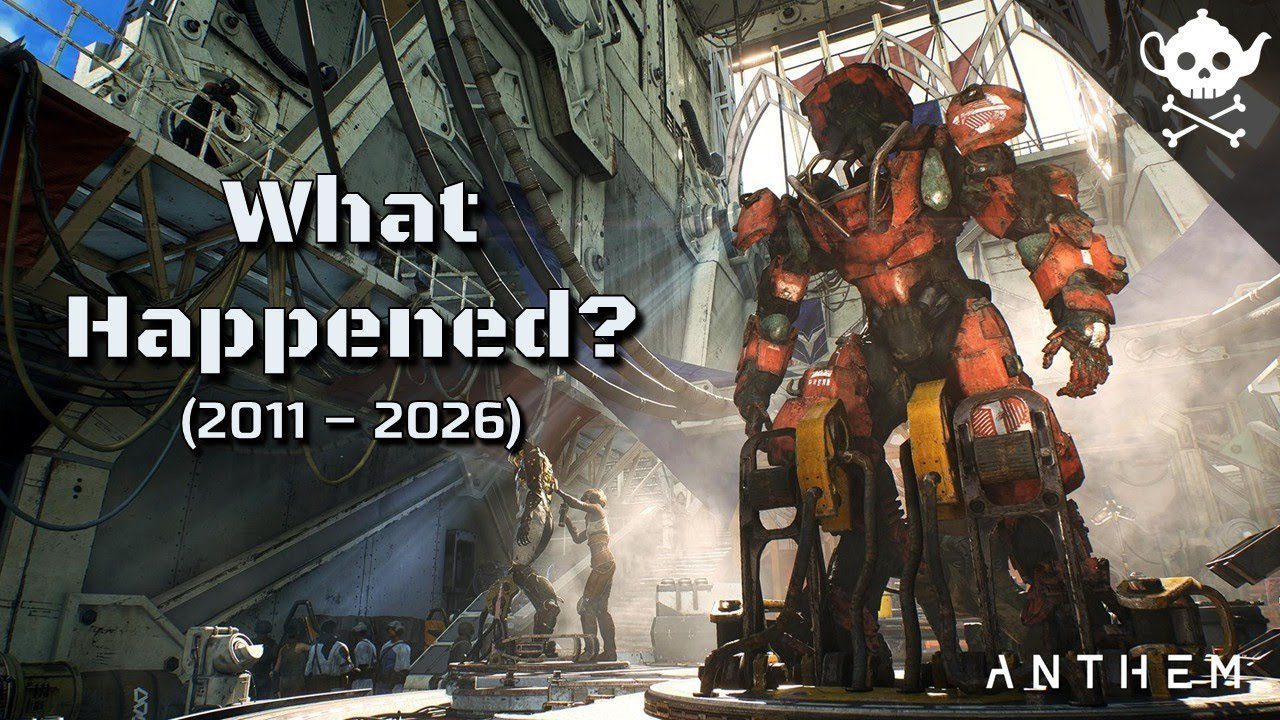
When Anthem’s servers finally went dark, the moment felt less like the end of a live‑service game and more like the closing of a long, complicated chapter in BioWare’s history. To mark the occasion, the game’s former executive producer released an almost four‑hour post‑mortem, a candid and unusually transparent look into the rise and fall of one of the most ambitious — and troubled — AAA projects of the last decade.
The retrospective traces Anthem’s origins back to its earliest days as “Project Dylan,” a codename that reflected BioWare’s desire to create something legendary. The studio envisioned a game that would redefine its identity, a bold departure from the narrative‑driven RPGs that had made its name. Yet from the very beginning, the project struggled to find a stable identity. Developers wrestled with competing visions: Was Anthem meant to be a survival game, a story‑heavy RPG, or a Destiny‑style shared‑world shooter? The answer changed repeatedly, and each shift forced teams to rework systems, mechanics, and even the fundamental structure of the game.
The post‑mortem paints a picture of a studio caught between ambition and uncertainty. Frostbite, EA’s in‑house engine, became a recurring antagonist. Designed for first‑person shooters, it lacked the tools needed for loot systems, open‑world flight, or even basic UI functionality. Developers spent months building foundational systems that other engines provided out of the box. Meanwhile, leadership turnover created a revolving door of priorities, leaving teams unsure which direction to follow. The infamous “BioWare Magic” — the belief that everything would come together in the final stretch — became a crutch that ultimately collapsed under the weight of the project’s complexity.
By the time Anthem launched in February 2019, much of the game had been assembled in a frantic final year. The result was a visually striking world with exhilarating flight mechanics, but one that lacked the depth and cohesion players expected. Loot felt shallow, missions repeated themselves, and the endgame evaporated almost as soon as players reached it. The studio knew the game needed more time, but the deadline was immovable.
🛠️ Anthem 2.0: The Reboot That Could Have Saved the Game
Yet Anthem’s story didn’t end there. For nearly two years after launch, BioWare quietly worked on a sweeping overhaul known internally as Anthem Next — or, as fans called it, Anthem 2.0. The reboot aimed to rebuild the game from the ground up, transforming its loot, progression, world structure, and Javelin customization into something far more robust. Early prototypes hinted at a dramatically improved experience, one that leaned into deeper builds, dynamic world events, and a more meaningful sense of player agency.
But Anthem 2.0 never escaped the planning phase. As the post‑mortem confirms, the team behind the reboot was simply too small to deliver the sweeping changes required. EA eventually redirected resources to Dragon Age: Dreadwolf and the next Mass Effect, leaving Anthem’s revival without the support it needed. The pandemic slowed progress even further, and in 2021, the reboot was officially cancelled. For many developers, it was a painful decision — not because the work was wasted, but because they believed the reboot could have redeemed the game.
The shutdown of Anthem’s servers brings a quiet finality to a project defined by noise, ambition, and turbulence. The producer’s retrospective doesn’t frame the game as a failure, but as a lesson in the realities of modern AAA development. It highlights the dangers of unclear vision, the challenges of building a live‑service game without long‑term planning, and the consequences of relying on last‑minute heroics instead of sustainable production.
Anthem’s legacy is complicated. It was a game full of potential, built by passionate developers who were never given the time, tools, or stability needed to realize their vision. The post‑mortem offers closure not just for players, but for the people who poured years of their lives into the project. And in revisiting the story of Anthem 2.0 — the reboot that might have rewritten the game’s fate — it reminds us how close BioWare came to turning one of gaming’s most infamous misfires into a redemption story.
If nothing else, Anthem’s final moments have sparked the most honest conversation about its development we’ve ever seen. And for a game defined by what could have been, that transparency may be the ending it always deserved.