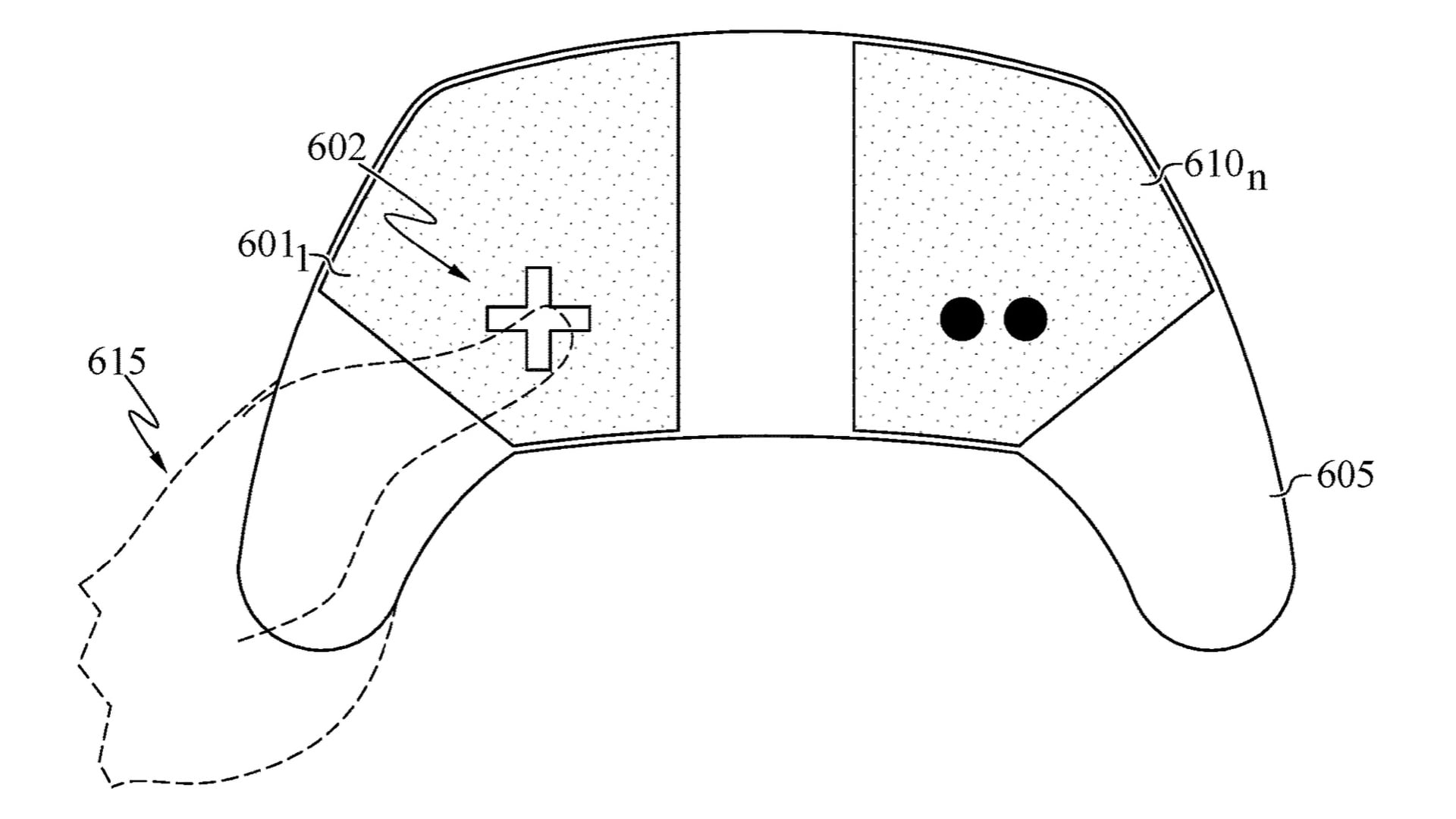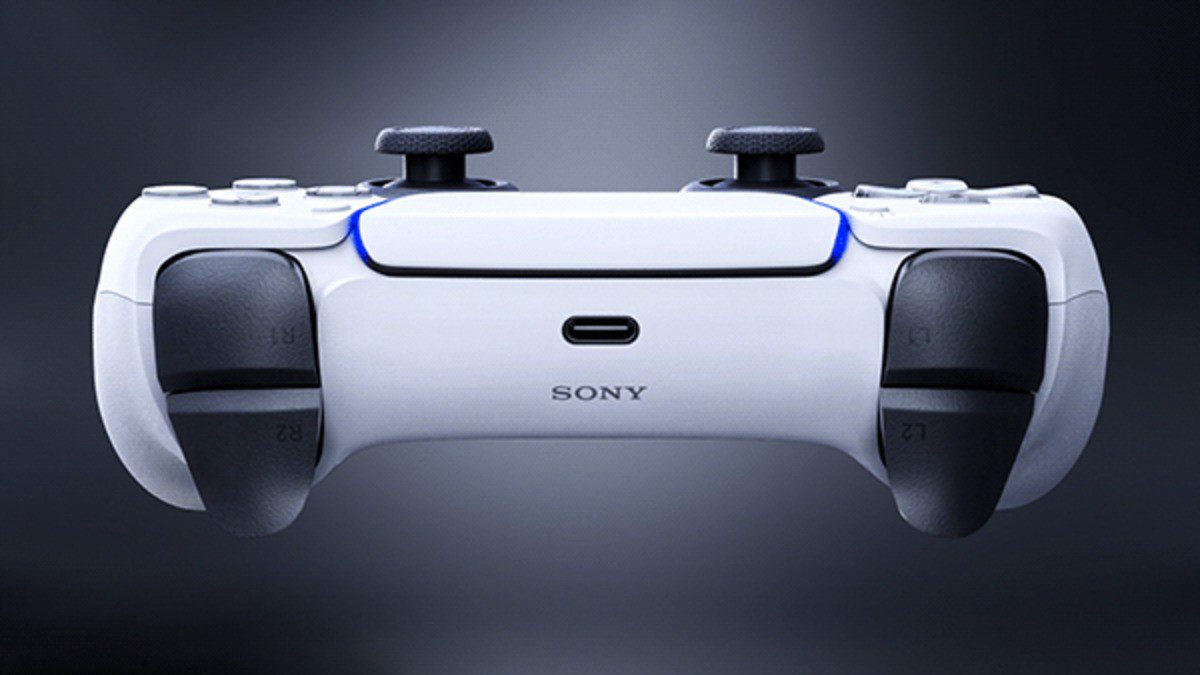
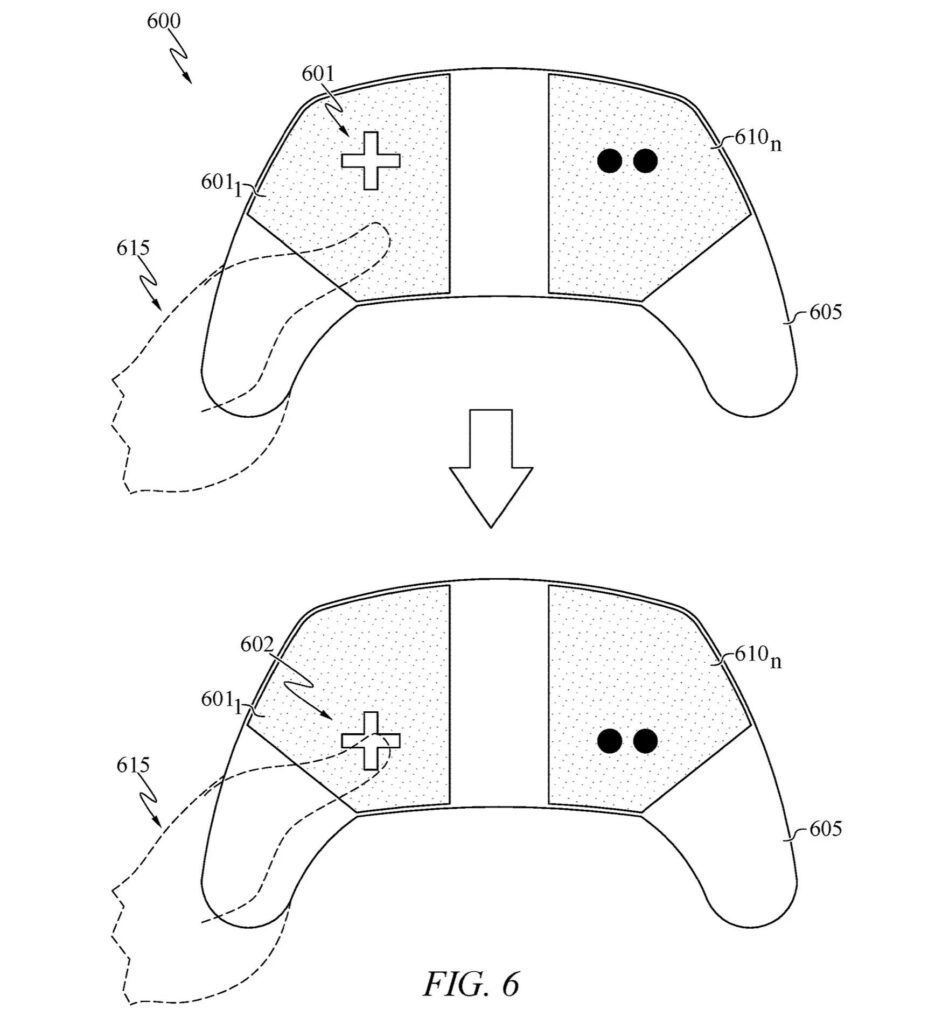
Sony’s newly issued patent for a touchscreen‑based PlayStation controller outlines a device where every traditional input—D‑Pad, face buttons, even analog stick zones—exists as a movable, resizable virtual element. The design replaces fixed hardware with a full‑surface touch panel, allowing players to drag, enlarge, shrink, or remove buttons depending on the game or their personal comfort. The patent, originally filed in 2013 and granted in January 2026, imagines a controller that adapts to the player rather than the other way around.
How the Concept Works
The patent describes a large touch‑sensitive display acting as the controller’s primary interface. Virtual buttons can be positioned anywhere, creating layouts tailored to accessibility needs, hand size, or genre‑specific demands. A platformer could feature a single oversized jump button; a fighting game could use a custom D‑Pad; a minimalist indie title might rely on gestures or swipes. Sony also hints at dynamic zones that shift based on grip or orientation, suggesting a hybrid between mobile touch controls and console‑grade responsiveness.
A Pattern in Sony’s Hardware Philosophy
This patent fits into a long tradition of Sony using filings as both experimentation and future‑proofing. Many of PlayStation’s defining features began as obscure patents: early multi‑axis thumb controls that evolved into DualShock analog sticks, gyroscopic concepts that became Sixaxis, and variable‑resistance mechanisms that eventually powered the DualSense adaptive triggers.
At the same time, Sony has patented ideas that never materialized—biometric controllers, modular handhelds, holographic projection concepts. Some served as stepping stones; others remained curiosities. The touchscreen controller sits in that liminal space: ambitious, technically plausible, but unconventional enough that its commercial fate is uncertain.
The Broader Push Toward Buttonless Design
Recent filings show Sony exploring capacitive and virtual‑button controllers, signaling a potential shift toward dynamic input surfaces for future PlayStation hardware. These designs emphasize accessibility, customization, and adaptability—areas where traditional controllers have long been constrained.
What This Means for PlayStation’s Future
With early PS6 discussions already circulating, the timing of this patent’s issuance is notable. Sony often patents ideas years before they become viable, and even when a concept doesn’t ship, its DNA can appear in later hardware.
The touchscreen controller may never release in its current form, but its underlying philosophy—player‑defined layouts, flexible interfaces, and accessibility‑first design—could shape the next decade of PlayStation innovation. It stands as another example of Sony’s dual identity: a company that protects bold ideas on paper and occasionally turns them into hardware that reshapes how millions play.