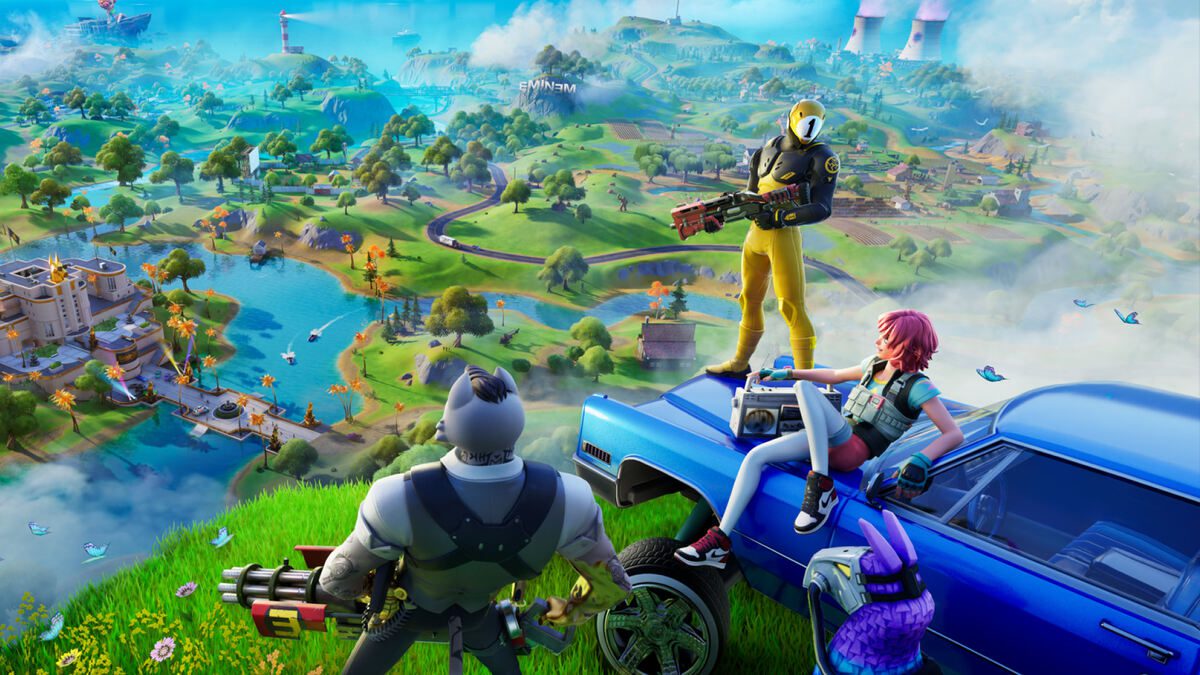
Epic Games, the powerhouse behind Fortnite and the Unreal Engine, has entered one of the most turbulent chapters in its history. The company confirmed that more than 1,000 employees—roughly 20% of its workforce—were laid off this week, a sweeping restructuring that signals both financial strain and a shifting landscape in the global gaming industry.
The announcement came directly from CEO Tim Sweeney, who acknowledged that Epic has been spending significantly more than it earns, largely due to a downturn in Fortnite engagement that began in 2025. What was once the studio’s unstoppable revenue engine has slowed enough to force deep cuts, despite Fortnite remaining one of the most recognizable and influential games in the world.
A Backstory Written in Booms and Reinventions
Epic’s rise has always been tied to its ability to reinvent itself. From the early days of Unreal in the 1990s, to the Gears of War era in the 2000s, to the seismic shift brought by Fortnite in 2017, the company has repeatedly rebuilt its identity to match the moment. Sweeney himself referenced this history, reminding employees that Epic has survived multiple industry upheavals before—transitions from 2D to 3D, from boxed console games to live‑service ecosystems, and from traditional development pipelines to creator‑driven platforms.
But this time, the challenge is different. Fortnite’s success was so massive, so culturally dominant, that it reshaped the expectations of both players and the company itself. For years, Epic expanded aggressively—hiring thousands, investing in creator tools, pushing the Epic Games Store, and fighting high‑profile legal battles with Apple and Google. The assumption was that Fortnite’s momentum would continue to fund the future.
Instead, the game’s engagement curve began to bend downward.
The Fortnite Slowdown: A Giant Feeling Gravity Again
For over two years, Fortnite averaged more than a million daily players, peaking at 3.1 million in December 2023. But by late 2025, that number had fallen to around 835,000, dipping below the million‑player threshold for the first time in years. The decline wasn’t catastrophic—but it was enough to disrupt the financial model of a company built around constant, expensive content production.
Epic also faced the long tail of its mobile exile. After being removed from the Apple and Google app stores in 2020, Fortnite only began returning to mobile platforms in 2024–2025, and the company admits it is still in the “early stages” of optimizing the game for billions of smartphones worldwide. That delay cost Epic years of mobile revenue and slowed its ability to reach younger audiences who primarily play on phones.
Meanwhile, the broader gaming industry has cooled. Console sales are down, consumer spending is weaker, and live‑service games—once seen as infinite money machines—are showing cracks as players spread their attention across social media, streaming, and competing titles.
Epic insists the layoffs are not related to AI, a point Sweeney emphasized amid industry fears of automation replacing developers. Instead, the company identified over $500 million in cost savings through reduced contracting, marketing cuts, and closing unfilled roles.
The Human Cost Behind the Restructuring
For the more than 1,000 employees affected, the news was devastating. Epic is offering at least four months of base pay and extended healthcare coverage—up to six months in the U.S.—but the emotional impact is undeniable. Many of those laid off were long‑tenured developers, artists, and support staff who helped build Fortnite into a global phenomenon.
The layoffs also hit Epic’s satellite offices, including 82 employees in the Seattle area, underscoring the scale of the restructuring.
How This Reshapes Fortnite’s Future
Epic’s message is clear: the company must return to its core strengths. Sweeney outlined a renewed focus on:
- delivering “consistent Fortnite magic” with stronger seasonal content,
- accelerating development toward Unreal Engine 6,
- and rebuilding the mobile presence that once fueled Fortnite’s global reach.
The company also hinted at major launch plans toward the end of the year, suggesting that Epic is preparing a new phase for Fortnite—possibly a large‑scale narrative shift, a technical overhaul, or a new platform strategy.
But the layoffs raise questions about how quickly Epic can deliver on those ambitions. Live‑service games depend on rapid iteration, and losing 20% of staff inevitably slows production, even with cost savings and restructuring.
Gamers React: Shock, Frustration, and a Fear of What Comes Next
The gaming community’s reaction has been intense and emotional. Fortnite players—many of whom grew up with the game—expressed shock that a title still considered “massive” could be at the center of such drastic cuts. The sentiment online has ranged from sympathy for the affected workers to frustration with Epic’s recent decisions, including:
- rising V‑Bucks prices,
- inconsistent seasonal quality,
- and a sense that Fortnite’s identity has become stretched thin by constant crossovers and experimental modes.
Some players worry that the layoffs signal a decline in Fortnite’s long‑term health. Others believe this could be a necessary reset—an opportunity for Epic to refocus on gameplay, storytelling, and the creative spark that made Fortnite a cultural force.
What’s clear is that Fortnite’s community remains deeply invested. Even in decline, the game still commands millions of players, and its influence on gaming, entertainment, and digital culture is unmatched.
A Studio at a Crossroads
Epic Games now stands in a familiar but precarious position: forced to rebuild, re‑strategize, and rediscover the magic that once propelled it to the top of the industry. The layoffs mark a painful moment, but also a turning point—one that will shape not only Fortnite’s future, but the direction of Epic’s entire ecosystem.
If history is any indication, Epic is capable of rising from upheaval stronger than before. But this time, the stakes are higher, the competition fiercer, and the expectations heavier.
The next chapter of Fortnite—and Epic Games—will depend on whether the company can transform crisis into reinvention once again.