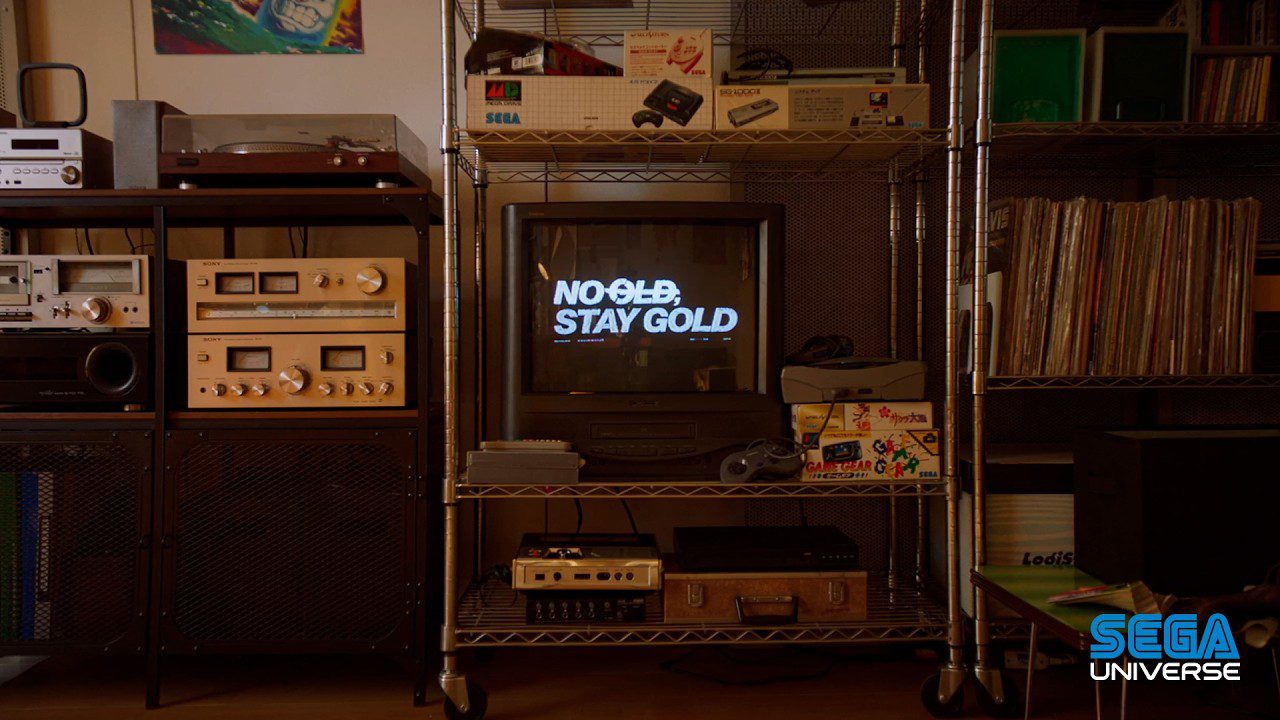
For decades, Sega has lived in a strange duality. It is a company defined as much by what it once was as by what it hopes to become. Its past is legendary, its present often uncertain, and its future perpetually shaped by the gravitational pull of nostalgia. That tension came into sharp focus this week when Sega announced SEGA UNIVERSE, a sweeping initiative designed to revive, reimagine, and reintroduce its classic franchises to a modern global audience.
The announcement arrived with a bold tagline—“No Old, Stay Gold”—a phrase that captures Sega’s intent to treat its retro catalog not as dusty artifacts but as timeless cultural pillars. SEGA UNIVERSE is more than a marketing slogan. It is a structural shift inside the company, a coordinated effort to unify game development, animation, and multimedia storytelling under a single umbrella. The first wave of projects will focus on franchises celebrating anniversaries in 2026, but Sega has already confirmed that multiple dormant IPs are being developed into animated series and other cross‑media productions. Among the names circulating internally are Streets of Rage, Shinobi, OutRun, and Eternal Champions, each with the potential to become the next breakout adaptation.
This moment did not emerge from nowhere. Sega has watched the entertainment landscape transform around it. Nintendo’s Super Mario Bros. films have become global blockbusters. Sony and Ubisoft have turned their biggest franchises into prestige television. Even Sega itself has tasted Hollywood success with the Sonic the Hedgehog movie series, which is now deep into production on its fourth installment. The industry has made one thing clear: gaming IP is no longer confined to consoles. It is the new frontier of mainstream entertainment.
Yet for Sega, SEGA UNIVERSE is not simply a reaction to market trends. It is the culmination of a long, complicated history of trying—and often struggling—to modernize its retro identity.
SEGA UNIVERSE: The First Time Everything Is Under One Banner
After Sega exited the console business in 2001, the company leaned heavily on its past to stabilize its future. Collections like Sega Smash Pack and Sonic Mega Collection introduced younger players to Genesis classics, but these releases were inconsistent in quality and vision. Sega was still figuring out what it meant to be a software‑only company, and its approach to retro content reflected that uncertainty.
By the 2010s, something unusual happened: the most faithful and innovative preservation of Sega’s legacy wasn’t coming from Sega at all. It was coming from fans and independent developers. Christian Whitehead’s mobile remasters of Sonic 1, Sonic 2, and Sonic CD became the gold standard for how to modernize retro games without losing their soul. M2’s Sega Ages line delivered museum‑quality ports that treated Sega’s history with a reverence the company itself rarely matched. Meanwhile, Sega’s own attempts—like the divisive Sonic 4—struggled to capture the magic of the originals.
The irony was impossible to ignore: Sega’s legacy was being preserved best by people outside Sega.
The 2020s brought a new wave of experimentation. Sega Forever, a mobile initiative meant to bring classic games to smartphones, launched with excitement but quickly fizzled due to performance issues and inconsistent support. The Genesis Mini and Genesis Mini 2 were critical successes, proving that the appetite for Sega’s heritage was still enormous. And Streets of Rage 4, developed externally by Dotemu, became a breakout hit—another reminder that Sega’s dormant franchises still had power, even when Sega wasn’t the one making the games.
But despite these successes, Sega lacked a unified strategy. Revivals happened in isolation, disconnected from one another, and rarely part of a larger vision. SEGA UNIVERSE is the first time the company has attempted to bring all of these efforts together under a single, cohesive identity.
Why This Matters for Sega—and for the Industry
What makes this initiative different is its ambition. Sega is no longer treating its classics as nostalgia bombs to be deployed sporadically. It is treating them as evergreen brands with the potential to thrive across games, animation, film, and beyond. The company is building a framework that allows its past to fuel its future, not haunt it.
If Sega commits to this vision, the next decade could see the return of franchises fans have begged for: Jet Set Radio, Golden Axe, Crazy Taxi, Skies of Arcadia, Virtua Fighter, and others that have lived in limbo for far too long. SEGA UNIVERSE doesn’t guarantee these revivals, but it finally gives Sega a structure capable of supporting them.
For longtime fans, this moment feels like a turning point. Sega has always been a company defined by creativity, risk‑taking, and a willingness to break the rules. Its classics endure not because they are old, but because they were ahead of their time. SEGA UNIVERSE is an acknowledgment of that truth—and a promise that the company is ready to honor its legacy with the respect, ambition, and consistency it deserves.
If Sega follows through, the future may finally look as bright as its past.