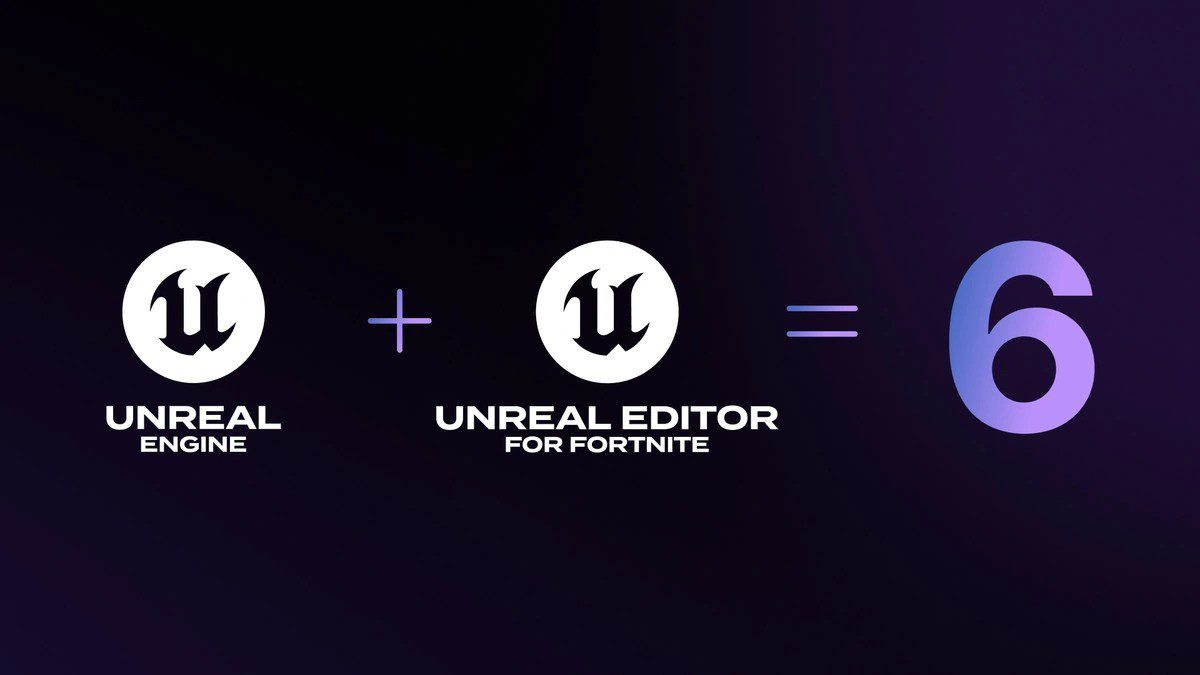
Unreal Engine 6 arrives not as a routine upgrade, but as a structural rewrite of what Epic believes game development must become — and Rocket League’s surprise reveal at the 2026 Paris Major is the first real-world demonstration of that shift. The moment Rocket League’s UE6 trailer appeared between semifinal matches, the industry saw more than a visual overhaul: it saw the first practical expression of Epic’s plan to unify its tools, its ecosystem, and its creator economy into a single engine built for persistent, interoperable, live experiences.
The Context: Rocket League as the First UE6 Showcase
Epic chose Rocket League — a game still running on Unreal Engine 3 after more than a decade — to debut Unreal Engine 6. That alone signals how dramatic the leap is. The teaser shown at the RLCS Paris Major confirmed Rocket League as the first commercial title to run on UE6, even before Fortnite. The footage was captured fully in real time, showing a stadium rendered with near‑photorealistic lighting, sharper reflections, and redesigned car materials that immediately distinguished the new engine from its predecessors.
The reveal was intentionally understated: no keynote, no tech demo, no deep dive. Just a minute-long trailer dropped into an esports broadcast — a quiet but confident statement that UE6 is ready to be seen in action. The crowd’s reaction, captured live, underscored the significance: this wasn’t a cinematic; this was the first public glimpse of the next generation of Unreal technology.
Why Rocket League Matters to the UE6 Story
Rocket League’s engine history makes it the perfect symbol for UE6’s ambitions. The game launched on UE3 in 2015 and never transitioned to UE4 or UE5, despite years of speculation. The jump directly to UE6 skips an entire generation — a move that reflects Epic’s confidence in the new engine’s stability and long-term vision.
The Rocket League teaser also hinted at deeper interoperability across Epic’s ecosystem. The closing animation placed Rocket League alongside Fortnite and Epic’s broader partnerships, suggesting a future where games share assets, economies, and player identity across a unified platform. This aligns with Epic’s stated goal: UE6 is not just a rendering upgrade, but a foundation for cross‑game, cross‑ecosystem experiences.
The Road to Unreal Engine 6: A Unified Engine for a Unified Ecosystem
Epic’s official “Road to UE6” announcement clarifies the philosophy behind the engine. UE6 is the convergence of Unreal Engine 5 and Unreal Editor for Fortnite (UEFN) into a single product. This is not a fork, not a branch, and not a transitional version — it is the merging of two development worlds that have grown increasingly intertwined.
Epic frames the evolution this way:
- UE4 opened the engine to everyone.
- UE5 reinvented worldbuilding.
- UE6 evolves how games are shipped, operated, and interconnected.
This unification is driven by three simultaneous shifts Epic believes the industry must undergo:
1. A New Programming Model: Verse
UE6 moves gameplay logic toward Verse, a next‑generation language designed for persistent, large‑scale, concurrent worlds. Verse introduces transactional concurrency — a way to ensure global state remains correct even with thousands of contributors or players interacting simultaneously. This is essential for the “live, evolving worlds” Epic envisions.
2. Interoperability Across Games and Ecosystems
Epic is building UE6 around open standards that allow content, code, and even economies to move between games. This is the backbone of the cross‑title ecosystem hinted at in the Rocket League trailer. The goal is a future where creators build once and deploy everywhere — including Fortnite, standalone games, mobile, console, and even browser-based experiences.
3. AI‑Driven Development Pipelines
UE6 integrates Epic’s MCP (Multi‑Creator Platform) with AI systems like Claude and Gemini to automate repetitive tasks, accelerate iteration, and allow teams to focus on creative decisions rather than manual pipeline work. This is not a gimmick; it’s a structural shift in how development time is spent.
The New Gameplay Framework: Scene Graph
UE6 introduces Scene Graph, a gameplay framework built entirely on Verse. It replaces legacy systems with a modern, high‑level architecture designed for modularity, scalability, and interoperability. Developers can build components that work across multiple games — a crucial step toward Epic’s vision of a shared ecosystem.
Technical Evolution: Parallelism, Modularity, and Next‑Gen Rendering
Beyond philosophy, UE6 includes deep architectural changes:
Parallel Task Execution
UE6 abandons the single‑threaded simulation model that constrained UE4 and UE5. Instead, it uses a fine‑grained task scheduler that distributes work dynamically across CPU cores, reducing bottlenecks and improving performance on modern hardware.
Modular Runtime
UE6 consolidates the professional UE5 pipeline and Fortnite’s live‑service infrastructure into a plugin‑based modular system. This ensures cross‑platform portability and easier long‑term maintenance.
Rendering and Lighting Overhaul
UE6 introduces:
- Nanite Plus geometry
- A full lighting pipeline replacement for Lumen
- A built‑in AI character system based on Llama 4 derivatives
- First‑class WebGPU export, enabling browser‑playable builds from the same project files used for console and PC
This last feature — browser-native builds — may quietly be one of the most transformative.
Timeline and Industry Impact
Epic’s roadmap suggests:
- UE6 ships mid‑2027
- First AAA titles arrive in 2028
- Technical previews run through 2027–2028 for internal teams and partners
Rocket League’s UE6 version is the first public demonstration, but Fortnite is also confirmed to transition. The reveal raises questions about whether major UE5 titles — such as The Witcher 4 or Marvel 1943 — might eventually adopt UE6.
What This Means for Rocket League’s Future
Rocket League’s move to UE6 is more than a graphical upgrade:
- It positions the game inside Epic’s unified ecosystem.
- It opens the door to creator tools similar to Fortnite’s UEFN.
- It suggests deeper cross‑game interoperability.
- It modernizes the game’s foundation for the next decade of esports.
For a title that has surpassed one million concurrent players and remains one of the world’s largest esports, the timing is strategic.
Conclusion: The First Step Into Epic’s Next Era
Unreal Engine 6 is not simply Unreal Engine 5 with new features. It is the convergence of Epic’s entire ecosystem — engine, creator tools, live‑service infrastructure, and cross‑game interoperability — into a single platform designed for the next generation of persistent, interconnected experiences.
Rocket League’s reveal is the first real-world proof of that vision. It marks the beginning of a new era not just for the game, but for how Epic intends the industry to build, share, and operate games in the years ahead.