
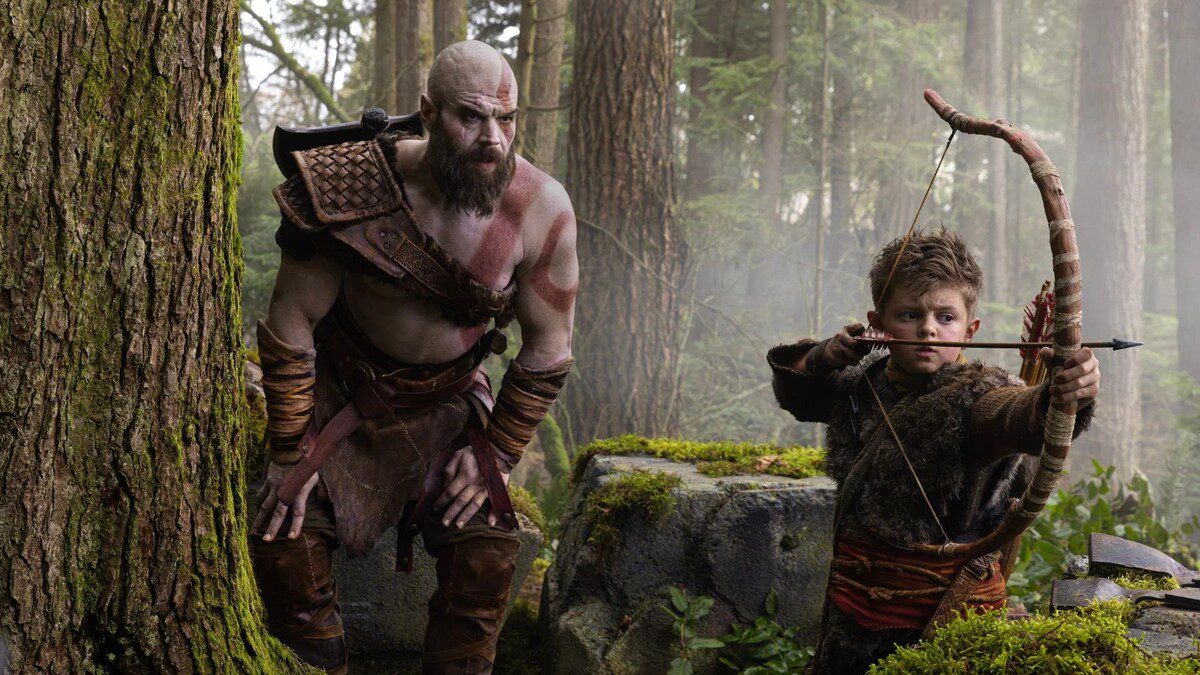
The news that Ryan Hurst will no longer portray Kratos in Amazon’s God of War series landed like a thunderclap across the gaming community. It wasn’t just a casting update—it was a disruption to a production that had been quietly building momentum, a reminder of how fragile large-scale adaptations can be, and a moment that reshaped the early identity of a show many fans have been waiting years to see.
What happened is straightforward but consequential: Hurst suffered a severe on‑set injury—a torn bicep—while filming the physically demanding role. According to reporting from Deadline, the injury required surgery and a recovery timeline stretching into early 2027, far beyond what the production could accommodate. The role of Kratos, a character defined by relentless physicality and emotional weight, simply couldn’t be paused for that long.
But the story behind this moment is richer than a single injury.
The Road to Kratos
When Amazon announced the God of War adaptation, skepticism was high. Video game adaptations have historically struggled, and Kratos is one of gaming’s most iconic, complex figures. But the casting of Ryan Hurst in January changed the tone. Hurst—known for Sons of Anarchy and The Walking Dead—brought a mix of physical presence and emotional gravitas that fans immediately recognized as a strong match.
Hurst himself embraced the role with genuine enthusiasm. On social media, he celebrated the casting with a message that resonated deeply with longtime fans: he had played Kratos, admired the character, and now had the chance to embody him. It was a rare moment where fandom and professional opportunity aligned perfectly.
Behind the scenes, Amazon was confident enough in the project to renew the series for a second season before filming had meaningfully begun. That early renewal signaled the studio’s belief that God of War could become one of Prime Video’s flagship franchises—something on the scale of The Boys or Fallout.
The adaptation itself is rooted in the 2018 PlayStation 4 game, a reinvention of the franchise that shifted Kratos from a rage-driven Spartan to a weary father navigating grief, responsibility, and the Norse world. The show’s narrative centers on Kratos and Atreus’ journey to scatter the ashes of Faye, Kratos’ wife—a pilgrimage that becomes a meditation on legacy, violence, and the possibility of redemption.
Hurst’s injury didn’t just remove an actor; it disrupted the emotional continuity the production had begun building.
The Injury That Changed Everything
A torn bicep is not a minor setback for any actor, but for Kratos—whose scenes demand heavy stunt work, weapon handling, and constant physical exertion—it’s catastrophic. Deadline reports that Hurst’s recovery would have pushed his return into early 2027, effectively halting the show’s momentum.
Productions of this scale operate on tight timelines. Sets are built, stunt teams are contracted, and actors’ schedules are locked months in advance. Waiting nearly a year for a lead actor is simply not feasible. The decision to recast wasn’t a reflection on Hurst’s performance or commitment—it was a logistical necessity.
Still, the emotional weight of the decision is undeniable. Hurst had already begun filming. He had already stepped into Kratos’ boots. And now, someone else will pick up the Leviathan Axe.
What Happens Now?
The recasting of Kratos is more than a personnel change—it’s a creative pivot. Whoever steps into the role must honor the emotional depth of the 2018 game while bringing their own interpretation to a character defined by decades of evolution.
The rest of the cast remains intact, and Amazon’s early renewal suggests confidence in the story’s long-term potential. But Kratos is the gravitational center of God of War. His presence shapes every scene, every emotional beat, every moment of tension. Recasting him mid-production is a challenge that will test the show’s resilience.
Fans are already speculating about potential replacements, but the production has not yet announced a successor. The choice will define the series’ identity moving forward.
The Larger Backstory: Why This Adaptation Matters
God of War is not just another video game adaptation—it’s a cultural milestone. The 2018 game redefined what blockbuster action games could be, blending mythological spectacle with intimate storytelling. It won Game of the Year, sold millions, and became a touchstone for narrative-driven design.
Adapting it for television means translating not just the plot, but the emotional architecture: the strained bond between father and son, the quiet grief of loss, the violent past Kratos tries—and often fails—to outrun.
Ryan Hurst’s casting felt like a promising bridge between mediums. His departure forces the production to rebuild that bridge with someone new.
A Story Still in Motion
The injury, the recast, the uncertainty—these are chapters in a story still unfolding. Amazon’s God of War remains one of the most anticipated adaptations in modern gaming culture, and the production’s willingness to move forward despite setbacks suggests a commitment to delivering something worthy of the franchise’s legacy.
Kratos has always been a character defined by endurance, pain, and transformation. In an unexpected way, the production now mirrors that journey.
