

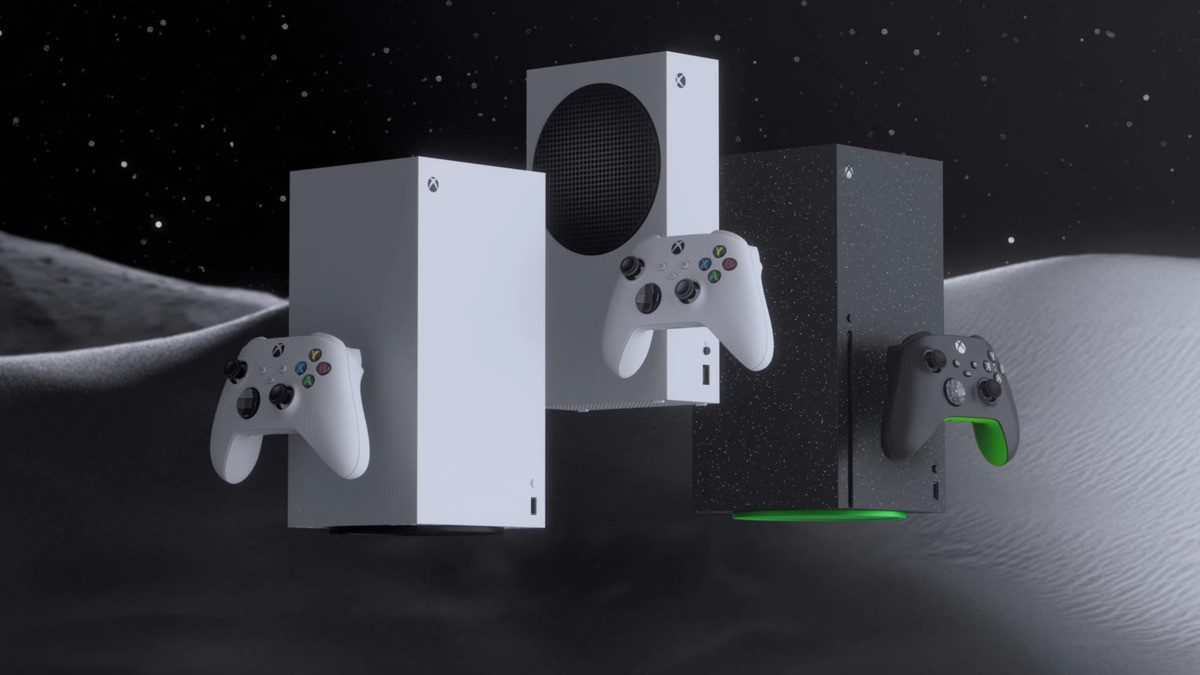
Microsoft has confirmed another round of price increases for its Xbox console lineup, marking the second major adjustment in less than a year and underscoring just how unstable the hardware market has become. Insider Gaming’s reporting reveals that the company is raising the price of its 512GB consoles by one hundred dollars and its 1TB models by one hundred fifty, while discontinuing the 2TB Series X entirely. These changes take effect on August 1, 2026, and they arrive with a warning that the cost of memory and storage components could double again by the fall of 2027.
The announcement reflects a broader reality that the console industry has struggled to escape. Since 2024, the price of RAM and NAND has surged to more than two and a half times its previous levels, driven by a perfect storm of AI datacenter expansion, automotive computing demands, and aggressive competition for high‑bandwidth memory. Microsoft acknowledged that consoles are typically sold at little to no profit, and the sudden volatility in component pricing has made the traditional subsidized‑hardware model nearly impossible to maintain. Even long‑term supply contracts, which once offered stability, have become liabilities as suppliers shift production toward more profitable AI‑focused memory technologies.
The result is a console market that increasingly resembles the PC space in terms of pricing, but without the flexibility that PC manufacturers enjoy. A PC maker can release new SKUs, adjust margins, or simply pass costs directly to consumers. Console makers cannot. Their hardware is fixed for an entire generation, and their business model depends on predictable component costs that no longer exist. This is why the new 1TB Xbox Series X with a disc drive will now retail for $799.99, the digital version will sit at $749.99, and even the 1TB Series S will climb to $599.99. The 512GB Series S, once marketed as the affordable entry point into the ecosystem, will now cost $499.99.
Probably no light at the end of the tunnel yet
Yet the story is not entirely bleak. While Microsoft’s internal projections anticipate another major spike in memory pricing by late 2027, several early indicators suggest that the worst of the volatility may be approaching its peak. Major suppliers such as Samsung, SK Hynix, and Micron are expanding their high‑bandwidth memory production capacity, which could ease pressure on traditional DRAM and NAND lines. At the same time, the explosive growth of hyperscale datacenters is beginning to cool, giving the supply chain room to breathe. New semiconductor fabs in the United States, Japan, and South Korea are scheduled to begin partial output in 2027, and consumer electronics demand is stabilizing after several years of unpredictable swings.
Analysts who track the semiconductor market believe that 2027 may represent the final major spike before a gradual normalization begins. If that holds true, the industry could see memory and storage prices plateau by the end of next year and begin a slow decline in 2028, eventually returning to more predictable cycles by 2029. For console manufacturers, that would open the door to more aggressive hardware revisions, renewed focus on cost‑optimized models, and potentially even price reductions later in the generation.
Mitigating the impact at short term
In the meantime, Microsoft is attempting to soften the impact of the new pricing through financing options, refurbished units, and expanded trade‑in programs. These efforts acknowledge the reality that affordability in the console space may now depend more on payment structures than on manufacturing efficiencies. The Xbox ecosystem, like the rest of consumer electronics, is navigating a period defined not by technological ambition but by economic turbulence.
The current generation was once expected to usher in an era of 8K gaming, ultra‑fast storage, and seamless cloud integration. Instead, it has become a case study in how global supply chains, AI‑driven component demand, and manufacturing constraints can reshape an entire industry. But if the early signals from the memory market prove accurate, the painful adjustments of 2026 and 2027 may ultimately give way to a more stable and predictable hardware landscape as the decade closes.





One Comment