
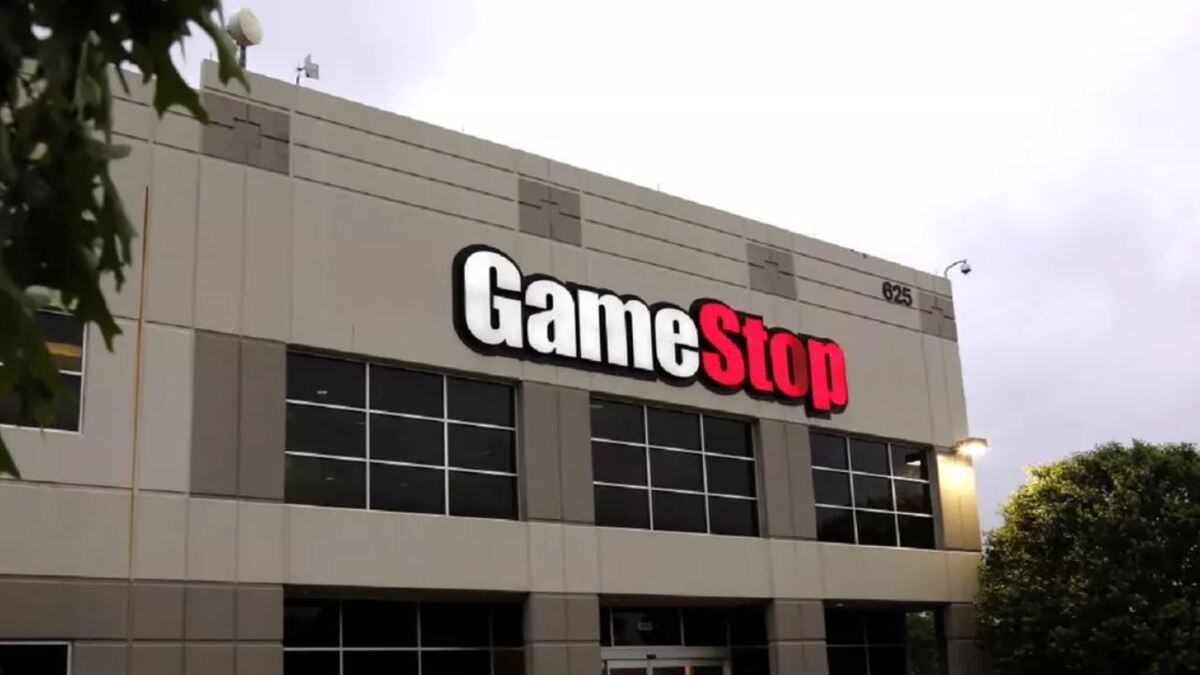
GameStop’s transformation under Ryan Cohen has become one of the strangest, most aggressive pivots in modern retail — a shift so dramatic that even longtime observers struggle to recognize the company that once lived and died by pre‑owned discs. Recently the famed gaming store capture the emotional core of this shift: Cohen’s insistence that “games are irrelevant” to GameStop’s future, and his belief that “everyone wants the company to fail.”
When placed alongside this year’s extraordinary attempt to force eBay into accepting a hostile $56 billion takeover, the picture becomes clearer: GameStop is no longer trying to survive as a gaming retailer. It is trying to reinvent itself as a sprawling, Amazon‑sized commerce empire — even if the path there looks chaotic, theatrical, and at times surreal.
The Breaking Point: “Games Are Irrelevant”
Cohen’s comments, reported by Insider Gaming, reflect a blunt truth he has repeated across interviews: GameStop’s legacy business — selling physical games — is collapsing. Digital storefronts dominate. Publishers push subscriptions. Hardware cycles no longer guarantee foot traffic. Cohen’s frustration is not subtle; he has described the traditional model as dead weight, a distraction from what he sees as GameStop’s real potential.
This isn’t just rhetoric. It’s a justification for abandoning the company’s historical identity. Cohen’s strategy hinges on the belief that GameStop’s 1,600 U.S. stores are not retail outlets but infrastructure — physical nodes that can authenticate goods, handle fulfillment, and serve as intake centers for a much larger marketplace. In his view, the stores are valuable not because they sell games, but because they exist.
“Everyone Wants the Company to Fail”
Insider Gaming’s second report highlights Cohen’s growing resentment toward critics, analysts, and even parts of the gaming community. He has repeatedly framed GameStop as a target of ridicule — a company people expect to collapse, a meme stock that was never supposed to survive its own hype.
This siege mentality fuels his aggressive posture. Cohen’s public statements often read like challenges: to Wall Street, to eBay’s board, to the media. He has accused eBay’s leadership of incompetence, called them “losers,” and insisted that shareholders — not executives — should decide the fate of his takeover proposal.
The emotional throughline is clear: Cohen believes GameStop must transform radically because the world refuses to take it seriously. And he intends to prove everyone wrong.
The Bizarre, All‑In Gamble: Forcing eBay Into a Merger
This year’s attempted takeover of eBay is the clearest expression of Cohen’s new vision. In May, GameStop — a company worth around $10–12 billion — attempted to buy eBay, a company valued near $50 billion, for roughly $56 billion.
The offer was unsolicited, aggressive, and immediately controversial. Cohen proposed paying $125 per share, a 20% premium, funded through a mix of cash, stock, and a highly scrutinized $20 billion financing letter from TD Securities.
When eBay rejected the bid, calling it “neither credible nor attractive,” Cohen escalated:
- He publicly threatened a hostile proxy fight.
- He insisted shareholders deserved a vote.
- He increased GameStop’s stake in eBay from 5% to nearly 10%, converting derivatives into common shares.
- He declared, “We’re coming for eBay one way or another.”
Then came the strangest moment: Cohen began auctioning his personal belongings on eBay — socks, carpet scraps — as a theatrical gesture meant to dramatize the hostile nature of the takeover. eBay responded by suspending his seller account, citing “risk to the community,” before reinstating it after public backlash.
It was corporate warfare conducted partly through SEC filings and partly through performance art.
Why eBay? Why Now?
Cohen’s logic is simple, if audacious: GameStop + eBay = a commerce giant capable of challenging Amazon.
He argues that:
- eBay’s marketplace needs physical infrastructure.
- GameStop’s stores can provide it.
- The combined company could cut billions in costs.
- The merger could unlock “hundreds of billions” in value.
This is not a gaming strategy. It is a logistics strategy — a reinvention of GameStop as a hybrid marketplace, authentication network, and fulfillment chain.
In Cohen’s mind, GameStop is not dying. It is molting.
The Emotional Engine Behind the Strategy
Taken together, the Insider Gaming reports and the public takeover battle reveal a CEO driven by:
- Disdain for GameStop’s past
- Defiance toward critics
- A belief that only radical transformation can save the company
- A willingness to use spectacle as a strategic tool
Cohen’s comments about games being irrelevant are not dismissive of gaming culture; they are dismissive of the business model that GameStop once relied on. His claim that everyone wants the company to fail is not paranoia; it is fuel.
GameStop’s attempted hostile takeover of eBay — complete with personal auctions, public insults, and escalating ownership stakes — is the clearest manifestation of this mindset.
The Future: Reinvention or Ruin?
GameStop is no longer trying to be a gaming retailer. It is trying to become something unprecedented: a meme‑stock‑powered, infrastructure‑driven commerce platform built on the bones of a legacy brand.
Whether this transformation succeeds or collapses under its own ambition remains uncertain. But one thing is undeniable:
GameStop’s future will not be defined by games. It will be defined by how far Ryan Cohen is willing to push — and how much the market is willing to tolerate.