
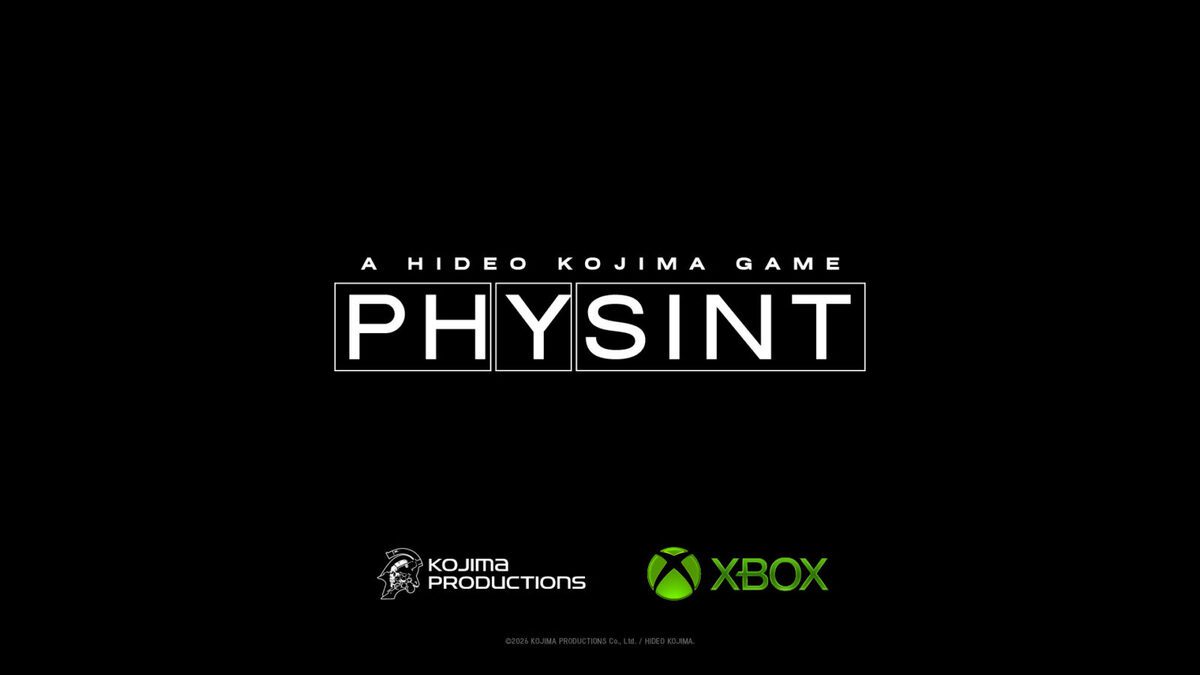
For months, the gaming industry has been buzzing with speculation about the fate of PHYSINT, Hideo Kojima’s mysterious “action‑espionage” project that was widely believed to be his spiritual successor to the stealth lineage he helped define. Today, Kojima himself finally confirmed what insiders had only whispered: PlayStation Studios cancelled PHYSINT in mid‑June, abruptly halting a project that had already become central to Kojima Productions’ future.
The revelation is stunning. PlayStation had been positioned as the project’s original partner, and PHYSINT was expected to be one of the most ambitious cinematic‑game hybrids ever attempted — a title Kojima described as “a fusion of film and game” and a new evolution of the espionage genre he pioneered. Yet behind closed doors, the partnership dissolved without warning.
Kojima’s statement makes clear that the cancellation was not mutual, not strategic, and not expected. It was a shock.
Three Months of Uncertainty — and a Relentless Search for Survival
Rather than shelving the project, Kojima Productions entered what Kojima calls a “tireless” three‑month sprint to keep PHYSINT alive. The studio sought advice, held negotiations across industries, and explored every possible avenue to secure a new home for the game.
This wasn’t just business. Kojima describes PHYSINT as “an important project both to me personally and to KOJIMA PRODUCTIONS.” The wording is deliberate — this is not a contract job, not a side experiment, not a studio‑mandated assignment. It is a passion project, a legacy project, and a creative statement.
The search for a new partner was not guaranteed to succeed. But it did.
Xbox Returns to the Table — and This Time, It’s for Espionage
Kojima Productions has now officially partnered with Xbox to continue development of PHYSINT. The announcement marks the second collaboration between Kojima and Microsoft, following the cloud‑native experimental title OD. But unlike OD, PHYSINT is not an experiment — it is a genre‑defining blockbuster.
Kojima says Xbox was chosen because the two share “a common vision for the future.” That phrasing is important. It suggests that Xbox offered not just funding, but creative freedom, technological support, and long‑term stability — the exact ingredients Kojima Productions needed after losing its original publisher.
The partnership also signals a major strategic win for Xbox. For decades, Kojima’s most iconic work has been associated with PlayStation. Now, one of his most anticipated new projects will be built under Microsoft’s banner.
This is not just a game deal. It is a symbolic shift.
What the Cancellation Means — and Why It Matters
PlayStation’s decision to cancel PHYSINT raises questions that will linger for months. Why would Sony walk away from a project led by one of gaming’s most influential creators? Why now? And what does it say about the company’s shifting priorities?
The timing is notable. PlayStation has spent the past year restructuring its studios, cancelling projects, and tightening its portfolio after a series of costly missteps in its live‑service strategy. But PHYSINT was not a live‑service game. It was prestige, narrative‑driven, and cinematic — the exact type of project PlayStation has historically championed.
The cancellation suggests deeper internal recalibration, one that may not align with Kojima’s ambitions or production style.
For Xbox, however, the opportunity was clear: secure one of the most visionary creators in the industry and give him the runway to build something only he can build.
PHYSINT Lives — and Development Continues
Kojima ended his statement with reassurance: “Please rest assured that development of PHYSINT… is ongoing and will continue moving forward.”
The project is alive. The team is working. The vision remains intact.
And now, PHYSINT is positioned to become one of the most important Xbox‑backed titles of the generation — a prestige espionage experience built by the creator who defined the genre.
The industry has entered a new chapter. Kojima Productions has a new home. And PHYSINT has a future again.