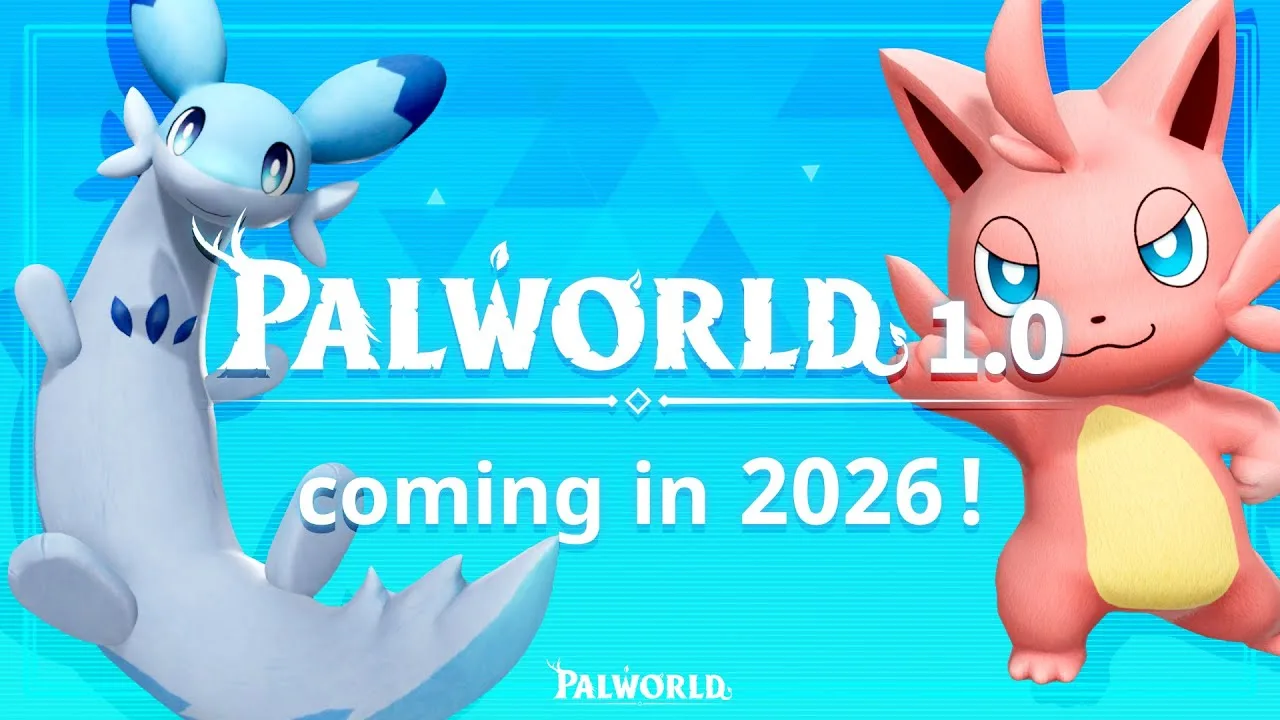
Nintendo’s long‑running effort to reinforce its legal position against Pocketpair’s Palworld has hit yet another obstacle. The Japan Patent Office (JPO) has rejected a newly filed touchscreen‑based monster‑catching patent, marking the latest setback in a year defined by escalating legal maneuvers, public scrutiny, and a rapidly shifting landscape in the monster‑collecting genre.
But to understand why this rejection matters—and why Nintendo is filing so many patents so quickly—we need to rewind to the very beginning of this conflict.
DAY 1 — The Spark That Lit the Fuse (January 2024)
When Palworld launched in early 2024, the gaming world erupted. The game’s blend of survival mechanics, crafting systems, and Pokémon‑like creature design triggered immediate comparisons to Nintendo’s flagship franchise. Social media exploded with side‑by‑side images, memes, and accusations of plagiarism. Nintendo, historically aggressive in protecting its intellectual property, issued a brief but ominous statement:
“We will investigate and take appropriate action.”
That single sentence set the tone for everything that followed.
THE FIRST WAVE — Nintendo’s Legal Reconnaissance (2024–2025)
Throughout 2024, Nintendo quietly gathered evidence, monitored community discussions, and evaluated whether Palworld crossed the line from “inspired by” to “infringing upon.” Behind the scenes, attorneys began mapping out potential legal angles:
- Character design similarities
- Gameplay mechanics that mirrored Pokémon conventions
- Marketing materials that evoked Nintendo’s brand identity
By mid‑2025, Nintendo had begun filing a series of patents—some new, some expansions of older filings—focused on monster‑catching, summoning, and battle mechanics. These filings weren’t just defensive; they were strategic groundwork for a potential lawsuit.
THE LAWSUIT ERA BEGINS — Nintendo vs. Pocketpair (Late 2025)
When Nintendo officially filed suit against Pocketpair, the industry braced for impact. The company’s legal team argued that Palworld benefited unfairly from decades of Pokémon design language, even if no assets were directly copied.
Pocketpair countered with a confident stance:
- Their creature designs were original.
- Their gameplay systems were distinct.
- And most importantly, no Nintendo code, models, or textures were used.
The lawsuit immediately polarized the gaming community. Some saw Nintendo as a bully protecting a monopoly. Others believed Pocketpair had knowingly sailed too close to the sun.
THE PATENT BLITZ — Nintendo’s New Strategy (2026)
As the lawsuit progressed, Nintendo began filing fast‑tracked patents at an unusually high rate. These filings appeared to serve two purposes:
- Strengthen Nintendo’s legal position by establishing clearer ownership of monster‑catching mechanics.
- Preemptively block competitors, especially as Palworld Mobile and Tencent’s Roco Kingdom: World entered the market.
One of these patents—a Pokémon‑summoning‑and‑fighting system—was rejected by the U.S. Patent and Trademark Office earlier this year on non‑final grounds.
Now, another has fallen.
THE NEW REJECTION — Touchscreen Monster‑Catching Patent Fails (May 2026)
According to documents published by the Japan Patent Office and reported by GamesFray, Nintendo’s latest patent—centered on a touchscreen‑based monster‑catching mechanic—was rejected for lacking an “inventive step over the prior art.”
In plain language:
The JPO believes Nintendo’s idea isn’t new enough to qualify as a patent.
The examiner cited a surprisingly broad range of prior works, including:
- Pokémon Generations
- PUBG Mobile
- YouTube gameplay videos
- Various mobile titles with drag‑and‑capture mechanics
Nintendo has already amended several claims, signaling they intend to continue fighting for approval.
But the timing is impossible to ignore. With Palworld Mobile gaining traction and Tencent’s Roco Kingdom: World expanding globally, Nintendo appears to be racing to secure legal ground before the monster‑collecting genre becomes too crowded to control.
WHY THIS MATTERS — The Bigger Picture
This rejection is more than a bureaucratic hiccup. It highlights a deeper issue:
Nintendo is trying to patent mechanics that the industry now sees as genre‑standard.
For decades, Pokémon defined the monster‑catching formula. But Palworld shattered the monopoly, proving that players were hungry for alternatives. Now, multiple companies are entering the space, and Nintendo is fighting to maintain ownership of ideas that may no longer be exclusively theirs.
The JPO’s decision suggests that the era of Nintendo’s uncontested dominance is ending.
THE PRESENT — A Legal War With No Clear Winner
As of today:
- The lawsuit against Pocketpair continues.
- Nintendo’s patent strategy is under pressure.
- Competitors are accelerating development.
- And the monster‑collecting genre is evolving faster than ever.
Nintendo will still appear at Gamescom 2026, signaling confidence and a desire to control the narrative. Meanwhile, the Nintendo eShop is seeing an influx of third‑party titles—including a new Gears of War/Dead Space‑style clone—showing how rapidly the platform’s ecosystem is diversifying.
The battlefield is shifting, and Nintendo is no longer the only general commanding troops.
THE FUTURE — What Comes Next?
Three scenarios are emerging:
- Nintendo wins the lawsuit, forcing Pocketpair into licensing agreements or design changes.
- Pocketpair wins, setting a precedent that could permanently weaken Nintendo’s control over the genre.
- A settlement, where both companies walk away bruised but intact.
But the patent rejections suggest something more profound:
Nintendo may be losing the ability to define what “monster‑catching” means.
And that could reshape the next decade of gaming.