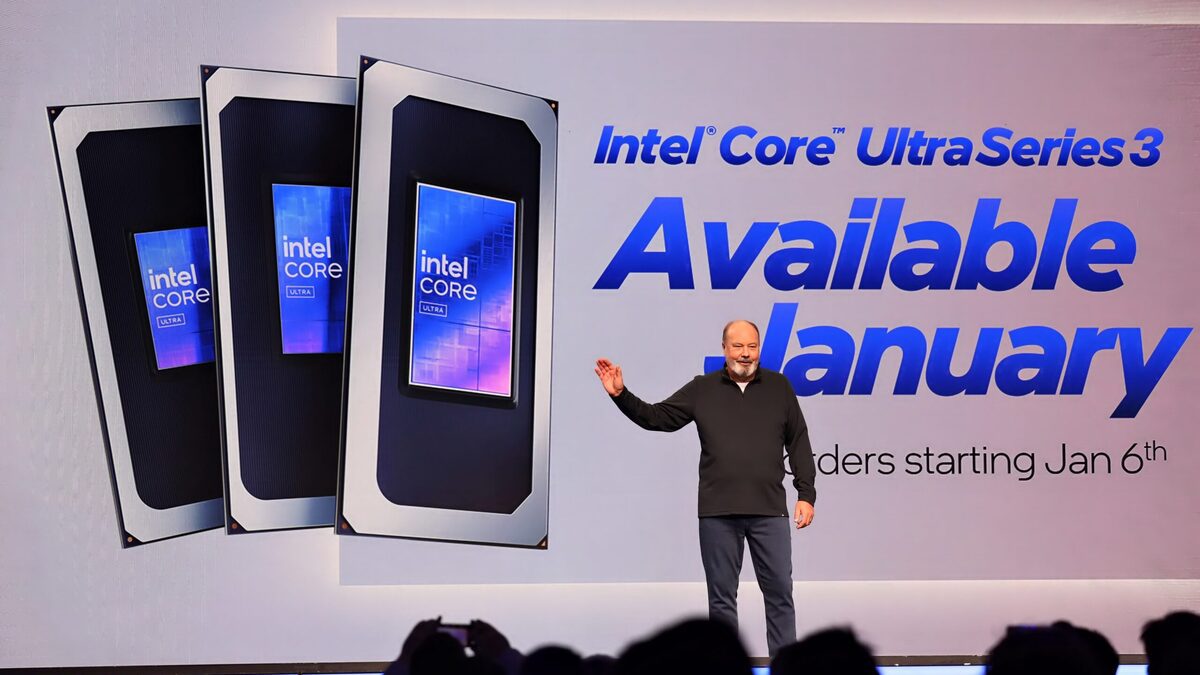
Intel used its CES 2026 keynote to make one of its boldest gaming moves in years: a dedicated handheld gaming PC platform powered by its new Panther Lake processors and a custom chip designed specifically for portable gaming devices. The announcement marks a strategic shift for the company, signaling that Intel intends to challenge AMD’s near‑total control of the handheld PC market.
The initiative builds on the momentum of Intel’s Arc B390 integrated GPU, which delivers up to 77% faster gaming performance than the Arc 140V found in last year’s Lunar Lake chips. With that leap, Intel believes it finally has the graphics horsepower to anchor a full handheld ecosystem — hardware, software, and OEM partnerships included.
🔥 A New Platform Built for Handhelds — Not Just Repurposed Laptop Silicon
Intel vice president Daniel Rogers confirmed during the CES presentation that the company is developing a complete handheld platform, combining firmware, drivers, power‑management tools, and a new chip tailored for portable gaming devices.
Key elements include:
- A dedicated handheld CPU variant based on Panther Lake’s Core Series 3 architecture
- Intel’s first 18A‑process gaming silicon, offering major efficiency gains for battery‑limited devices
- A unified software stack to help OEMs avoid the fragmentation that plagued early Windows handhelds
- Partnerships already in motion with companies like Acer, GPD, MSI, and others exploring Panther Lake handheld designs
Intel’s message was clear: this isn’t a side project — it’s a coordinated push into a market segment that has exploded since 2022.
🎮 Panther Lake: The iGPU Breakthrough Intel Needed
The star of the show is the Arc B390 iGPU, formerly known as the 12‑Xe‑core configuration. Intel claims it delivers:
- Up to 77% higher gaming performance vs. Lunar Lake’s Arc 140V
- Significant battery‑life improvements thanks to the 18A node’s efficiency gains
- A performance-per-watt profile that finally puts Intel in handheld‑ready territory
Intel CEO Lip‑Bu Tan summarized the launch with a confident statement: “We’ve overdelivered.”
For years, integrated graphics were Intel’s Achilles heel. Now, the company is positioning its iGPU as the foundation of a new handheld ecosystem — a dramatic reversal from the days when Intel graphics were considered a compromise.
🆚 AMD’s Handheld Monopoly Finally Faces a Real Challenger
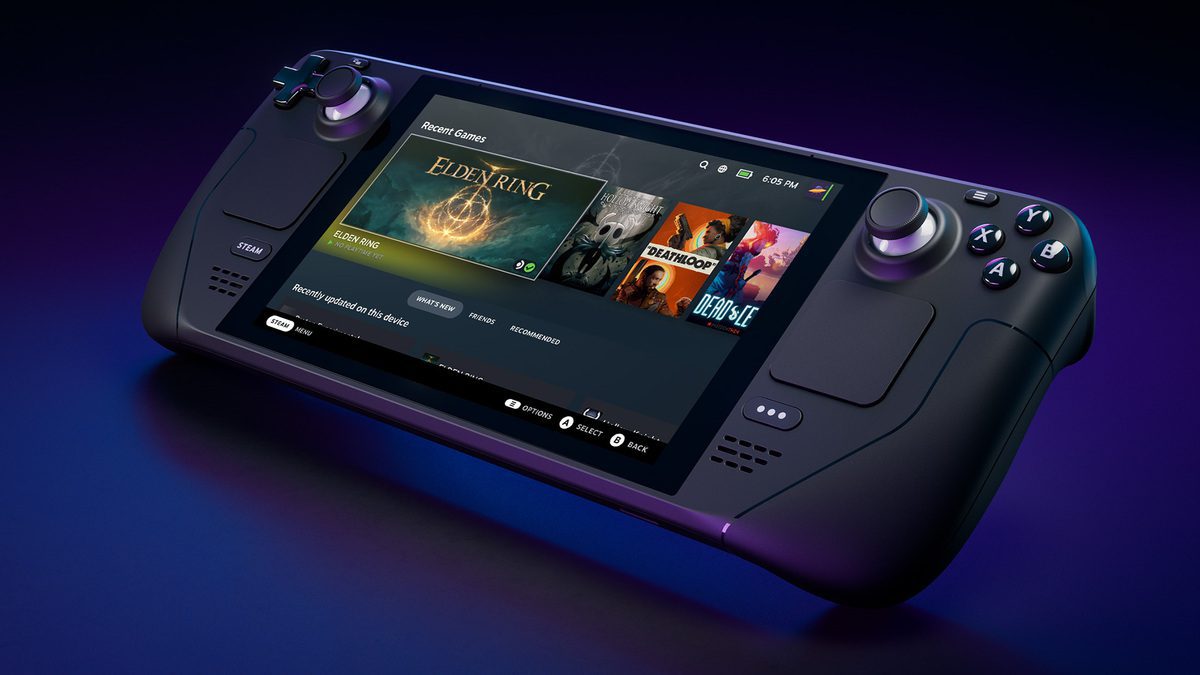
AMD has dominated handheld PCs since the Steam Deck’s debut, powering nearly every major device: ROG Ally, Legion Go, Ayaneo systems, and more. Intel’s entry threatens that dominance on several fronts:
Why Intel’s Move Matters
- OEMs want alternatives to AMD’s supply‑constrained custom APUs
- Windows handhelds need better power‑management integration, something Intel can deliver through tight hardware–software coupling
- A competitive iGPU gives Intel a real shot at performance parity or better
- The handheld market is growing, and Intel wants in before it matures
Analysts note that Intel’s 18A process could give it a manufacturing advantage if yields remain strong.
🛠️ A Full Ecosystem Strategy — Not Just Chips
Intel emphasized that its handheld platform is more than silicon. The company is building:
- A reference design for OEMs to accelerate development
- Optimized drivers tuned specifically for handheld thermals and power envelopes
- A unified control center for performance profiles, fan curves, and battery modes
- Developer tools to help studios optimize for Intel’s new iGPU architecture
This mirrors AMD’s successful strategy with the Steam Deck — but Intel is aiming for broader, multi‑OEM adoption from day one.
📅 Launch Timeline and What Comes Next
Intel says more than 200 Panther Lake‑powered PC models — laptops, ultrabooks, and early handheld prototypes — will ship later this month. Dedicated handheld devices are expected to appear later in 2026, with several OEMs already exploring designs.
Industry insiders believe Intel may even produce its own reference handheld, though the company has not confirmed this.
🧩 What This Means for the Handheld Market
If Intel delivers on its performance and efficiency claims, 2026 could be the first year the handheld PC market becomes a true two‑horse race. Competition would likely drive:
- Lower prices
- More diverse form factors
- Better battery life
- Faster driver updates
- Stronger developer support
For gamers, that’s a win across the board.