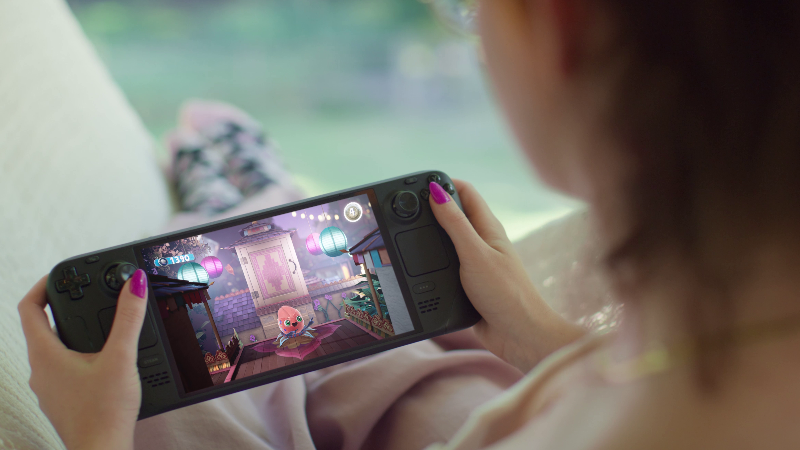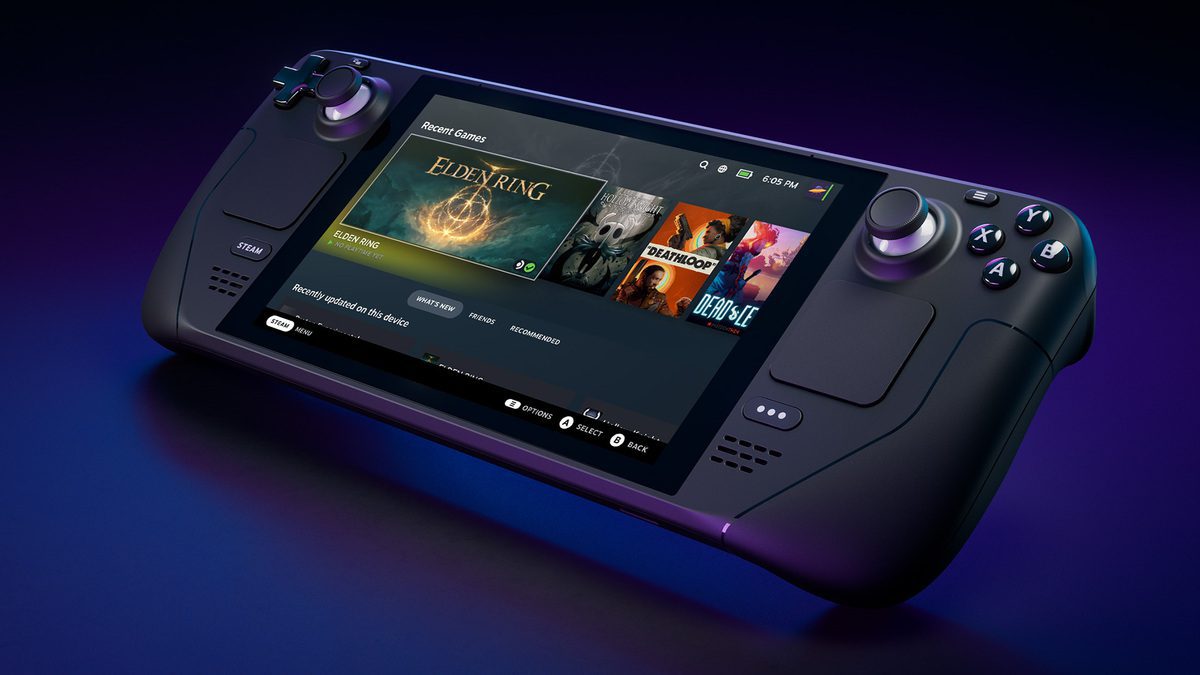
Valve has always been a company that speaks softly but moves mountains. When it updates the public, it’s rarely noise; it’s usually a signal. That’s why the latest announcement on the Steam Hardware page—confirming the Steam Deck OLED’s return to stock with adjusted pricing—feels like more than a simple inventory update. It reads like a quiet repositioning, a subtle tightening of gears inside Valve’s long‑running hardware ambitions.
The announcement itself is short, almost deliberately plain. But beneath that simplicity lies a message: Valve’s hardware pipeline is stabilizing, maturing, and preparing for something larger than a handheld refresh. The Deck OLED’s renewed availability is not just a restock; it’s a recalibration of the ecosystem that began years before the handheld ever existed.
The Backstory: Steam Machines, SteamOS, and a Dream Too Early for Its Time
To understand why this matters, you have to go back to the moment Valve first tried to break into the living room.
In 2015, the original Steam Machine initiative arrived with the confidence of a revolution. Valve envisioned a future where PC gaming lived in the same space as consoles, powered by SteamOS and a unified hardware identity. But the dream was too early. Linux gaming wasn’t ready. Proton didn’t exist. Developers weren’t testing their games on anything but Windows. And the hardware lineup, built by third‑party manufacturers, was so fragmented that consumers didn’t know what they were buying. The Steam Machine wasn’t a failure of imagination; it was a failure of timing.
Valve didn’t abandon the idea. It simply retreated into the workshop. SteamOS evolved quietly. Proton became the miracle layer that rewrote the rules of compatibility. And when Valve returned to hardware, it did so with a device that solved the software problem first: the Steam Deck. The Deck succeeded because it delivered a cohesive experience, something the original Steam Machine never could. It proved that Valve could build hardware people trusted, hardware that felt like an extension of Steam itself.
Why This Restock Matters More Than It Seems
That’s why this new restock matters. The Deck OLED returning with updated pricing is a sign that Valve’s supply chain is not only healthy but predictable. Valve doesn’t adjust prices casually; it does so when aligning product tiers for future expansion. The company is not clearing shelves. It’s preparing the runway.
For the first time since the Steam Machine era, Valve has everything it lacked back then: a stable OS, a compatibility layer that makes Linux gaming feel invisible, a proven hardware success, and a massive audience willing to buy Valve‑designed devices. The only missing piece is the living‑room device that bridges the gap between the Deck and a full PC. And the timing has never been better.
The only concern now if this is a signal on how the Steam Machine 2026 could end up costing if Valve insist that this year is actually the year.