Embracer has spent the last few years as the poster child for unchecked acquisition sprees—followed by brutal layoffs and painful reversals. Now it’s trying something it hasn’t done before: slow down, focus, and convince investors that its most famous worlds are worth more than the market thinks.
On May 20, the Swedish group announced plans to split itself into two publicly listed companies, with a new entity—Fellowship Entertainment—taking custody of its crown jewels: Tomb Raider, The Lord of the Rings, Metro, Dead Island, Kingdom Come: Deliverance, Remnant, and more.
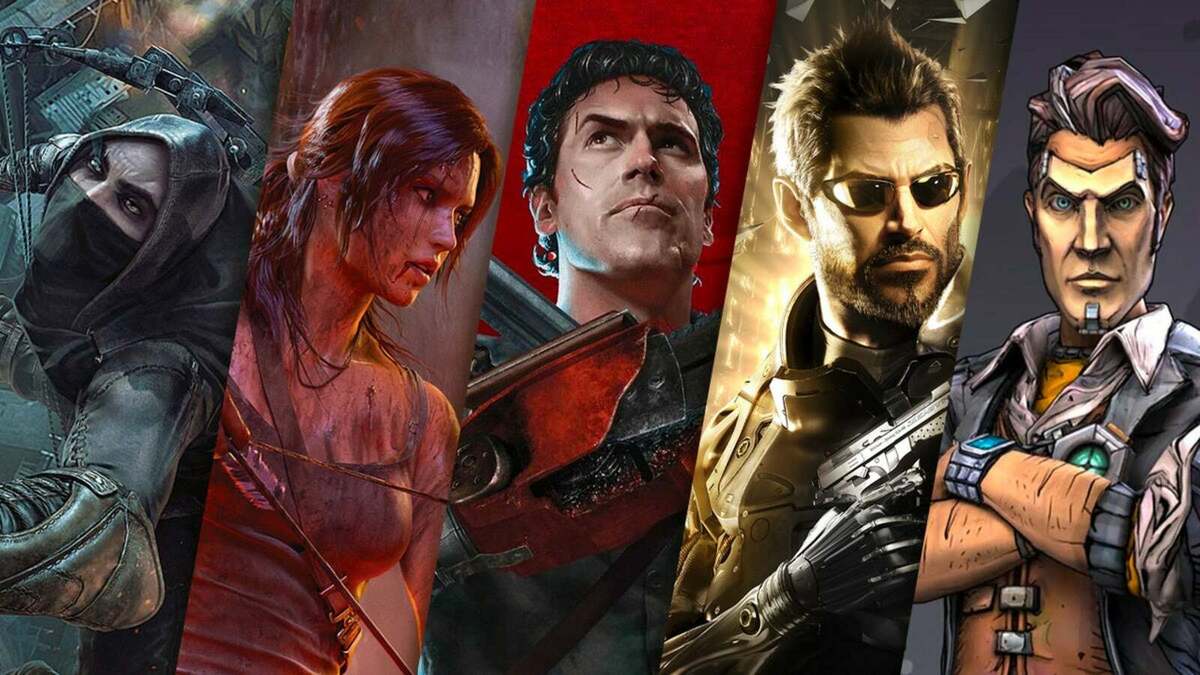
At the same time, Embracer is promising to “more actively” license out dormant or underused IP like Deus Ex, TimeSplitters, Saints Row, Legacy of Kain, and Thief, while one of its key studios, Warhorse, has confirmed it’s building an open-world Lord of the Rings RPG alongside a new Kingdom Come game.
Behind the headlines is a simple truth: Embracer needs these worlds to work—creatively and financially—because the numbers are no longer forgiving.
From acquisition machine to two-company structure
The new structure is designed to draw a bright line between Embracer’s sprawling, decentralized portfolio and a more tightly managed, IP-led powerhouse.
Fellowship Entertainment, planned to be listed in 2027, will be built around a single, centralized business plan focused on development, publishing, and licensing of its biggest franchises. It will control The Lord of the Rings IP (via Middle-earth Enterprises) and series such as Tomb Raider, Darksiders, Dead Island, Kingdom Come: Deliverance, Metro, and Remnant. Studios like Crystal Dynamics, Eidos-Montréal, 4A Games, Dambuster, Gunfire Games, Flying Wild Hog, Warhorse Studios, and Dark Horse Media are all set to move under its umbrella.
The “old” Embracer will remain a highly decentralized group, overseeing IP such as Destroy All Humans!, Desperados, Gothic, Killing Floor, Kingdom of Amalur, Titan Quest, Wreckfest, and licensed projects like Hot Wheels Unleashed and SpongeBob SquarePants. Companies like THQ Nordic, Plaion, Milestone, Tripwire, Vertigo Games, Aspyr, CrazyLabs, and Limited Run Games will stay on this side of the split.
Lars Wingefors, Embracer’s founder and chair, framed the move as a way to “increase management focus” and unlock what he calls some of the most undervalued assets in the industry. He argues that Fellowship, like previously spun-off units Asmodee and Coffee Stain, will thrive as a standalone business with clearer strategy and accountability.
Leadership will also be reshuffled: Embracer’s current CEO Phil Rogers and COO Lee Guinchard will transition to lead Fellowship as CEO and COO, with CFO Müge Bouillon joining them. A recruitment process is underway for a new CEO and CFO for the remaining Embracer entity.
The financial reality: big IP, bigger losses
The timing of this restructuring is not accidental. Embracer’s financials have been under intense pressure since its acquisition binge collided with a tougher funding environment and underperforming releases.
For the full year ended March 31, 2026, Embracer reported sales of about SEK 15.9 billion, down sharply from SEK 21.3 billion the year before. Revenue was SEK 16.6 billion, but the bottom line swung to a net loss of SEK 5.8 billion, compared to a net profit of SEK 6.0 billion a year earlier.
Using a rough exchange rate of around 10.5 SEK to 1 USD, that translates to approximately:
- Annual sales: about USD 1.5 billion
- Net loss: roughly USD 550 million
Those are approximate figures, but the direction is clear: Embracer is still a multi‑billion‑dollar revenue business, yet it’s burning a significant amount of money to sustain its portfolio.
Other snapshots of the company’s performance tell a similar story. Recent trailing-twelve-month earnings before interest and taxes (EBIT) have been estimated at around USD 1.8 billion, reflecting the impact of divestments, write‑downs, and restructuring on reported numbers.
Wingefors has openly acknowledged that Embracer has become synonymous, in many people’s minds, with industry layoffs. The group’s 2023 “reset” saw thousands of jobs cut, multiple studios closed, and high‑profile divestments like Gearbox and Saber Interactive. He insists the company tried to avoid a “hard US corporate style” headcount cull, instead giving some studios and IP time to prove themselves—but the end result was still a painful contraction.
The spin‑off of Fellowship is, in part, a promise to investors that the company can now turn its IP library into consistent, focused earnings rather than sporadic hits buried under restructuring charges.
Fellowship’s playbook: licensing as a second life for dormant icons
If Fellowship is the “IP-led” future, licensing is its main lever.
In a letter to shareholders, Wingefors outlined plans for a new IP licensing business unit within Fellowship, designed to increase revenue by letting external partners use its franchises across games, film, TV, and other media. Dark Horse Media—already experienced in co‑producing film and TV projects—will sit inside this unit, giving Fellowship a direct pipeline into Hollywood.
The strategy has two layers.
First, there’s the obvious: expand the biggest transmedia brands. The Lord of the Rings/Middle-earth and Tomb Raider are explicitly called out as priority IPs, with Fellowship planning to invest its own capital and form new partnerships around them. Other “AAA” pillars like Kingdom Come: Deliverance, Dead Island, Darksiders, Remnant, and the licensed Metro series are also flagged as key growth drivers.
Second, there’s the long tail of beloved but underused franchises. Wingefors says Fellowship will “more actively” explore external partnerships for IP such as Saints Row, Legacy of Kain, Deus Ex, Red Faction, The Mask, Thief, and TimeSplitters, among others.
That line is doing a lot of work. Embracer previously cancelled an in‑development TimeSplitters reboot being built by members of the original team, shut down Saints Row studio Volition, and reportedly cancelled a new Deus Ex project.
Now, instead of internal reboots, these series may find new life through co‑development deals, licensing arrangements, or collaborations with external studios that can take on creative and financial risk. For fans, that’s a bittersweet proposition: the IP might return, but not necessarily in the hands—or with the budgets—they once imagined.
Warhorse steps into Middle-earth
If you want a glimpse of what Fellowship’s future could look like when it works, Warhorse Studios is a good place to start.
On the same day Embracer detailed its split, Warhorse confirmed that it is developing two major projects: a new Kingdom Come adventure and an open‑world RPG set in Middle-earth.
In a short but loaded announcement, the studio said:
“You might have heard the rumours, it’s time to reveal what we are working on.
🗺️ An open world Middle-earth RPG.
⚔️ A new Kingdom Come adventure.”
Warhorse, owned by Embracer, is already riding high off the success of Kingdom Come: Deliverance II, which earned strong critical reception and reinforced the studio’s reputation for grounded, uncompromising RPG design.
Now, with Middle-earth in its hands, Warhorse becomes a flagship example of Fellowship’s thesis: pair a respected developer with a globally recognized IP and give them room to build something ambitious. The announcement post quickly racked up thousands of likes and shares, signaling just how much appetite there is for a fresh take on Tolkien’s world that isn’t tied to movie timelines or mobile gacha systems.
There’s no release window yet—Warhorse simply says it will share more “when the time is right”—but strategically, the message is clear. The Lord of the Rings isn’t just a licensing asset for films and merch; it’s a pillar for long‑term, premium game development under Fellowship’s watch.
Can Embracer’s worlds outgrow its past?
Embracer’s story over the last few years has been one of extremes: rapid expansion, aggressive acquisitions, then equally dramatic cuts and course corrections. The split into Embracer and Fellowship Entertainment is an attempt to turn that volatility into something more legible.
For investors, the pitch is that Fellowship will surface the true value of IP like Tomb Raider and The Lord of the Rings, while the remaining Embracer focuses on a leaner, more disciplined portfolio. For developers, the hope is that a clearer structure and more focused capital allocation will mean fewer whiplash cancellations and more projects that actually make it to release.
For players, the stakes are more emotional. This restructuring will help decide whether series like Deus Ex, TimeSplitters, Saints Row, Legacy of Kain, and Thief get meaningful new entries—or fade into a cycle of remasters and cameos. It will shape what a modern Tomb Raider looks like, how Middle-earth is interpreted in RPG form, and whether Kingdom Come can grow from cult hit to enduring franchise.
The financial pressure is real: roughly USD 1.5 billion in annual sales paired with a loss of more than half a billion dollars is not a sustainable long‑term equation.
So Embracer is doing what conglomerates do when the numbers stop adding up: it’s breaking itself apart, betting that clarity and focus will be worth more than sheer size. Whether Fellowship Entertainment becomes the industry‑leading, IP‑driven powerhouse Wingefors imagines—or just the next chapter in Embracer’s turbulent saga—will depend on what happens next with the worlds players already love.