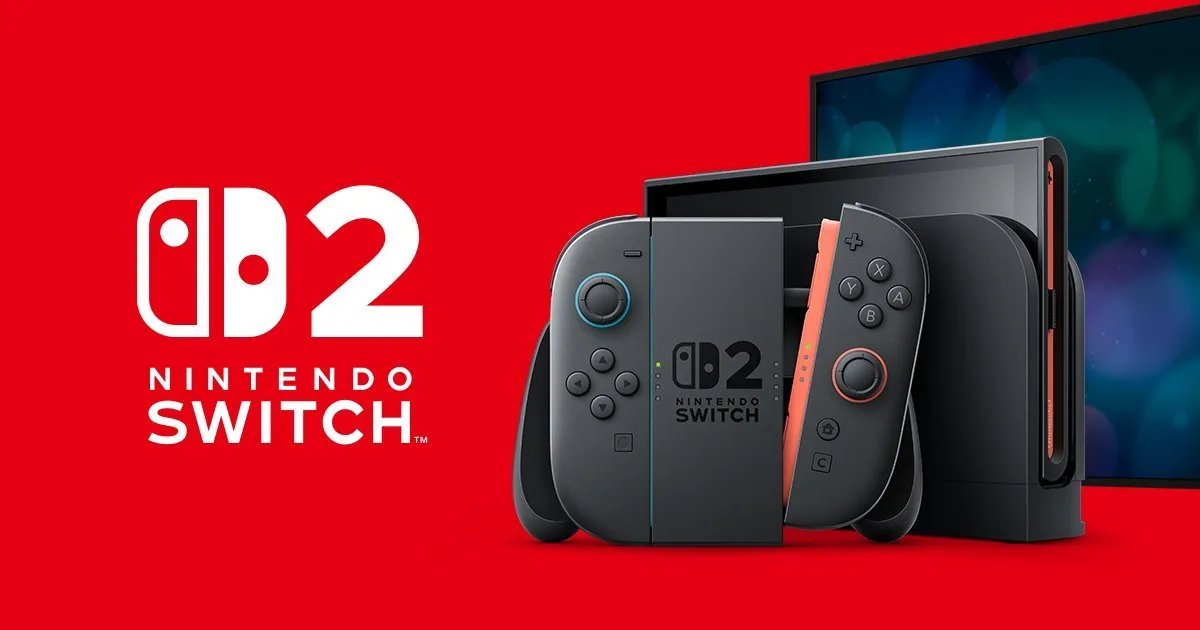
Nintendo has quietly confirmed a new hardware revision for the upcoming Switch 2, and while the announcement arrived without the spectacle of a Direct showcase, its implications are far more significant than the low‑key reveal suggests. The company is preparing a new “OSM” model designed around one core requirement: the battery must be replaceable without special tools. This change is driven by the European Union’s sweeping battery regulations, but the effects will ripple far beyond Europe’s borders.
The revision marks a philosophical shift for Nintendo. For years, the company’s handhelds have relied on sealed designs that required heat, solvents, or specialized screwdrivers to access internal components. The Switch 2’s OSM model breaks from that tradition. The battery is now meant to be accessible, swappable, and supported for years after the console’s lifecycle ends. It’s a move that aligns Nintendo with a global push toward sustainability and repairability, but it also hints at a deeper strategic realignment in how the company plans to manufacture and distribute its next‑generation hardware.
Let Speculate!
The EU’s regulations are strict, demanding that consumer electronics allow battery replacement without destructive disassembly. Nintendo’s compliance means the Switch 2’s internal layout has been reworked to accommodate easier access. Analysts believe this redesign is not a minor tweak but a structural overhaul that affects the console’s long‑term support model. Even the Joy‑Con controllers, long criticized for drift issues and battery degradation, may eventually receive similar treatment, though Nintendo has not confirmed this yet.
What makes this development especially interesting is how it intersects with Nintendo’s global launch strategy. Historically, the company has released region‑specific hardware variants when regulations required it. But the modern manufacturing landscape makes that approach increasingly inefficient. Producing two different Switch 2 models — one for Europe and one for the rest of the world — would complicate assembly lines, inflate costs, and create logistical headaches. A unified global design is simply more practical.
Coming To America?
This is particularly relevant for the Americas. The United States is moving steadily toward right‑to‑repair legislation, with several states already adopting laws that echo the EU’s principles. Launching a sealed‑battery Switch 2 in the U.S. only to revise it later would create unnecessary friction and negative press. Meanwhile, Latin America presents a different but equally compelling case. In regions where consoles often cost significantly more due to taxes and import structures, repairability becomes a major selling point. A Switch 2 that can be maintained and extended through simple battery swaps is far more appealing to consumers in Brazil, Chile, Mexico, Colombia, and Argentina, where hardware longevity is a priority.
Nintendo’s supply chain also plays a role. Once the company commits to producing standardized replacement batteries for the EU, distributing them globally becomes a natural extension of that infrastructure. It would be counterproductive to limit repair‑friendly hardware to one region while shipping a more restrictive model elsewhere.
All signs point to the OSM Switch 2 becoming the default version across the Americas. The United States and Canada are almost certain to receive it due to manufacturing efficiency and shifting legal landscapes. Mexico and Central America, which share distribution channels with the U.S., are likely to follow. South America, despite its complex import environment, stands to benefit the most from a repairable design, making it a strong candidate for the same hardware revision. Even the Caribbean, including Puerto Rico, is tied closely enough to U.S. distribution that parity is the expected outcome.
Nintendo’s move toward replaceable batteries is more than regulatory compliance. It represents a broader shift toward sustainability, consumer‑friendly design, and long‑term hardware support. For players, it means a Switch 2 that ages more gracefully and remains viable long after its initial battery wears down. For Nintendo, it strengthens the console’s appeal in emerging markets and aligns the company with global trends that will only grow stronger in the coming decade.
The Switch 2 is shaping up to be more than a generational upgrade. It’s a signal that Nintendo is preparing for a future where repairability, longevity, and accessibility are not optional features but essential pillars of modern hardware design. And for the Americas, the message is clear: this new, more open approach to hardware is almost certainly coming their way.