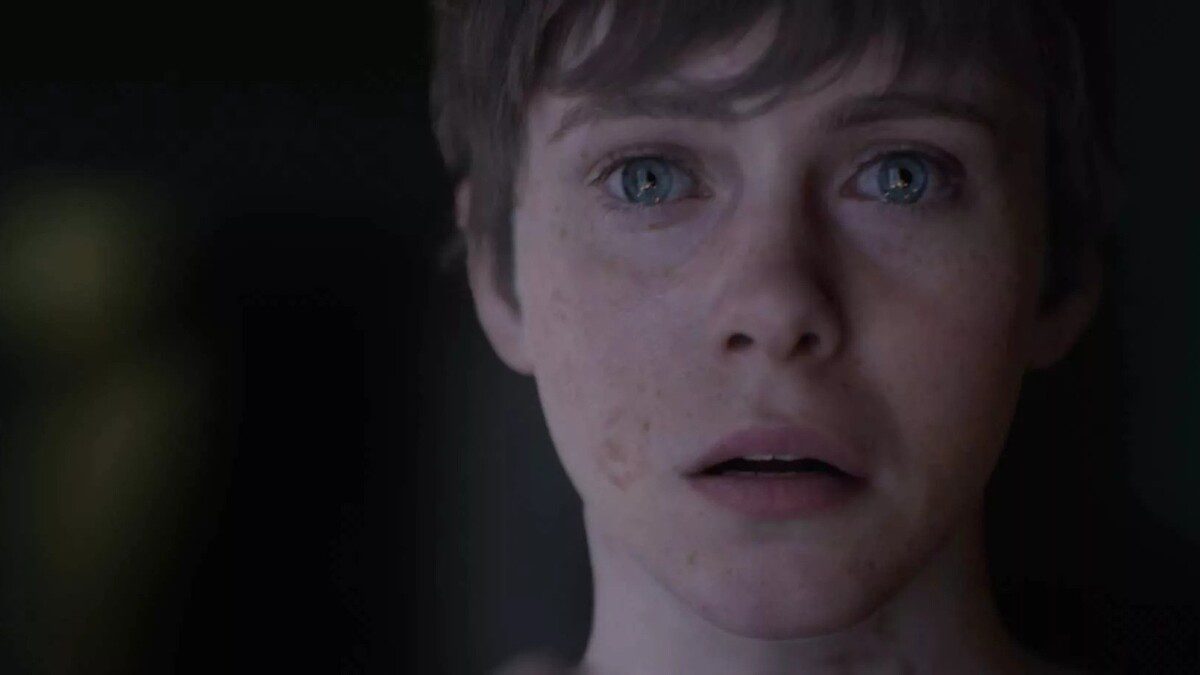
In the dim glow of Kojima Productions’ Tokyo studio, a monitor flickers with a looping test sequence: a face, half‑lit, half‑shadowed, trembling between terror and revelation. The room is silent except for the hum of servers and the soft murmur of developers reviewing the latest capture session. It’s late — well past midnight — but no one seems eager to leave. Not when the project in front of them is this important.
This is OD, Hideo Kojima’s long‑gestating horror experiment and the first major collaboration between Kojima Productions and Xbox Game Studios. And after months of secrecy, internal testing, and a production cycle shaped by both tragedy and ambition, the studio is finally ready to share a new update on the game that has become one of the most talked‑about mysteries in modern gaming.
A Project Born From Fear — and Reinvention
Kojima has described OD as “a new game system,” a phrase that has become something of a mantra inside the studio. The concept predates Death Stranding, originating as a private experiment he tinkered with during late‑night writing sessions. But it wasn’t until Xbox approached him with a pitch for cloud‑native game development that the idea found a home.
“OD was always too strange for traditional pipelines,” one developer says. “It needed infrastructure that could scale with the concept — and Xbox was the only partner willing to take that risk.”
The game’s premise remains tightly guarded, but the team confirms that OD is built around fear as a measurable, interactive system. Not jump scares. Not scripted sequences. Something more dynamic — something that reacts to the player’s emotional state.
Kojima, ever cryptic, puts it this way:
“I wanted to go beyond the limit of what ‘scary’ means. Not just in games — in any medium.”
The Cast, the Loss, and the Technology That Preserved a Performance
The update confirms that Sophia Lillis, Hunter Schafer, and the late Udo Kier remain the central trio of OD’s narrative. Kier’s involvement has been a point of speculation since his passing in late 2025. Kojima Productions now reveals that a full facial and performance scan was completed before his death — but the team never had the chance to film his scenes.
Rather than recast or digitally resurrect him, the studio made a different choice.
“We treated his scan as a final portrait,” says the performance director. “A presence in the world of OD, not a full character. It felt more respectful — and more haunting.”
Kier’s likeness appears in the latest internal build, woven into the game’s psychological architecture in a way the team refuses to elaborate on. But those who’ve seen it describe it as “unsettling” and “beautiful.”
Jordan Peele’s Role Expands
The update also confirms that Jordan Peele, originally announced as a creative collaborator, has taken on a more active role in shaping OD’s narrative structure. Peele has been involved in script revisions, thematic development, and the game’s experimental approach to player agency.
“He understands fear as a cultural language,” Kojima says. “And OD needs that.”
Peele reportedly pushed the team toward a more grounded emotional core — not just terror, but vulnerability, guilt, and the psychology of self‑confrontation.
A System That Adapts When You Want to Quit
One of the most intriguing details in the update is the confirmation of a mechanic Kojima has teased for months: a system designed for players who “want to stop playing because it’s too scary.”
The studio clarifies that this is not a difficulty toggle, nor a narrative branch. It’s a dynamic adaptation layer that changes the game’s behavior when the player hesitates, freezes, or attempts to disengage.
“It’s not about making it easier,” a designer explains. “It’s about making the fear follow you in a different way.”
The team refuses to elaborate further.
Xbox’s Role: A Platform Built for Experiments
Internally, OD has become a symbol of Xbox’s new creative philosophy under CEO Asha Sharma: a willingness to fund unconventional projects that expand the definition of “play.”
Kojima’s update emphasizes that OD could not exist without Xbox’s cloud infrastructure, which handles real‑time data processing and procedural narrative adjustments.
Phil Spencer, who championed the project from the beginning, reportedly told Kojima: “Make the thing only you can make.”
Sharma, in a recent internal meeting, described OD as “a deeply moving game” and “a sign that we haven’t reached the boundary of what games can be.”
Filming Has Begun — and It’s Unlike Any Game Shoot Before
Kojima Productions confirms that principal photography with Lillis and Schafer is now underway. But unlike traditional performance capture, OD uses a hybrid system that blends live‑action footage, volumetric capture, and cloud‑driven rendering.
“It’s not FMV,” the technical director insists. “It’s not CGI. It’s something in between — something that shifts depending on how you play.”
The update also notes that the team is experimenting with real‑time actor‑driven sequences, where performers can influence in‑game events during specific narrative beats.
A Game That Wants to Overdose the Player on Fear
The title OD — long speculated to mean “overdose” — is now confirmed to be a thematic anchor. The game is designed to push players to the edge of their comfort zone, then offer them a way to continue even when they want to stop.
“It’s not about punishing the player,” Kojima says. “It’s about exploring the boundary between fear and curiosity.”
The update hints that the game’s final act will be “impossible to experience the same way twice.”
The Road Ahead
Kojima Productions states that OD is now in “full production,” with cloud systems, narrative structure, and core mechanics locked. The studio is expanding its testing pool and preparing a new phase of internal previews.
A public reveal is still months away, but the update closes with a line that feels quintessentially Kojima:
“OD is not a horror game. It is a game about what horror reveals.”
And with that, the mystery deepens.