Micron’s decision to lock in historically high memory prices for the next five years is more than a business maneuver; it is a declaration that the global semiconductor economy has permanently shifted. The Register’s reporting makes clear that this is not a temporary spike or a cyclical correction. It is the beginning of a new era in which AI demand dictates the cost of every component that touches consumer electronics. And for gaming, the timing could not be worse.
Only days before Micron’s announcement, Microsoft confirmed a sweeping price increase across the Xbox hardware lineup. The company cited soaring memory and storage costs as the primary driver, noting that the economics of console manufacturing have become unsustainable under current market conditions. The two developments are not isolated events. They are symptoms of the same structural pressure: AI’s insatiable appetite for DRAM, NAND, and especially high‑bandwidth memory.
The AI Boom Has Rewritten the Memory Market
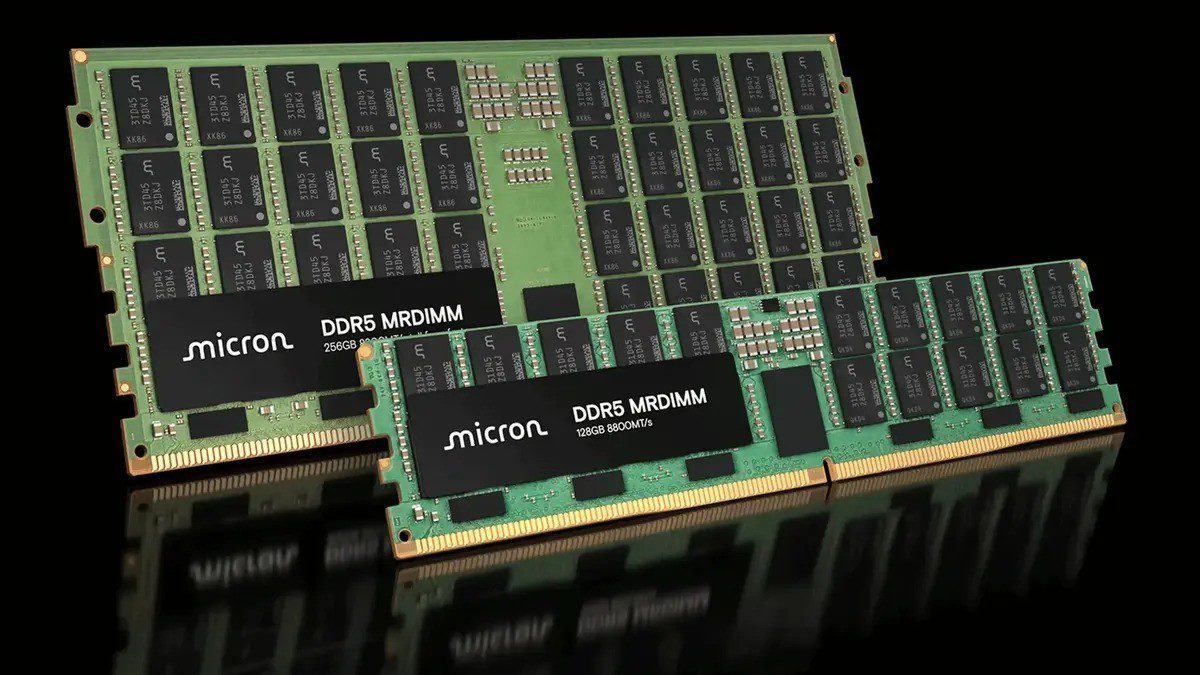
For decades, memory pricing followed a predictable rhythm. Supply gluts drove prices down, manufacturers cut production, shortages followed, and the cycle repeated. That pattern has been shattered. AI datacenters now consume memory at volumes that dwarf every other sector, and they are willing to pay whatever it takes to secure supply. Micron’s long‑term contracts reflect this new reality. The company is effectively signaling that the next half‑decade will be defined by elevated prices, constrained supply, and a prioritization of AI‑grade memory over consumer‑grade components.
This shift has immediate consequences. As manufacturers redirect capacity toward HBM for AI accelerators, the availability of traditional DRAM and NAND shrinks. Consumer electronics — PCs, smartphones, and especially game consoles — are pushed to the back of the line. The result is a market where memory is not only more expensive but also harder to secure in the quantities required for mass‑market hardware.
Xbox’s Price Hike Was the First Domino
Microsoft’s decision to raise the price of every Xbox model was met with frustration, but the company’s explanation was blunt: memory and storage costs have risen more than twofold in the last two years, and internal forecasts show another doubling by 2027. Consoles, unlike PCs or smartphones, cannot simply adjust their bill of materials mid‑generation. Their hardware is locked in place for seven to ten years. When component prices rise, the platform holder has only two options: absorb the loss or raise the price.
Sony faced the same pressure earlier this year when it increased the price of the PS5 and PS5 Pro. Nintendo, preparing its next‑generation hardware, is reportedly wrestling with similar cost constraints. The entire console sector is being squeezed by a component market that no longer behaves in its favor.
Micron’s five‑year pricing lock confirms that this squeeze is not temporary. It is the new normal.
Why Gaming Is Uniquely Vulnerable
The gaming industry sits at an uncomfortable intersection. It relies heavily on memory for performance, load times, and storage capacity, yet it operates on razor‑thin margins and long hardware cycles. A smartphone can raise its price every year. A gaming PC can adjust its configuration with each new model. A console cannot. Once a console launches, its cost structure is frozen, even as the market around it shifts.
This rigidity makes consoles particularly sensitive to memory inflation. Every dollar added to DRAM or NAND costs is a dollar that must be absorbed or passed on. With Micron’s new pricing structure, the cost pressure becomes a long‑term burden rather than a short‑term challenge.
The Next Five Years: A Difficult Road for Gaming
The implications for the gaming ecosystem are far‑reaching. Hardware prices will continue to rise, not because companies want to charge more, but because the cost of building the machines themselves is climbing. Mid‑generation refreshes — once a reliable way to extend a console’s life — become less attractive when memory procurement is expensive and unpredictable. Cloud gaming, which depends on massive server farms filled with memory‑hungry hardware, faces its own slowdown as AI companies outbid everyone else for supply.
Even game development feels the ripple effect. A slower‑growing install base means publishers become more cautious. Budgets tighten. Riskier projects struggle to get greenlit. The industry becomes more conservative at the exact moment when innovation is needed to keep players engaged.
PC gaming, often seen as a refuge during console turbulence, is not immune. Micron’s consumer brand Crucial has already been scaled back as the company shifts its focus to AI‑grade memory. RAM and SSD prices are expected to rise steadily, making high‑end PC builds more expensive for years to come.
A New Era of Expensive Gaming
Micron’s five‑year pricing pact is a turning point. It signals that the era of cheap memory — the era that enabled fast SSDs, massive open worlds, and affordable consoles — is over. Combined with Microsoft’s Xbox price hike and Sony’s earlier adjustments, the gaming industry is entering a period defined by higher costs, slower hardware evolution, and a more cautious approach to innovation.
For players, this means consoles that cost more, PCs that cost more, and a market that moves more slowly. For developers and publishers, it means recalibrating expectations around growth and profitability. For hardware manufacturers, it means navigating a world where AI dictates the price of every component they need.
The next five years will test the resilience of the gaming industry. It will adapt — it always does — but the path forward is more challenging than any hardware cycle in recent memory. The AI revolution has rewritten the rules, and gaming must now find its place in a market where it is no longer the priority.