May 2026 will age into one of those datapoints analysts circle in red—a month where three separate stories, on three different fronts, quietly stitched together a single uncomfortable truth about the games business. On the surface, it was just NPD-style sales data and another round of hardware headlines: PlayStation posting its weakest May in a quarter century, Xbox hitting its lowest May ever recorded, and Nintendo’s Switch 2 sprinting into the history books as the second-fastest‑selling console the US has ever seen.
Underneath those charts, though, sits a deeper structural shift: a global memory and storage crunch driven by AI, data centers, and strategic manufacturing decisions that is reshaping what it costs to build a console, a gaming PC, or even a mid‑range laptop. The “RAM and SSD crisis” isn’t just a PC‑builder meme—it’s a pressure point that now shows up directly in console pricing, in platform strategy, and in how long this generation might be forced to last.
This is the story of how those threads meet.
PlayStation: a premium console colliding with a new cost reality
For most of this generation, PlayStation 5 has been the safe headline: strong hardware sales, a deep exclusive slate, and a familiar pattern of price cuts and bundles as the years roll on. May 2026 broke that rhythm. According to US sales data shared by analyst Matt Piscatella, overall hardware spending in the month actually rose—but that growth was “primarily driven by the Switch 2,” which had to offset a brutal 43% decline in PS5 hardware spending and a 58% drop in unit sales year‑over‑year.
Those numbers matter not just because they’re bad, but because of why they’re bad. The article notes that this collapse is “attributed to recent price increases,” with the average price of a new PlayStation 5 jumping 33% in a year to around 672 dollars. The PS5 still ranks second in both units and dollars for May and year‑to‑date, but that’s now happening at a much higher average ticket price, in a market where the cheapest way into modern gaming is no longer Sony’s box.
Historically, console makers have relied on a familiar playbook: sell hardware close to cost or even at a loss, then make the real money on software, subscriptions, and accessories. That model assumes component prices trend downward over time, letting manufacturers quietly improve margins as the generation matures. The RAM and SSD crisis flips that assumption. Memory and storage—once the predictable, ever‑cheaper parts of a bill of materials—are now the volatile line items. When DRAM and NAND prices spike, a console like the PS5 suddenly becomes more expensive to build in year five than it was in year one.
Sony’s price hikes are, in that sense, less a greedy move and more a defensive one. The company is trying to keep its ecosystem attractive while refusing to eat the full impact of a component super‑cycle that it did not cause. The problem is that consumers don’t see wafer allocation charts or HBM capacity—they see a console that costs hundreds more than it did last year, in a world where subscription services and cloud gaming are increasingly viable alternatives.
Xbox: the canary in the hardware mine
If PlayStation’s May was bad, Xbox’s was historic in the worst way. The same US data shows that Xbox hardware unit sales in May 2026 were “the lowest ever recorded for a May month,” with tracking going back to 1995. Switch 2 led the market, PlayStation came second, and Xbox finished last in both units and dollars.
Here, too, the culprit is price. Insider Gaming’s report ties the dip “entirely” to recent price increases driven by “shortages and rising costs of console storage and memory.” Microsoft has already announced further price hikes effective August 1, raising each console model by 100 dollars or more, and warns that storage and memory prices could double again by fall 2027.
Xbox has always leaned harder into the “sold at a loss” model than Sony, openly stating in court that it has never profited from the sale of a console. That makes it even more exposed when RAM and SSD costs explode. If you’re already losing money on hardware, and your memory bill suddenly doubles, you either raise prices, cut specs, or accept deeper losses. None of those options are attractive in a market where your competitor’s hybrid handheld is surging and your own platform is fighting perception battles on exclusives and identity.
The result is a vicious loop. Higher prices depress demand, depressed demand makes it harder to justify aggressive hardware subsidies, and the platform leans more heavily on services like Game Pass and cloud streaming to keep players inside the ecosystem. In a world where AI data centers are devouring DRAM and NAND, Xbox’s hardware story becomes a case study in what happens when a console maker is forced to navigate a component crisis while already operating on razor‑thin margins.
Switch 2: thriving in the same storm
Against that backdrop, Nintendo’s Switch 2 reads almost like a counter‑narrative. In its first 12 months on the US market, the console has sold 5.9 million units, making it the second‑fastest‑selling gaming system in US history, behind only the Game Boy Advance’s 6.5 million in its debut year.
The same May 2026 data that paints such a grim picture for PlayStation and Xbox shows Switch 2 as the best‑selling hardware platform in both units and dollars, for the month and year‑to‑date. It didn’t just survive the memory and storage crunch—it helped increase overall hardware spending, offsetting the declines from its rivals.
That success isn’t magic. Nintendo’s hardware philosophy has long favored modest specs, efficient designs, and aggressive cost control over chasing cutting‑edge performance. In a world where DRAM and NAND prices are surging because AI accelerators and data centers are consuming wafer capacity, a console that doesn’t need the latest DDR5 or the fastest NVMe drive is structurally advantaged.
Switch 2 still relies on memory and storage, of course, and it is not immune to the broader super‑cycle. But its bill of materials is less exposed to the most extreme price spikes, and its hybrid form factor taps into a different value proposition: portability, flexibility, and a software library that leans on Nintendo’s own evergreen IP. In a month where average hardware prices climbed and the PS5’s average ticket hit 672 dollars, the Switch 2’s relative affordability became a strategic weapon.
The RAM and SSD crisis: AI’s shadow over gaming hardware
To understand why May 2026 looks the way it does, you have to zoom out from consoles and look at the component market they depend on. Starting in 2025, the global memory supply entered what some outlets have dubbed “RAMmageddon” or the “RAMpocalypse”: a structural shortage of DRAM and NAND flash driven not by pandemic logistics, but by AI infrastructure demand and strategic capacity allocation.
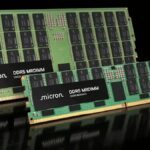
Memory manufacturers like Samsung, SK Hynix, and Micron have pivoted aggressively toward High Bandwidth Memory (HBM), the lifeblood of AI accelerators and data center GPUs. HBM is far more complex and wafer‑intensive than consumer DDR4 or DDR5, and as fabs prioritize it, the supply of traditional RAM shrinks. Contract DRAM prices have surged anywhere from 70% to over 170% year‑over‑year, with retail prices for common gaming kits climbing even faster. A 32GB DDR5‑6000 kit that cost around 90–120 dollars in early 2025 has, in some markets, ballooned to 350 dollars or more.
NAND flash—the foundation of SSDs—faces a similar squeeze. Enterprise and data center demand for high‑capacity NVMe drives has diverted large quantities of NAND away from consumer products, tightening supply for 2TB and 4TB SSDs that have become standard in gaming PCs and next‑gen consoles. Prices for popular drives like Western Digital’s SN850X 2TB have jumped from around 130 dollars to over 220 in a matter of months.
Layered on top of that are geopolitical and corporate decisions. US tariffs on Chinese tech imports have raised costs and uncertainty. Micron’s withdrawal from the consumer RAM market, citing surging demand from AI data centers, has left Samsung and SK Hynix as the primary suppliers for both consumer DRAM and HBM, consolidating power and limiting competition. Analysts expect meaningful relief only toward the end of the decade, as new fabs come online and capacity catches up.
For gamers, the impact is immediate and brutal. A mid‑range gaming PC that cost 1,200 dollars in mid‑2025 can now easily push 1,600–1,800 purely because RAM and SSD prices have inflated. Games that increasingly expect 32GB of RAM and fast storage—think path‑traced Cyberpunk, sprawling Starfield installs, or cinematic horror like Alan Wake 2—are colliding with a market where upgrading beyond 16GB feels financially punishing.
Consoles, which rely on custom memory configurations and integrated SSDs, cannot escape that gravity. When your BOM is suddenly 15–20% more expensive because DRAM and NAND have spiked, you either raise prices, cut corners, or delay new hardware entirely.
A longer generation, or a more fragmented one?
One of the most interesting arguments emerging from this crisis is that soaring RAM and SSD prices might actually prolong the current console generation—and that this could be, in some ways, a good thing. As Game Rant and other outlets have pointed out, Sony and Microsoft make their real money on software, subscriptions, and peripherals, not on the box itself. If the cost of building a brand‑new, more powerful console with cutting‑edge memory and storage is dramatically higher than expected, it may simply make more sense to stretch the PS5 and Series X|S lifecycle.
A longer generation would give developers more time to fully exploit existing hardware, reduce fragmentation, and stabilize expectations for players who are already fatigued by constant upgrades. It would also align with the industry’s broader pivot toward services: Game Pass, PS Plus, cloud streaming, and cross‑platform ecosystems that care more about monthly active users than about how many teraflops sit under the TV.
But there’s a darker side. If component prices remain high through 2030, as some analyses suggest, the gap between players who can afford high‑end hardware and those who cannot will widen. PC gaming, already strained by GPU inflation, now faces a memory and storage tax. Console gaming, once the “affordable” alternative, is seeing its entry price creep upward. Cloud gaming can soften that blow, but it depends on bandwidth, latency, and regional infrastructure that are far from evenly distributed.
Nintendo’s success with Switch 2 hints at one possible path: hardware that deliberately sidesteps the bleeding edge, focuses on efficiency and unique experiences, and keeps BOM exposure to DRAM and NAND spikes as low as possible. Sony and Microsoft, by contrast, have built platforms whose identity is tied to performance, fidelity, and the promise of “next‑gen” spectacle. In a RAM and SSD crisis, that promise becomes more expensive to keep.
The state of the industry: fragile abundance
If you zoom out from May’s numbers and the memory charts, the gaming industry in 2026 looks paradoxical. On one hand, total US video game spending in May reached 4.2 billion dollars, up 3% from the previous year, with year‑to‑date spending hitting 23 billion—4% higher than last year. Players are still buying games, subscribing to services, and investing time and money into the medium.
On the other hand, the hardware and component side of the business is more fragile than it has been in years. Console makers are raising prices instead of cutting them. PC builders are warning customers about a “component cost super‑cycle.” Memory manufacturers are prioritizing AI over consumer products, and analysts are openly talking about shortages lasting into the next decade.
For players, this translates into a strange kind of abundance: more games than ever, more ways to play them, but a growing sense that the physical machines we use to access that abundance are becoming luxury items again. For platform holders, it forces hard questions about strategy. Do you double down on premium hardware and accept a smaller, wealthier audience? Do you lean into cloud and subscription models that decouple your business from component volatility? Do you, like Nintendo, design hardware that thrives in the mid‑range and lets your software do the heavy lifting?
May 2026 didn’t answer those questions, but it did expose the fault lines. PlayStation’s worst May in 25 years, Xbox’s lowest May ever recorded, and Switch 2’s historic sprint are not isolated curiosities—they’re early signals of how an AI‑driven memory crisis is reshaping the economics of play. The next few years will show whether the industry can turn that pressure into smarter, more sustainable hardware strategies, or whether we’re heading into a decade where the cost of entry climbs while the promise of “next‑gen” keeps moving just out of reach.