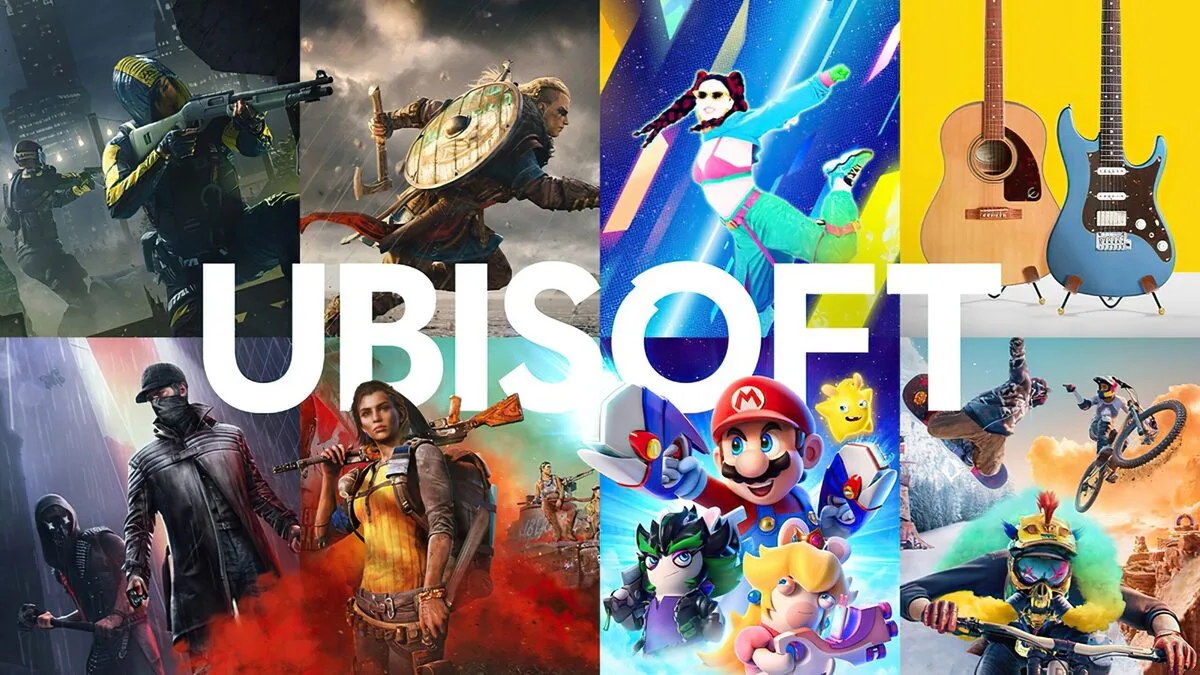
Ubisoft entered fiscal year 2026–27 with a paradox: a spectacular start to its second quarter driven by Assassin’s Creed Black Flag Resynced, and a bruising first quarter marked by a dramatic year‑on‑year decline in net bookings. The company is celebrating the commercial strength of its flagship remake while simultaneously warning investors not to expect revised guidance — a stance shaped by both competitive pressure and the lingering effects of last year’s unusually strong comparison base.
A Remake That Outperformed Expectations — But Won’t Move Guidance
Assassin’s Creed Black Flag Resynced, developed by Vantage Studios, launched in early July and immediately became Ubisoft’s strongest Assassin’s Creed release since the original Black Flag. Within its first 14 days, the remake sold 3.5 million copies and achieved an 84 average score on OpenCritic and Metacritic, surpassing Ubisoft’s annual expectations for the title far earlier than anticipated.
CEO Yves Guillemot framed the launch as a “proof point” for Ubisoft’s ongoing transformation — a multi‑year effort to streamline operations, consolidate creative leadership, and focus resources on high‑potential franchises. The company has recently closed its Winnipeg and Belgrade studios and restructured its Barcelona team, part of a broader rightsizing initiative intended to stabilize production pipelines and reduce overhead.
Yet despite the remake’s strong performance, Ubisoft is not raising its fiscal guidance. According to Ubisoft, the publisher expects Black Flag Resynced to deliver “superior financial performance” compared to its initial projections, but the competitive landscape for the remainder of the fiscal year is simply too crowded to justify an upward revision. Major releases from rival publishers — many of them sequels or remakes with entrenched fanbases — create a market environment where Ubisoft prefers to remain conservative rather than risk overpromising.
This restraint reflects a strategic shift: Ubisoft is positioning itself as a disciplined operator rather than a company chasing quarterly spikes. Guillemot’s messaging emphasizes long‑term value creation, predictable cash generation, and a more controlled content cycle rather than short‑term volatility.
Q1 Net Bookings Fall 9.2% — Or 13.7% Under IFRS — Due to a Tough Comparison Base
The first quarter of FY2026–27 tells a different story. Ubisoft reported net bookings of €255.8 million, down 9.2% year‑over‑year, and IFRS 15 sales of €268.2 million, down 13.7%.
Converted to USD (using the mid‑2026 average rate of €1 = $1.09 USD):
- Net bookings: ~$278.8 million USD
- IFRS 15 sales: ~$292.3 million USD
Digital net bookings fell sharply, down 17.6%, while back‑catalog bookings — typically Ubisoft’s financial backbone — dropped 15.1%.
The company attributes this decline not to underperformance, but to an unusually high comparison base. Q1 of the previous fiscal year included the launch window of Assassin’s Creed Shadows, which released in March 2025 and generated significant bookings well into the June quarter. Shadows’ momentum inflated last year’s numbers, making this year’s more modest performance appear steeper than it is.
Ubisoft stresses that Q1 results were still “slightly above guidance,” buoyed by a record contribution from the mobile title Invincible: Guarding the Globe, while evergreen titles like Rainbow Six Siege, The Division 2, and The Crew Motorfest performed in line with expectations.
A Company in Mid‑Transformation
Ubisoft’s financial communications repeatedly emphasize transformation — not just in cost structure, but in creative leadership and portfolio strategy.
Key developments include:
- Appointment of industry veteran Christoph Hartmann as General Manager of Creative House 2, tasked with building a “world‑class portfolio of battlefield‑driven experiences.”
- Continued consolidation of resources toward high‑potential franchises, especially Assassin’s Creed.
- Rightsizing actions across global publishing and multiple studios.
This restructuring is intended to stabilize Ubisoft’s production cadence after several years of delays, cancellations, and inconsistent output. The company’s messaging suggests that FY2026–27 is a transitional year — one focused on execution rather than expansion.
Why Ubisoft Won’t Raise Guidance — Even With a Hit Remake
The decision not to increase guidance despite Black Flag Resynced’s early success reflects three strategic realities:
- Competitive pressure. The fiscal year is crowded with major releases from other publishers, making it difficult to forecast upside without introducing risk.
- A desire for predictable performance. Ubisoft’s leadership is clearly prioritizing stability over volatility. Raising guidance only to miss it later would undermine investor confidence during a sensitive transformation period.
- The remake’s timing. Black Flag Resynced launched in early Q2. Its strong performance will help the quarter, but Ubisoft prefers to evaluate sustained momentum before adjusting full‑year expectations.
In other words, Ubisoft is pleased — but not yet convinced that one early hit can offset broader market uncertainty.
The Road Ahead
Ubisoft’s fiscal messaging reveals a company attempting to balance optimism with discipline. Black Flag Resynced’s success demonstrates the enduring strength of the Assassin’s Creed brand and validates the publisher’s renewed focus on quality. Meanwhile, the Q1 decline — though steep on paper — is largely a statistical artifact of last year’s blockbuster release.
The publisher’s refusal to raise guidance is not a sign of weakness, but of strategic caution. Ubisoft is signaling to investors that it intends to rebuild trust through consistent delivery, not through aggressive forecasting.
If Black Flag Resynced maintains momentum, and if Ubisoft’s transformation continues to stabilize production, FY2026–27 may ultimately be remembered not for its uneven start, but for the moment the company regained its footing.